How a Munchkin Turns a Corner Better Than a Long Legged Cat
It might seem counterintuitive to think of a cat with short legs as agile, especially when picturing those sleek, long-limbed felines that seem to float across furniture. Many new Munchkin owners, and even those just curious about the breed, might worry that their unique physique would make them clumsy or slow. But here's a secret: when it comes to quick turns and darting around corners, a Munchkin cat often has an unexpected edge, leveraging its distinctive build in ways that might just surprise you. This guide will delve into the fascinating physics and inherent advantages that allow a Munchkin to navigate tight spaces and sharp angles with remarkable efficiency, often outmaneuvering their longer-legged counterparts in certain situations.
Understanding the Munchkin's Unique Physique and Its Impact on Movement
When we talk about Munchkin cats, the first thing everyone notices is their legs, right? But it's not just about how short they are; it's about how that shortness influences their entire body mechanics and, crucially, their movement. This isn't just a quirky visual trait; it’s a fundamental difference that affects everything from how they jump to how they turn a corner.
The Low Center of Gravity: A Natural Advantage
Imagine a sleek sports car versus a tall SUV. Which one do you think can take a sharp bend at speed without tipping over? It's usually the lower one, right? The same principle applies to our beloved Munchkins. Their proportionally shorter legs mean their body, and therefore their center of gravity, sits much closer to the ground than that of a standard long-legged cat. This low center of gravity is a huge natural advantage when it comes to stability.
Think about it: when a cat is running and needs to make a sudden change in direction, it has to shift its weight rapidly. For a long-legged cat, that weight is distributed higher up, making it more prone to swaying or even losing balance if the turn is too tight or too fast. A Munchkin, however, is much more "grounded." Their lower profile means less distance for their weight to travel laterally, allowing them to adjust their balance almost instantaneously. This translates directly into the ability to execute incredibly sharp, controlled turns without losing momentum or stability. It's like they're hugging the ground, allowing them to pivot with remarkable ease. Why a Low Center of Gravity Helps a Munchkin Corner
Short Legs, Not Weak Legs: Dispelling a Myth
There's a common misconception that because Munchkin cats have short legs, they must be somehow weaker or less capable movers. This couldn't be further from the truth, especially when we're talking about horizontal movement and agility on a flat surface. Their legs are certainly short, but they are typically well-muscled and perfectly capable of supporting their body weight and propelling them with surprising speed.
The "shortness" is a result of pseudoachondroplasia, which affects the long bones in their limbs, but doesn't inherently mean their muscles or joints are deficient for typical cat activities, especially those that involve running and turning on the ground. Instead of hindering them, these shorter limbs provide a sturdy, compact base. They don't have the long levers that can sometimes become unwieldy during quick directional changes. For a Munchkin, their legs are like powerful little pistons, designed for efficient, low-to-the-ground propulsion and swift pivots. They might not reach the top of your kitchen counter in a single bound, but ask them to chase a laser pointer around the coffee table, and you'll see their true speed and control come out. Why a Munchkin's Legs Are Short but Its Body Is Not
The Mechanics of a Munchkin's Cornering Prowess
So, how exactly does this unique physique translate into such effective cornering? It's all about how they interact with the ground, distribute their weight, and control their movement in those split-second decisions to change direction. It’s a dance of physics and feline instinct.
Shifting Weight and Maintaining Traction
When any cat makes a turn, they have to lean into it, much like a motorcyclist on a bend. This leaning motion involves shifting their body weight to the inside of the turn to counteract the centrifugal force trying to push them outwards. For a Munchkin, this weight shift is incredibly efficient. Because their body is already low, they don't have to "drop" their weight as far or as dramatically as a taller cat would. This makes the action smoother and quicker.
Furthermore, their broad stance and the way their paws are planted contribute significantly to maintaining traction. With their body closer to the ground, their paws can exert more direct and even pressure, allowing for better grip on various surfaces. On a smooth, hard floor – the bane of many long-legged cats attempting a quick turn – a Munchkin is less likely to skid or lose their footing. They can dig in, shift, and push off with minimal fuss, making them remarkably stable. Think about the difference between running on a carpeted hallway versus a slick tile kitchen floor. A Munchkin often handles the transition and the turns with less drama, precisely because they can distribute their weight so effectively.
Precision Foot Placement and Body Control
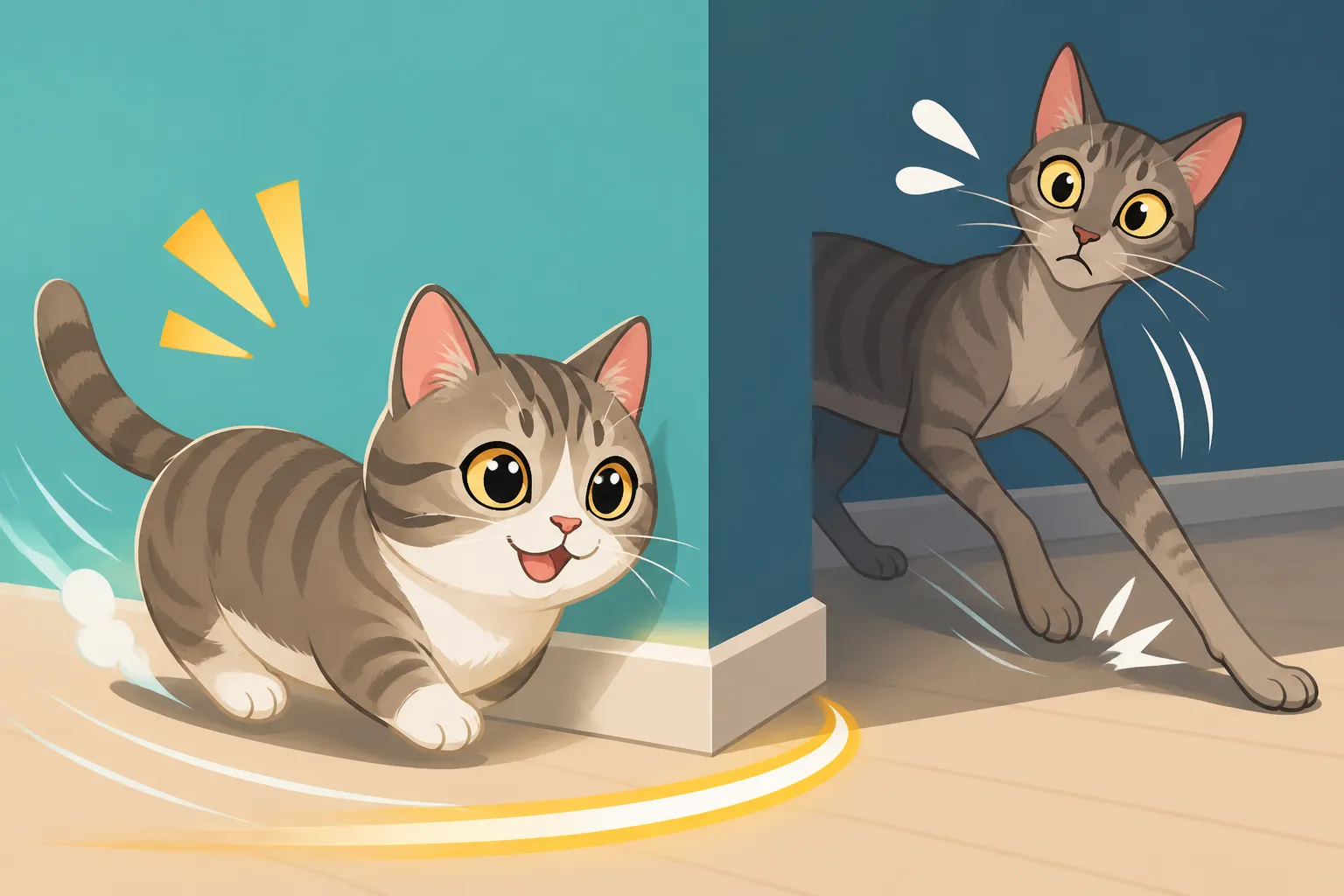
A Munchkin's shorter legs allow for incredibly precise foot placement, especially during a dynamic maneuver like a sharp turn. They can place their paws closer together and more directly under their body, creating a tighter pivot point. This means they don't need to swing their legs out as wide, which can be a common sight with long-legged cats trying to navigate a tight corner, often resulting in a wider arc.
When a Munchkin corners, their entire body acts as a single, compact unit, flexing and twisting with remarkable control. You'll observe their low-slung bodies hugging the inside of the turn, their paws making small, rapid adjustments to maintain momentum and direction. This focused, economical movement minimizes wasted motion, allowing them to complete the turn efficiently and continue their chase or exploration without missing a beat. How a Munchkin Changes Direction at Speed It's a testament to how their body has adapted to make the most of its unique structure.
Comparing a Munchkin's Agility to a Long-Legged Cat
It’s easy to look at a Munchkin and assume they are inherently less athletic than their longer-limbed cousins. While they certainly have limitations, particularly with vertical jumps, their ground-level agility, especially when cornering, often tells a different story.
Straight Line Speed vs. Cornering Dynamics
Let's be clear: a long-legged cat, with its powerful hindquarters and long strides, can often achieve a higher top speed in a straight line. They are built for covering ground quickly, like a cheetah on the savannah. However, the world, or more accurately, your living room, isn't always a straight line. There are furniture obstacles, tight hallways, and sudden changes in direction required during playtime.
This is where the Munchkin shines. While they might not win a straight-line dash across a football field against a Siamese, they are often surprisingly quick and effective in navigating a cluttered house. Their advantage isn't in sheer, sustained velocity, but in their ability to maintain speed through intricate paths and rapid directional changes. A long-legged cat might have to slow down considerably to make a tight turn, potentially losing their momentum, while a Munchkin can often cut the corner sharply, almost effortlessly, and continue at pace. How Fast a Munchkin Runs on Level Ground
The "Skid" Factor: Why Longer Legs Can Be a Hindrance
Have you ever watched a long-legged cat try to stop or turn quickly on a smooth floor? They often slide a bit, sometimes comically, sometimes with a jolt that looks uncomfortable. This "skid" factor is a direct consequence of their higher center of gravity and longer limbs. When they try to shift their weight quickly for a turn or sudden stop, their body has further to lean, and their long legs can act like levers, making it harder to anchor themselves. The momentum carrying their higher mass is more difficult to control.
A Munchkin, on the other hand, minimizes this problem. Their compact structure means less leverage working against them, and their superior traction from their low stance reduces the likelihood of skidding. This isn't just about looking graceful; it's about efficiency and safety. Less skidding means less strain on their joints from sudden stops and starts, and more control over their movements, making them surprisingly nimble in a domestic environment full of sharp turns and sudden stops. Why a Munchkin's Gait Looks Different
Practical Implications for Munchkin Owners
Understanding your Munchkin's unique movement style isn't just for academic interest; it has real, practical applications for how you set up your home and interact with your feline friend.
Harnessing Their Agility in Play
Knowing that your Munchkin is a cornering champion means you can tailor playtime to really let them show off their skills. Forget high shelves; think about games that involve darting around furniture, weaving through obstacles, and quick changes of direction.
- Laser Pointer Fun: This is a classic, but for a Munchkin, it’s a masterclass in agility. Guide the dot around chair legs, under tables, and into tight corners, and watch them execute those rapid pivots with impressive precision.
- Wand Toys on the Floor: Toys that drag or flutter along the ground are perfect. A feather wand or a string toy pulled quickly around corners encourages their natural low-to-the-ground hunting style and fantastic cornering.
- Tunnel Exploration: Cat tunnels are excellent for Munchkins, allowing them to dash in and out, making sharp turns within the confined space. How Much Floor Level Play a Munchkin Needs You can even arrange multiple tunnels to create an agility course.
Remember, the goal is to provide enrichment that plays to their strengths, celebrating their unique movement capabilities rather than frustrating them with tasks they're not built for, like scaling tall cat trees without ramps.
Ensuring Safe and Suitable Environments
While Munchkins are surprisingly agile on the flat, their environment needs to support this. Their natural low stance means they are always interacting with the floor directly.
- Flooring: Surfaces with good traction are paramount. Carpets, rugs, and non-slip mats are ideal. While they handle smooth floors better than some long-legged cats, consistent slick surfaces can still challenge any cat during high-speed antics. Consider runners or area rugs in high-traffic play zones. Which Surface a Munchkin Needs Underfoot
- Clear Pathways: Keep floor spaces as clear as possible, especially in areas where your Munchkin likes to zoom. This allows them to fully exploit their cornering abilities without encountering unexpected obstacles that could lead to bumps or falls.
- Low Entry Points: Beyond play, remember their needs for everyday access. Things like low-entry litter boxes and food bowls placed at an comfortable height are crucial. Their agility doesn't mean they can manage all the same physical challenges as a standard cat.
When Agility Changes: Age and Health Considerations
While Munchkins generally maintain their nimble cornering ability throughout their prime years, like all cats, they eventually face the effects of aging. It's important for owners to be vigilant about any changes in their movement.
Recognizing Early Signs of Stiffness
Even the most agile Munchkin will eventually start to feel the effects of time on their joints. While their short legs might provide stability, their joints are still susceptible to wear and tear. Watching for subtle changes in their cornering ability can be an early indicator of developing stiffness or discomfort.
You might notice they start taking wider turns, or they seem hesitant to engage in the quick, darting play they once loved. Perhaps they don't pivot as sharply, or you see a slight hesitation before pushing off into a new direction. They might shift their weight differently, favoring one side, or struggle momentarily to regain balance after a quick maneuver. At What Age a Munchkin Starts to Stiffen Any reluctance to jump onto low furniture they previously managed with ease, or a change in their preferred play style, warrants a check-up with your vet. Early detection of joint issues can lead to interventions that improve their quality of life for years to come.
The Role of Weight Management
For a Munchkin, maintaining a healthy weight is absolutely critical, and it directly impacts their agility and overall well-being. Their short legs and compact frame mean that even a few extra pounds can place significant strain on their spine and joints. What might be a minor weight issue for a long-legged cat can be a major burden for a Munchkin.
An overweight Munchkin will find their natural low-to-the-ground agility severely compromised. Their ability to shift weight quickly for a sharp turn will be hampered, leading to slower, wider turns and increased risk of joint pain. Their already hardworking short legs will have to carry more load, accelerating wear and tear. This is why strict portion control and a watchful eye on their body condition score are non-negotiable for Munchkin owners. Regular weighing at home and discussions with your vet about appropriate caloric intake are essential for preserving their unique athleticism and overall health. Why Weight Is More Dangerous on a Munchkin
Munchkin vs. Long-Legged Cat: Movement Comparison
To truly appreciate the Munchkin's unique movement style, especially their cornering, let's look at a quick comparison of their typical characteristics.
| Feature | Munchkin Cat | Long-Legged Cat |
|---|---|---|
| Center of Gravity | Low, close to the ground | Higher, typical for felines |
| Straight-Line Speed | Good, but not always top-tier over long distances | Excellent, built for sustained speed |
| Cornering Agility | Very high, tight, stable turns | Good, but often wider turns, can skid at speed |
| Traction on Turns | Excellent due to low stance and direct paw placement | Can be compromised on slick surfaces at speed |
| Weight Shift | Rapid and efficient, minimal lateral sway | More pronounced lateral sway, more complex balance |
| Jump Height | Limited vertical leap | High, capable of reaching high surfaces |
| Overall Movement | "Ferret-like," darting, ground-hugging | Graceful, fluid, often more vertical |
This table illustrates that while a Munchkin might not perform Olympic high jumps, their design offers clear advantages in ground-level maneuvers. Their agility, particularly their ability to turn corners with remarkable efficiency, is a testament to how their unique physique is perfectly adapted to navigating a human home. Whether a Munchkin Runs Normally
Keeping your Munchkin active and engaged with play that celebrates their strengths will not only keep them physically fit but also mentally stimulated. And understanding their limitations and needs is key to ensuring they live a long, happy, and comfortable life right by your feet. Why a Munchkin's Low Body Helps It Chase
Disclaimer
This article is for general informational purposes only and does not constitute professional advice. Laws, prices and regulations vary by location and change over time. Consult a qualified professional for guidance on your specific situation.