Whether a Munchkin Can Be Clicker Trained to Its Ramp
It's incredibly frustrating when you've invested in those specially designed ramps and steps for your adorable short-legged Munchkin, only to find them stubbornly ignoring them, or worse, trying to jump right over them! You worry about their little joints and spine every time they launch themselves onto the sofa, knowing those impacts add up. This guide is all about tackling that common problem head-on, showing you how to gently but effectively clicker train your Munchkin to happily use their ramps, ensuring their long-term health and mobility.
Understanding Why Ramps Are Essential for Your Munchkin
Let's be real, a Munchkin's short stature is what makes them so uniquely endearing. Their little legs and longer body give them that distinctive waddle and a lower center of gravity, which allows for surprising speed on flat surfaces and incredible agility around corners. However, those same short legs, while perfectly functional for everyday scampers and floor-level play, weren't designed for repeated high-impact jumping. As much as they try to be like their long-legged cousins, gravity and physics are working against them.
The Physical Limitations of Short Legs
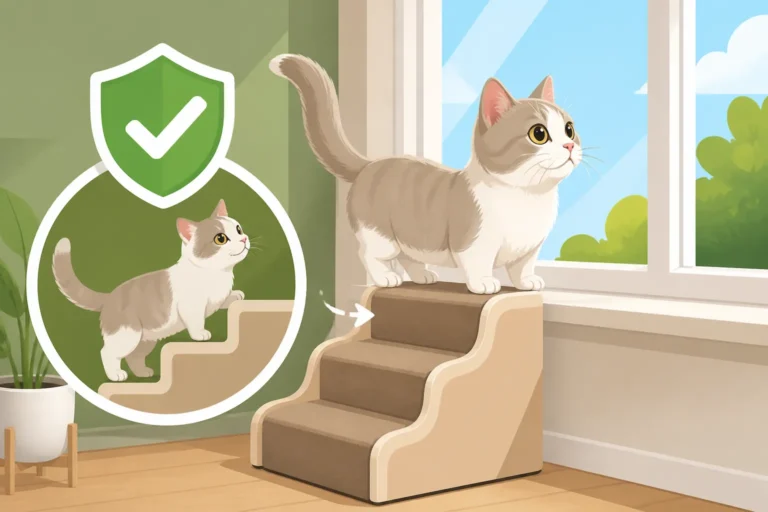
Think about it: when a regular cat jumps, their longer legs act like powerful springs, absorbing the shock of landing. A Munchkin, with its abbreviated limbs, doesn't have that same shock absorption. Every jump up onto a bed, a chair, or even a slightly elevated cat tree platform puts disproportionate stress on their spine, shoulders, and elbows. It’s like us trying to jump down from a high ledge without bending our knees – jarring and potentially damaging over time. This constant strain can contribute to issues down the line, even if they seem agile and unfazed now.
The spine, in particular, is a concern. While a Munchkin's spine is generally of normal length for a cat, its unique stance and the way its body is carried means it can bear a different kind of load. Why a Munchkin's Spine Carries a Load a Normal Cat's Does Not is a topic many owners grapple with. Over years of repeated jumping and landing, this cumulative stress can lead to premature wear and tear. You want to give your little friend every advantage to avoid discomfort as they age, and providing safe, easy access to their favorite spots is a huge part of that.
Furthermore, these repeated impacts can accelerate the onset of conditions like osteoarthritis. While all cats can get arthritis, the biomechanics of a Munchkin's body suggest they might be more susceptible to joint issues, especially in their front legs and shoulders, which bear the brunt of landings. Whether a Munchkin Gets Arthritis Earlier is a frequent concern, and preventative measures like ramps are key to mitigating this risk. They help protect those crucial weight-bearing joints from the daily micro-traumas of jumping.
The Mental Challenge of Learning New Habits
Cats, bless their independent little hearts, are creatures of habit. They've likely developed their own strategies for getting around your home – perhaps a series of smaller jumps, or even asking you to be their personal elevator service. So, when you introduce a ramp, it's not always an instant hit. They might see it as an alien object, something unstable, or just an unnecessary detour from their established routine. It's not that they're being difficult on purpose; they simply don't understand its purpose or how it benefits them.
Imagine for a moment: you've always walked a certain path, and suddenly a new path with a strange texture and incline appears. You might be hesitant to try it, especially if the old path still works (even if it's not the best path). This is often the case with Munchkins and ramps. They might sniff it, bat at it, or even try to squeeze under it, completely missing the point. The trick is to make the ramp seem like the most appealing, easiest, and most rewarding option available.
Another factor can be the ramp itself. If it's too steep, wobbly, or has a slippery surface, your Munchkin might refuse it outright. Why a Munchkin Refuses a Steep Ramp often comes down to their sense of security and their ability to navigate it comfortably. We need to remember they have a different perspective of the world from down low, and what seems easy to us might be a minor mountain for them. Building trust and making the ramp an inviting, secure pathway is paramount before any formal training can begin.
The Principles of Clicker Training for Cats
So, you're ready to get your Munchkin on board with ramp life. The good news is, cats are incredibly smart, and they respond wonderfully to positive reinforcement, especially when food is involved! Clicker training is a fantastic, humane, and surprisingly effective way to teach your feline friend new behaviors, even something as seemingly mundane as using a ramp. It turns learning into a fun game for both of you.
What Clicker Training Is and How It Works
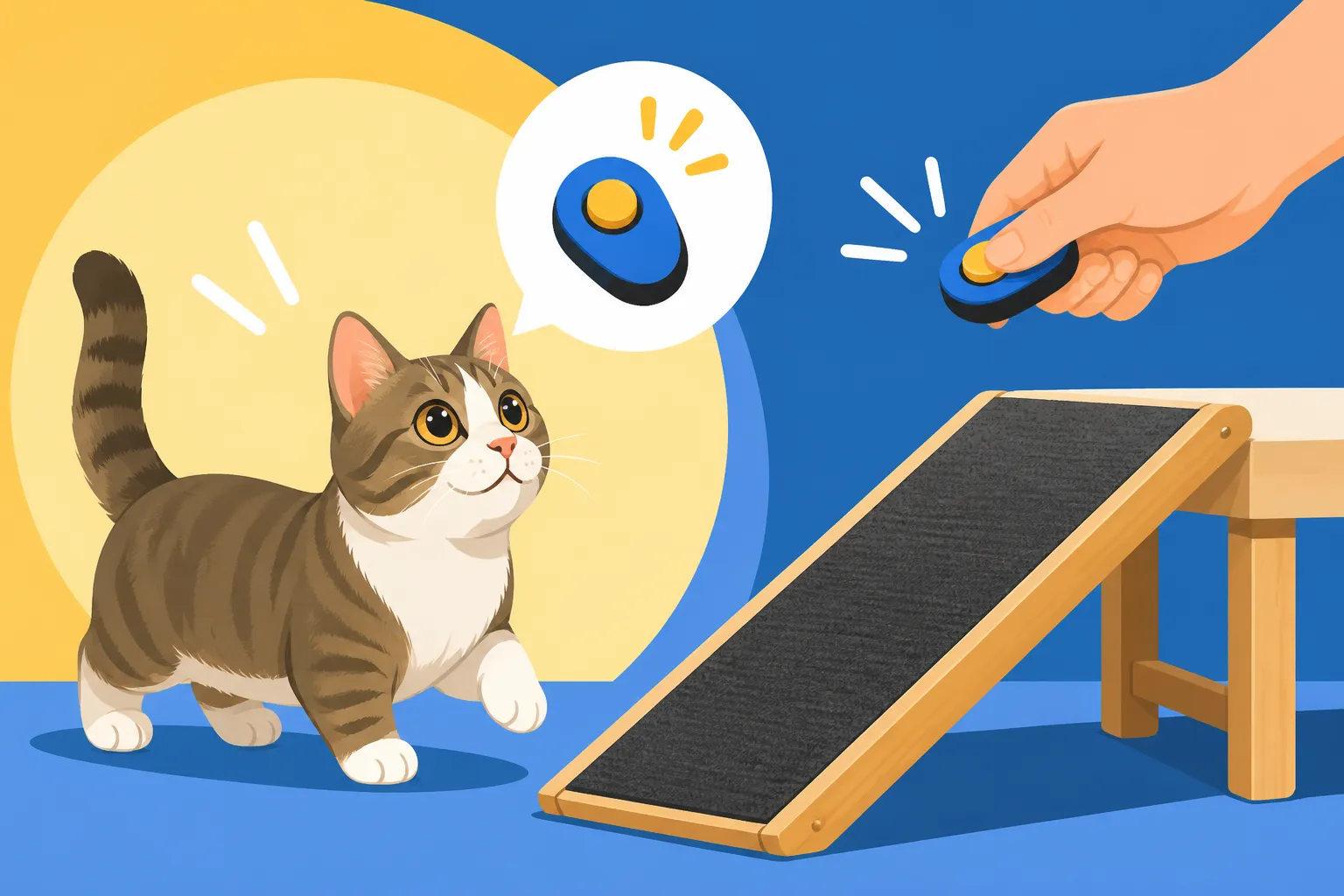
At its heart, clicker training uses a distinct sound (the "click") to mark the exact moment your cat performs the desired behavior. Think of the click as a tiny camera snapshot, capturing precisely what your cat did right. This immediate, consistent feedback is then followed by a high-value treat, which is the "reward." Over time, your cat learns that "click!" means "I did something good, and a tasty treat is coming!" This builds a clear association between their action, the sound, and the reward.
The beauty of the clicker is its precision. If you just gave a treat, your cat might not be sure what they were being rewarded for. Was it standing there? Looking at you? Walking in a circle? The click, however, happens the instant their paw touches the ramp, or they take a step up, making the message crystal clear. This method removes confusion and accelerates learning, fostering a positive relationship built on understanding and reward, rather than punishment or frustration.
It's crucial to keep sessions short and sweet – typically 5-10 minutes, a few times a day. Cats have shorter attention spans than dogs, and you want to end on a high note, leaving them wanting more. Avoid pushing them too hard, and if they seem frustrated or lose interest, it's time for a break. Remember, you're building a positive experience, not drilling them. This playful approach means that even if you're feeling a bit daunted, it quickly becomes a bonding activity you both look forward to.
Essential Tools for Getting Started
You don't need a massive array of specialized equipment to start clicker training, which is great news! The core tools are quite simple and readily available, making it accessible for any Munchkin owner ready to embark on this journey. Having these items prepared before you begin will make your training sessions smooth and effective.
First and foremost, you'll need a clicker. These are small, inexpensive devices that make a distinct, consistent clicking sound. You can find many varieties, from box clickers to button clickers, and even some with wrist straps, which are handy when you're juggling treats. Many owners find them on Amazon with just a quick search. If you're in a pinch and don't have a dedicated clicker, a pen that clicks loudly and consistently can work as a temporary substitute, but a proper clicker is always recommended for its clear sound.
Second, and arguably most important, are high-value treats. These aren't just any old kibble! These should be something your Munchkin absolutely adores and doesn't get at any other time. Think tiny pieces of cooked chicken, freeze-dried salmon, tuna flakes, or specific cat treats that are irresistible. Break them into pea-sized portions so they can be consumed quickly, keeping the session moving. You can explore a vast selection of high-value cat treats on Amazon to find what truly motivates your particular feline friend. Which Treats Fit Inside a Munchkin's Weighed Ration is a good thing to keep in mind, as you want these training treats to be part of their daily calorie intake, not extra.
Finally, you need the ramp itself! Make sure it's stable, has a non-slip surface, and is positioned where your Munchkin will naturally want to go. Whether it's leading to their favorite window perch, the bed, or a comfy sofa, choose a location that makes sense for them. How to Teach a Munchkin to Use a Ramp often starts with the right setup, so ensure the ramp is inviting and safe. Once you have these basics, you're good to go!
| Tool | Purpose | Key Characteristics | Where to Find |
|---|---|---|---|
| Clicker | Marks desired behavior with precise, consistent sound | Small, ergonomic, distinct sound (button or box clicker) | Pet stores, online retailers (e.g., Amazon) |
| High-Value Treats | Rewards cat immediately after the click | Irresistible, small, easily chewed (cooked chicken, freeze-dried salmon, specific cat treats) | Pet stores, grocery stores, online (e.g., Amazon) |
| Munchkin Ramp | Provides safe, low-impact access to elevated surfaces | Stable, non-slip surface, appropriate incline for Munchkin's short legs | Pet stores, specialty pet suppliers, DIY projects |
Step-by-Step Guide to Clicker Training Your Munchkin to Use a Ramp
Now for the exciting part – putting it all into practice! This isn't a race, it's a marathon of tiny successes. Each small step your Munchkin takes towards the ramp, onto it, and eventually up and down, is a victory worth celebrating with a click and a treat. Remember, patience is your best friend here.
Introducing the Clicker and Treats (Lure and Reward)
Before you even bring the ramp into the equation, you need to "charge" the clicker. This means teaching your Munchkin what the click sound means. Find a quiet spot away from distractions. Hold your clicker in one hand and a handful of high-value treats in the other. Click, then immediately give a treat. Do this about 10-20 times in a session. You're not asking them to do anything yet, just associating the sound with something good.
Repeat these short "charging" sessions a few times a day for a couple of days. You'll know it's working when your Munchkin perks up, looks at you, or starts searching for the treat the moment they hear the click. They're making the connection! At this stage, you can start adding in very simple behaviors, like clicking and treating when they make eye contact, or when they take a step towards you. This helps them understand that their actions can make the click happen.
Once the clicker is charged, you can introduce luring. Luring simply means using a treat to guide your cat into the desired position or action. Hold a treat near their nose and move it in a way that encourages them to move. For instance, you could hold it low to the ground and move it slowly forward to get them to walk a step. Click and treat as soon as they follow the lure successfully. This is the foundation for getting them to engage with the ramp.
Getting Your Munchkin Comfortable with the Ramp
The next step is to make the ramp a non-threatening, even appealing, part of their environment. Don't force them onto it. Start by placing the ramp in a location where your Munchkin already likes to hang out, or where they typically try to jump. The base should be stable and the incline gentle. Consider how accessible their boxes are too; How Low a Munchkin Litter Box Entry Should Be is just as important as ramp access for comfort.
Begin by simply placing treats near the ramp, not on it. Click and treat when they approach the ramp. If they sniff it, click and treat. If they even just look at it, click and treat. The goal is to build a positive association with the ramp's presence. Gradually, you can start placing treats on the very edge of the ramp, just where it meets the floor.
As they become more comfortable, place a treat a tiny bit further up the ramp. Click and treat as soon as they place even one paw on the ramp to reach the treat. You're rewarding any interaction with the ramp. Do this for a few short sessions until they are confidently stepping onto the first few inches of the ramp without hesitation. This slow, deliberate process ensures they don't develop any fear or aversion to the new structure.
Guiding Your Munchkin Up and Down the Ramp
Now, it's time to encourage upward (and eventually downward) movement. With your Munchkin standing at the base of the ramp, hold a treat slightly above their nose, just out of reach, and lure them to take a single step up the ramp. The moment that paw lifts and lands, click! then immediately reward with the treat. Repeat this for each step, building momentum gradually. It's often helpful to keep the treat close to the ramp surface so they don't try to jump past the lure.
Don't rush it. Some days, they might only take one or two steps before losing interest. That's perfectly fine! End the session on a positive note. The idea is to make each successful step a rewarding experience. Once they're confidently walking up a short section, start luring them all the way to the top. Again, click and treat at the top, making it a "jackpot" reward for reaching their destination. How to Teach a Munchkin to Use Steps is a very similar process, using the same clicker and treat mechanics for each individual step.
Descent is just as important as ascent, and sometimes cats find it trickier. Start by luring them down the first step, clicking and treating as their paw touches the lower surface. You can use the same technique, holding the treat slightly in front and below their nose to guide them down. Always ensure the ramp is secure and doesn't wobble, as any perceived instability can make them hesitant. Filming their gait and ramp use can be useful to show your vet, and give you an objective view of their progress. Whether a Munchkin Should Be Filmed Walking for the Vet is a good option if you have concerns about their mobility.
Troubleshooting Common Issues
Even with the best intentions, your Munchkin might throw you a curveball. One common issue is outright refusal to approach the ramp. If this happens, go back to basics. Place the ramp somewhere else, or try different, even higher-value treats. Sometimes, simply leaving the ramp out with treats scattered around its base (not for training, just for discovery) can pique their interest. Consider adding a small blanket or familiar scent to the ramp to make it more inviting.
Another challenge is when your Munchkin tries to jump over the ramp instead of walking up it, especially if it's a very low or short ramp. If they jump, do not click or treat. Wait for them to land, then reset. Try making the ramp slightly steeper initially (if safe to do so for their comfort, not too steep!) so jumping over isn't an option, or place objects strategically on either side to funnel them onto the ramp. The goal is to make walking the only easy option.
Sometimes, cats simply lose interest. This is where keeping sessions short is crucial. If they're distracted or bored, stop and try again later. Vary your treats occasionally, or use a favorite toy as a reward instead of food sometimes. Remember, play is very important for a Munchkin. How Much Floor Level Play a Munchkin Needs and Which Wand Toys Suit a Munchkin's Reach are important considerations for their overall enrichment. If they consistently refuse over several days, it might be worth checking the ramp's stability or incline. Which Surface a Munchkin's Ramp Should Have can also play a role; some cats prefer carpeted surfaces for better grip.
Maintaining and Generalizing Ramp Use
Once your Munchkin is a ramp-using pro in one spot, the next phase is to make it a natural, ingrained habit across your home. This means consistent reinforcement and thoughtfully expanding their access points. The ultimate goal is for them to choose the ramp automatically, without you needing to prompt them with a click or treat every time.
Consistency and Positive Reinforcement
Even after your Munchkin is confidently using the ramp, don't ditch the clicker and treats immediately. Continue to reward good behavior, perhaps not every single time they use the ramp, but frequently enough to keep the habit strong. You can start to vary the reinforcement, sometimes a click and a treat, other times just verbal praise and a gentle head scratch. This "intermittent reinforcement" actually makes the behavior more robust and resistant to extinction.
Keep the ramp clean and clear of obstructions. A dirty or cluttered ramp isn't inviting, and your Munchkin might revert to jumping. Make sure the ramp remains stable. If it ever shifts or wobbles, fix it immediately, as one bad experience can undo weeks of training. Remember, a Munchkin's sense of security is vital.
It’s also important to continue making ramp use a positive, unpressured experience. If you notice your Munchkin seems stiff or reluctant to use the ramp, it might be a sign of underlying discomfort. Why a Munchkin That Stops Using Its Ramp Is Unwell is a critical piece of information. Always consult your vet if you notice a sudden change in their mobility or behavior, as they might be experiencing pain in their joints or spine that makes ramp use uncomfortable.
Expanding Ramp Use to Other Areas
Once your Munchkin has mastered one ramp, it's time to think about other elevated surfaces they frequent. Do they jump on your bed? Consider adding a second ramp there. Do they love watching birds from a specific windowsill? Set up steps or a ramp to give them safe access. How to Set Up Ramps Around a Munchkin's House can be a game-changer for their daily life, essentially transforming your home into a Munchkin-friendly playground. You might even find yourself looking for more specialized pet steps or multi-level cat trees designed for short-legged cats, many of which are available on Amazon.
When introducing new ramps, start with a slightly easier version of the training you did for the first ramp. They'll likely pick it up much faster this time because they already understand the concept. Reward their initial curiosity and any steps they take, then build up to full use. The consistency of the positive reinforcement across different ramps will generalize the behavior, teaching them that "ramps are good" no matter where they are.
The ultimate goal is for these ramps and steps to become simply a part of their environment, like furniture. Ramps and Steps Are Munchkin Equipment, Not Luxuries, they are essential tools for a comfortable and healthy life for your short-legged friend. As your Munchkin ages, especially after the age of eight, their mobility might change. Why an Old Munchkin Stops Using Its Ramp could be due to increased stiffness, and making sure all access points are easy and safe will become even more crucial. Providing ramps throughout their lifespan helps How to Keep an Old Munchkin Moving Safely and reduces strain, making their golden years more comfortable and active.
Conclusion
Successfully clicker training your Munchkin to use ramps is truly one of the most loving and proactive things you can do for their long-term health and happiness. It’s not just about teaching a trick; it’s about safeguarding their delicate joints and spine from unnecessary wear and tear, and ensuring they can comfortably access all their favorite spots in your home. While it might take a bit of patience and a consistent supply of those irresistible treats, the bond you'll build and the peace of mind you'll gain are immeasurable. Your little short-legged companion deserves a home where they can move freely and safely, and with clicker training, you're empowering them to do just that, one happy step at a time.
Disclaimer
This article is for general informational purposes only and does not constitute professional advice. Laws, prices and regulations vary by location and change over time. Consult a qualified professional for guidance on your specific situation.