The Prairie Dog Sit Only a Munchkin Does
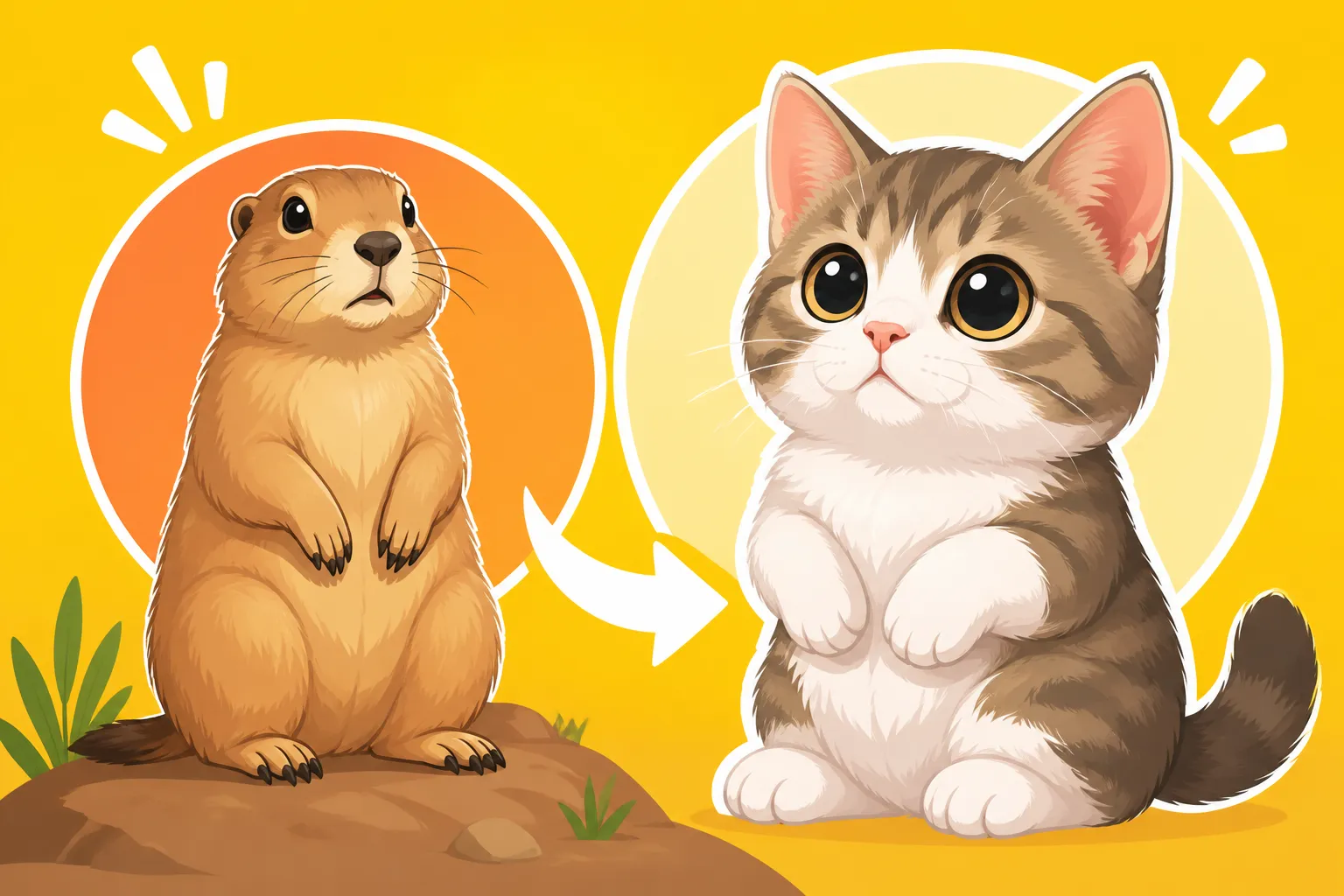
If you've spent any time around a Munchkin cat, you've probably witnessed their utterly charming, almost comical "prairie dog" sit. It's that moment when they rear up on their hindquarters, back straight, front paws tucked daintily or hanging loosely, looking for all the world like a furry little meerkat or a woodland creature surveying its domain. This unique posture often sparks a mix of delight and curiosity in owners, leading to questions about why they do it, what it means, and if it's truly a normal, healthy behavior for our short-legged companions. This comprehensive guide will delve deep into this distinctive trait, exploring its mechanics, purpose, and how it fits into the broader picture of Munchkin behavior and well-being.
What Exactly is the "Prairie Dog" Sit?
Let's get right to the heart of what makes this posture so captivating and unique to the Munchkin breed. It's more than just a fleeting glance; it's a deliberate and sustained stance that speaks volumes about their adaptation to their environment.
Describing the Posture
Imagine a tiny, furry periscope rising from the floor. That's often the first impression of a Munchkin in its "prairie dog" sit. The cat pushes up from a sitting or loafing position, extending its hind legs fully while keeping its spine remarkably straight and upright. Its front paws, those famously short ones, are typically held off the ground, either tucked neatly against its chest, hanging loosely at its sides, or even subtly paddling the air as if trying to gain just another inch of height. The tail might be used as a prop, a subtle counterbalance, or it might just flick gently as they maintain their perch.
This isn't a casual lean or a quick stretch. A true Munchkin prairie dog sit is held with purpose, sometimes for several seconds, or even a minute or two if something truly captivating has caught their attention. It gives them a completely different perspective on the world, elevating their sightline far above their usual ground-level view. It’s a moment of stillness and intense focus, often accompanied by swiveling ears and wide, curious eyes, absorbing every detail from their newfound vantage point. For an observer, it’s undeniably adorable, but for the Munchkin, it’s a vital tool for interacting with their surroundings.
Why Munchkins Do It (Evolutionary Advantage)
So, why this specific posture? It all comes back to their defining characteristic: those wonderfully short legs. Unlike a long-legged domestic shorthair who can simply stand on their hind legs and stretch upwards, or easily jump onto a counter, a Munchkin faces physical limitations in gaining vertical height. Their short stature means that many common household obstacles – a sofa, a coffee table, even a tall toy – can obscure their view or present an insurmountable barrier to observation.
The prairie dog sit is their ingenious solution, a behavioral adaptation that compensates for their physical constraints. By pushing up onto their hindquarters, they effectively add inches to their overall height, granting them a much better view of what’s happening in their world. It's almost like a built-in periscope for seeing over the sofa cushion, a human's knee, or the back of another pet. This behavior isn't unique to Munchkins in the animal kingdom; prairie dogs and meerkats, for whom the posture is named, utilize it for similar reasons – to scan for predators, observe their territory, or communicate. For a Munchkin, it's about gaining information, satisfying curiosity, and asserting their presence despite their petite dimensions. It's a testament to their cleverness and adaptability.
The Mechanics Behind the Munchkin's Unique Posture
While undeniably cute, the prairie dog sit is also a marvel of feline biomechanics. Understanding how their unique physique allows for this posture can help us appreciate their resilience and the specific challenges their bodies navigate.
The Role of Short Legs and Normal Spines
The ability to perform the prairie dog sit hinges on a crucial anatomical fact about the Munchkin: while their legs are short, their spine is, for the most part, a normal length. This is a point of frequent discussion when it comes to the breed's health, and it's important to differentiate it from other forms of dwarfism. Munchkin dwarfism, or pseudoachondroplasia, primarily affects the long bones of the legs, leading to their characteristic shortness, but the vertebral column usually remains unaffected. This means that a Munchkin’s spine has the same number of vertebrae, the same general curvature, and the same flexibility as a typical cat’s spine.
This normal spinal length and structure are critical. If their spine were also significantly shortened or deformed, as seen in some other conditions, holding such an upright posture could be painful or even impossible. It’s this combination of short limbs and a capable, flexible spine that enables them to achieve that tall, straight-backed sit. They effectively compress their body into a more vertical orientation, leveraging their strong back muscles and hindquarters to maintain stability. Owners often worry about potential spinal strain, but generally, a healthy Munchkin's spine is designed to handle this movement. Why a Munchkin's Spine Is Normal Length is a topic worth exploring further to truly understand this aspect of their anatomy.
Muscle Engagement and Balance
Holding the prairie dog sit is a surprisingly demanding feat of strength and balance. When a Munchkin adopts this posture, they are engaging a complex network of muscles, particularly those in their hindquarters, core, and along their spine. The powerful muscles of their thighs and glutes are crucial for pushing up and sustaining the vertical position, while their abdominal and back muscles work in concert to stabilize the torso and keep the spine straight. It’s a full-body effort, even if it looks effortless.
Their natural low center of gravity, a direct result of their short legs, also plays a role in their ability to balance in this upright stance. While it might seem counterintuitive, this low center of gravity can actually provide a stable base, allowing them to shift their weight and make minor adjustments to maintain their equilibrium. You might notice a slight sway or subtle tensing of muscles as they hold the pose, indicating the continuous work their body is doing. They become quite adept at it, learning to fine-tune their muscle control from a young age. This remarkable display of balance and strength is a clear indicator of their physical resilience and the clever ways they adapt to their unique body structure.
When and Why Your Munchkin "Prairie Dogs"
The prairie dog sit isn't just a random act; it's a specific behavior triggered by various environmental cues and internal motivations. Understanding these can help you better connect with your Munchkin and anticipate their needs.
Surveying Their Surroundings
One of the most common reasons you'll see your Munchkin adopt the prairie dog sit is to get a better view of their surroundings. Imagine living life at ankle height – a world of giant legs, opaque furniture, and constantly shifting obstacles. It can be hard to keep track of what's happening! When something piques their interest just beyond their normal sightline, up they go.
This often happens when they're trying to see over a sofa cushion to watch you prepare dinner, or trying to peer around a corner to see who just walked into the room. They might pop up from behind a chair to observe a new toy you've brought out, or simply to get a better vantage point on a bird fluttering outside the window. This isn't just about simple curiosity; it's about gaining information. Are you getting their food ready? Is that a new person at the door? Is the dog walking too close? Their short stature means they rely heavily on this vertical boost to make sense of their environment, transforming a world of legs and undercarriages into one where they can see faces and tabletops. They might also do this to monitor other pets, especially if they are larger cats or dogs, giving them a safer way to assess the situation without having to get too close.
Expressing Interest or Alertness
Beyond just surveying, the prairie dog sit is a clear signal of heightened interest or alertness. It's like their internal "alert system" kicking into gear. A sudden, unfamiliar sound – the doorbell, a package rustling, or even the subtle clink of their treat jar – can send them straight into this upright stance. Their ears will swivel, their whiskers might twitch, and their eyes will be laser-focused on the source of the stimulus.
This pose is often accompanied by an incredibly focused expression, signaling that they're processing information, trying to identify a sound or movement. It can also be a way for them to "beg" for attention or treats in the most charming way possible. If they know that rearing up often results in a head scratch, a kind word, or a tiny treat, they'll quickly learn to associate the posture with positive reinforcement. It's a highly effective communication tool, drawing immediate attention to their adorable, upright form. This is particularly true if they want to engage with you but cannot How Much a Munchkin Talks When It Wants Lifting or cannot jump onto your lap directly. What a Munchkin Is Looking At When It Sits Up is almost always something that has caught their full attention.
Play and Observation
The prairie dog sit also features prominently in a Munchkin's play repertoire. While they might be known for their inability to reach high shelves, they are incredibly agile and playful on the ground. When engaged in a vigorous play session, especially with wand toys or laser pointers, they'll often pop up into their upright stance to observe the "prey" from a new angle. This gives them a momentarily stable base from which to track movements, strategize their next pounce, or simply rest for a second before re-engaging.
It's a pause in the action, a chance to gather their thoughts and plan their attack. They might hold this pose as they watch a feather wand dance just out of reach, or as they track a toy mouse skittering across the floor. This observation phase is a crucial part of a cat's hunting instinct, and the prairie dog sit allows them to perform it effectively despite their low stature. It's not just about what they can't reach; it's about how they optimize their abilities within their physical reality. After all, Why a Munchkin's Low Body Helps It Chase and How a Munchkin Changes Direction at Speed, making them formidable ground-level hunters.
Is the Prairie Dog Sit Safe or a Sign of Trouble?
It’s natural for Munchkin owners to worry about their unique anatomy. The prairie dog sit, while adorable, sometimes raises questions about spinal health. It's crucial to understand when this behavior is normal and when it might signal a concern.
Normal Behavior vs. Potential Concerns
For the vast majority of Munchkin cats, the prairie dog sit is a perfectly normal and healthy behavior. It’s an adaptive posture, a clever way their bodies have learned to compensate for their short legs. They develop the necessary muscle strength and flexibility from a young age to perform this move without discomfort. It's as natural to them as jumping is to a long-legged cat. Many breeders and veterinarians who are familiar with the breed will confirm that observing a Munchkin regularly doing the prairie dog sit is a sign of a curious, engaged, and physically capable cat.
However, like any physical activity, extreme versions or changes in behavior can sometimes be a red flag. The core concern often revolves around Whether the Prairie Dog Sit Strains a Munchkin's Spine. While a healthy spine can handle it, certain underlying conditions could make it problematic. If your Munchkin suddenly becomes reluctant to do the sit, or if they appear to be in pain when performing it (e.g., struggling to get up, vocalizing, or displaying a hunched posture immediately after), it's worth noting. Any posture held for a very long, rigid period, especially if the cat seems stuck or unable to easily transition out of it, could also warrant a closer look. But generally, the quick, fluid movements in and out of the sit are indicators of a comfortable cat.
How to Monitor Your Munchkin's Comfort
As a loving Munchkin owner, your best tool is attentive observation. Keep an eye on how your cat performs the prairie dog sit. Does it look easy and natural? Do they transition smoothly into and out of the posture? Or do they seem to struggle, hesitate, or appear stiff afterward? Pay attention to the frequency and duration: a healthy Munchkin might pop up for a few seconds many times a day, while one in discomfort might avoid it or hold it for unnaturally short periods.
Beyond the sit itself, observe their overall mobility. Are they still running, playing, and exploring with their usual enthusiasm? Are they using their ramps and steps comfortably? How Many Inches a Munchkin Can Jump might be limited, but are they still trying their best? Any signs of lameness, lethargy, or changes in gait could be important. Gently palpating their spine and hindquarters (if they tolerate it) can sometimes reveal tenderness. If you notice any consistent changes in their prairie dog sit behavior or other mobility issues, it's always best to consult your veterinarian. They can perform a physical examination and, if necessary, recommend diagnostic imaging to rule out any underlying skeletal or joint issues. Early detection is always key to maintaining your Munchkin's quality of life.
Enriching Your Munchkin's Environment to Support Natural Behaviors
Knowing that your Munchkin enjoys the prairie dog sit to gain a better view of their world offers a fantastic opportunity to enhance their environment. While they can and will perform this sit, providing alternatives that offer height safely and comfortably is a huge part of being a responsible Munchkin owner.
Providing Safe Perching Alternatives
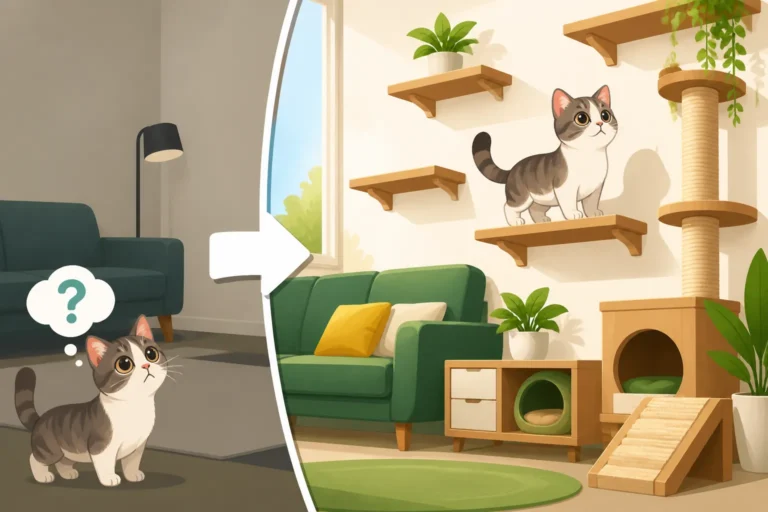
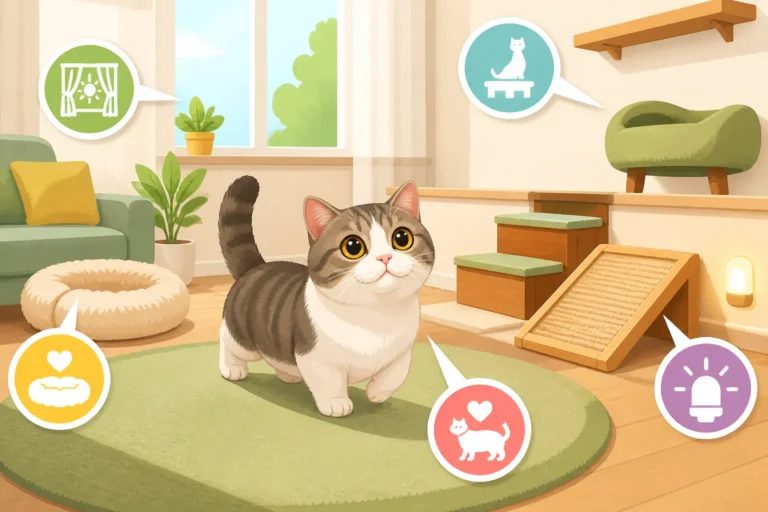
Since the prairie dog sit is often about gaining height, you can make your Munchkin's life even better by providing safe, accessible elevated spots. Think about what a standard cat enjoys – a high shelf, a window perch, the top of a tall cat tree. For a Munchkin, these are largely out of reach. That's where you come in. Instead of forcing them to constantly strain, create a tiered environment.
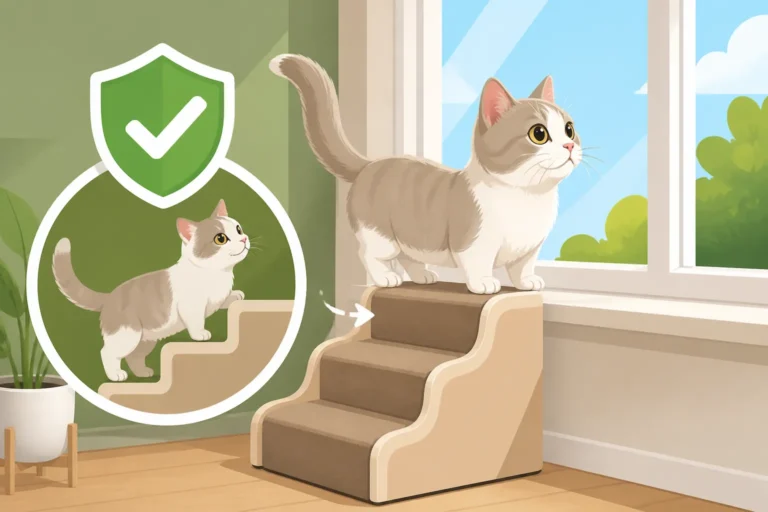
Low-rise cat trees or custom-built steps and ramps are invaluable. Look for cat trees with platforms that are close together, allowing them to use multiple small jumps or climbs rather than one large one. Which Cat Tree Layout Suits a Munchkin is very specific and different from a normal cat tree. You can also craft or purchase ramps designed for small pets, like those commonly found on Amazon, that lead up to windowsills, sofas, or even the foot of your bed. The goal is to give them access to the "human world" without demanding strenuous or potentially risky jumps. This satisfies their natural desire to survey their domain from a higher vantage point, offering the same benefit as the prairie dog sit but with less physical effort. Think about creating a "staircase" of furniture or sturdy boxes covered in carpet – anything that offers a safe, gradual ascent. How to Get a Munchkin Up to a Window Safely is a common challenge, and ramps or low steps are the best answer.
Encouraging Movement and Play
While providing elevated spots is great for observation, stimulating their natural instincts through floor-level play is equally important. Munchkins are incredibly playful and derive immense joy from chasing and batting toys. Since they spend most of their time close to the ground, focusing on toys that engage them at their natural height makes perfect sense.
Wand toys with feathers or ribbons are fantastic, as you can control the movement to keep the "prey" at floor level or just slightly above, encouraging playful pounces and short hops without demanding high jumps. Small, lightweight balls, crinkle toys, or toy mice that can be easily pushed and chased across the floor are also big hits. Puzzle feeders placed on the floor can stimulate their minds and provide mental enrichment. Remember, Why a Munchkin Prefers Floor Level Play isn't a limitation; it's just their natural preference given their body type. You can also incorporate tunnels, cardboard boxes, and paper bags to create an exciting, explorable landscape right on the floor. These items provide hiding spots, ambush opportunities, and new spaces to discover, all within their comfortable reach. Regularly rotating toys and creating new play scenarios keeps them engaged and active, which is vital for maintaining their muscle tone and overall health.
Comparing the Munchkin's Sit to Other Breeds and Behaviors
The prairie dog sit is so distinctive that it truly sets Munchkins apart. Understanding why other cats don't typically do it, and how to differentiate it from other feline postures, solidifies its unique place in the Munchkin behavioral repertoire.
Why Other Cats Don't Do It (or Rarely Do)
When you look at a typical domestic shorthair or a long-legged breed like a Siamese, you'll rarely, if ever, see them adopt the full, sustained prairie dog sit. Why? Because they simply don't need to. Their longer legs provide them with natural height and a much greater ability to jump. If a normal-legged cat wants to see over a sofa, it will likely stretch up on its hind legs for a quick peek, or more commonly, it will simply jump onto the sofa. If it wants to survey the room, it will seek out a high perch like a bookshelf or the top of a cat tree.
For these cats, gaining vertical perspective is effortless and often involves a single, powerful leap. The energy expenditure and muscle engagement required for the sustained upright posture of the prairie dog sit are simply unnecessary for their body type. While a long-legged cat might momentarily stand on its hind legs out of intense curiosity or when begging for a treat, it's a fleeting action, not the prolonged, stable stance characteristic of the Munchkin. It’s truly a testament to the Munchkin's specific adaptation that this behavior has become so ingrained and common within the breed. They are masters of leveraging their unique anatomy to interact with their world.
Distinguishing From Other Health-Related Postures
It's important for owners to differentiate the healthy, adaptive prairie dog sit from other postures that might indicate pain or distress in any cat, including a Munchkin. While the prairie dog sit is an alert, curious, and often enthusiastic stance, a cat in pain will exhibit very different body language.
A cat hunching due to abdominal discomfort, for example, will typically have its back arched, its belly tucked up, and might be pressing its body low to the ground. This is a protective posture, not one of alertness. Similarly, a cat experiencing spinal pain or neurological issues might adopt an awkward, stiff, or imbalanced posture, struggling to move fluidly. Their movements might be uncoordinated, or they might vocalize in pain. In contrast, the prairie dog sit is characterized by an upright, engaged, and usually relaxed expression, even if the cat is intently focused. The transitions into and out of the sit are typically smooth and deliberate, not wobbly or hesitant. If your Munchkin is adopting unusual postures, seems unwilling to move, or shows any signs of discomfort that are not the fluid, curious prairie dog sit, it's a signal to consult your vet immediately. The key difference lies in the cat's overall demeanor, its ease of movement, and the context in which the posture is adopted.
The Endurance and Frequency of the Prairie Dog Sit
One of the fascinating aspects of the Munchkin's prairie dog sit is how long they can maintain it and how often they choose to adopt this unique posture throughout their day. It speaks volumes about their physical capabilities and their unwavering curiosity.
How Long a Munchkin Holds the Pose
When a Munchkin pops up into its prairie dog sit, it's not always a blink-and-you'll-miss-it event. Many owners report their Munchkins holding this upright posture for significant periods, sometimes upwards of a minute, occasionally even longer if they are truly captivated. This sustained hold demonstrates impressive core strength, balance, and focus. It's not a casual stretch; it's a deliberate act of observation.
The duration often depends on the stimulus. If it's a quick sound or movement, they might only hold it for a few seconds before dropping back down to investigate further or resuming their previous activity. However, if they spot a bird outside the window, hear the distinct sound of a food bag opening, or are intently watching a new person in the house, they can hold that pose with remarkable stillness. This endurance suggests that for a healthy Munchkin, the posture is not inherently uncomfortable or taxing in short bursts. They have developed the musculature to support it, making it an efficient and effective way to interact with their environment. How Long a Munchkin Holds That Sit is a clear indicator of their physical prowess and determination.
Frequency Throughout the Day
The frequency of the prairie dog sit can vary greatly from one Munchkin to another, much like how often a long-legged cat might jump onto a counter. Some Munchkins are more prone to it, perhaps due to a naturally higher level of curiosity or a household environment that often presents interesting sights just out of their ground-level view. You might see your Munchkin pop up several times an hour, especially during periods of high activity in the household, such as meal preparation or when people are moving around a lot.
Other Munchkins, perhaps those in quieter homes or with fewer visual obstructions, might only do it a few times a day. Factors like age can also play a role; younger, more energetic kittens and adolescents might perform it more often as they explore their new world, while older Munchkins, particularly if they start to experience joint stiffness, might do it less frequently or for shorter durations. It's a spontaneous behavior driven by circumstance and individual personality. As long as your Munchkin appears comfortable and willing to engage in other activities, the frequency itself is generally not a cause for concern. It's simply a visible expression of their active engagement with their surroundings.
Safety and Interaction: Living with a Prairie Dog Sitter
Living with a Munchkin that frequently does the prairie dog sit also means being mindful of their interactions with their environment, other pets, and people, ensuring their safety and comfort.
Interactions with Other Pets and Children
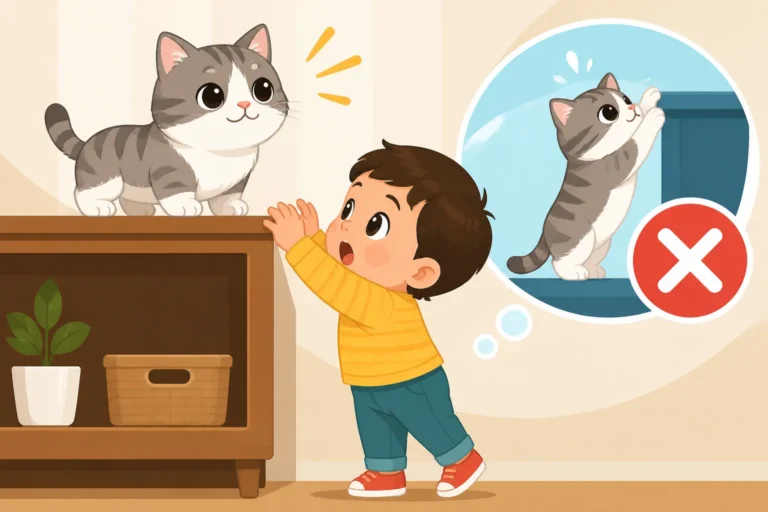
A Munchkin's prairie dog sit, while adorable, can sometimes place them in a vulnerable position, especially when interacting with larger pets or young children. When they are intently focused in their upright stance, they might be less aware of what's happening directly behind or to their sides. A boisterous dog or an unobservant toddler could accidentally bump into them, potentially causing them to lose balance and fall. Unlike long-legged cats who can quickly scale a bookshelf to escape, a Munchkin's primary escape route is often a quick dash across the floor.
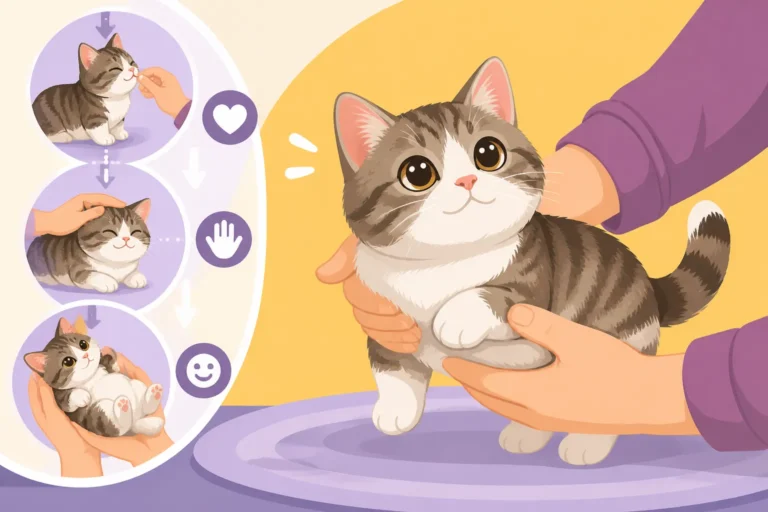
It’s crucial to teach children to be gentle and respectful around your Munchkin, especially when they are "sitting up." Supervise interactions closely. For multi-pet households, ensure your Munchkin has safe, elevated spaces (accessible via ramps or steps, as discussed) where they can retreat if they feel overwhelmed or need a break from a larger, more energetic companion. Introducing a Long Legged Cat to a Munchkin or a dog requires careful management to ensure the Munchkin has personal space and doesn't feel perpetually vulnerable. The prairie dog sit is a beautiful expression of their curiosity, but it's important that their environment supports this behavior safely.
Minimizing Strain and Maximizing Comfort
While the prairie dog sit is a normal behavior for Munchkins, providing an environment that minimizes any potential strain and maximizes their overall comfort is key to their long-term well-being. Think about proactively reducing the need for them to repeatedly stretch or jump for things.
This includes ensuring all essential resources – food bowls, water dishes, and litter boxes – are easily accessible at floor level. Consider using slightly raised food bowls (like those available from brands on Amazon) that allow them to eat without craning their short necks, even when standing on all fours. While the prairie dog sit itself might not strain their spine, frequent small jumps or awkward stretches throughout the day could contribute to wear and tear over time. By strategically placing ramps to sofas and beds, providing low window perches, and offering plenty of engaging floor-level toys, you're not just making their life easier; you're actively supporting their joint health and reducing the cumulative impact of their unique physique. Encourage gentle play and provide soft landing spots near any furniture they might attempt to jump onto. A well-adapted home allows your Munchkin to satisfy their curiosity and engage with their world in the most comfortable way possible.
Disclaimer
This article is for general informational purposes only and does not constitute professional advice. Laws, prices and regulations vary by location and change over time. Consult a qualified professional for guidance on your specific situation.