How a Munchkin Gets Onto a Lap Without Jumping
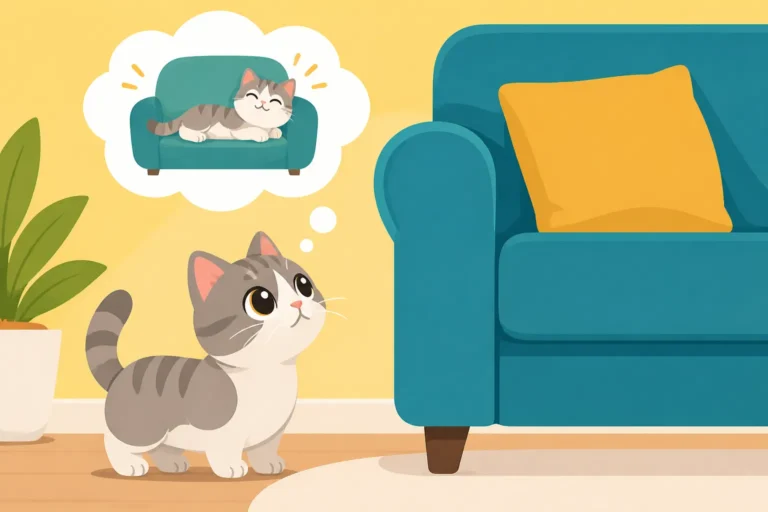
One of the most common questions I hear from new Munchkin parents, or folks just curious about these adorable short-legged cats, is about their perceived limitations. People often worry, "Can my Munchkin even get onto the sofa with me? Will they feel left out?" It's a valid concern, born from seeing their unique physique. This guide is here to shed light on exactly how a Munchkin navigates its world and, crucially, how it does manage to join you on your lap or favorite armchair, often without a single big, stressful jump.
Understanding the Munchkin's Vertical Challenge
It’s true that Munchkin cats have a distinctive silhouette, characterized by their notably short legs. This feature, while endearing, fundamentally changes how they interact with vertical spaces compared to their long-legged feline cousins. It’s not just a matter of looking different; it impacts their entire approach to movement and accessibility within your home.
The Reality of Short Legs and Jumping
Let’s be honest: watching a Munchkin attempt a high jump can sometimes be a bit heartbreaking, or at least a stark reminder of their physical limitations. While they possess the same athletic spirit as any cat, the mechanics of their short legs simply don't allow for the powerful spring needed to clear significant heights in one go. A standard cat can coil its long hind legs, generating immense force to launch itself onto a bookshelf or the kitchen counter. A Munchkin, however, has much less leverage. Their legs are proportionally shorter, making that explosive push-off much less effective. They might try, oh yes, they will try! You'll see them gather, wiggle their rear, and then… a valiant leap that often falls short, perhaps only reaching the edge of the sofa cushion before they slide back down with a frustrated little chirp. It's not a lack of desire or agility; it's a simple biomechanical reality. Owners can feel a pang of guilt or worry when they see this, wondering if their cat is missing out on prime snuggle spots or favorite sunbathing perches. It's important to remember that this isn't a sign of weakness, but a characteristic they adapt to with remarkable ingenuity.
More Than Just Short Legs: The Spine's Role
While the most obvious difference is in their limbs, it's also worth considering the larger skeletal picture. A Munchkin's spine, unlike its legs, is generally of normal length for a cat of its size. This means that while their legs are short, their body is not necessarily compact in the same way. When a long-legged cat jumps and lands, the impact is distributed efficiently through its agile, flexible spine and powerful limbs. For a Munchkin, repeated high-impact landings, especially from a significant height, could potentially put undue stress on their back. It's not that their spine is inherently fragile or deformed – that's a common misconception. Instead, it's about the physics of a body with a standard trunk length being supported by shorter levers (their legs). Imagine trying to jump off a tall box with very short stilts; the landing would feel much more jarring than if you had long, springy ones. This is why minimizing unnecessary vertical strain is a proactive step in responsible Munchkin care. Thinking about Why a Munchkin's Spine Carries a Load a Normal Cat's Does Not gives a good perspective on how their body is designed and why gentle navigation is key.
Ingenious Alternatives: The Munchkin's Climbing Strategies
Just because they can't make Olympic-level jumps doesn't mean Munchkins are resigned to a life on the floor. Far from it! These clever felines develop remarkable strategies to get where they want to be, often employing a combination of intelligence, persistence, and a little help from their human companions.
The "Staircase" Approach to Furniture
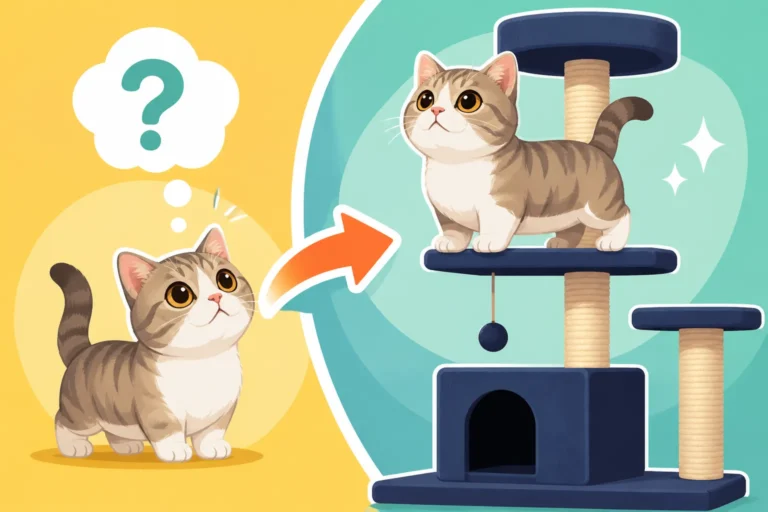
One of the most endearing and effective ways a Munchkin conquers vertical challenges is by treating your home like a giant, interactive staircase. They don't see a single, daunting leap to the sofa; they see a series of smaller, manageable steps. Your ottoman becomes their first rung, a stack of books their second, and a strategically placed cushion their third. They're masters of sequential climbing. For example, if your sofa is too high for a direct jump, your Munchkin might first hop onto a low coffee table nearby. From the coffee table, they'll survey the scene, then perhaps launch onto a sturdy footstool you have placed next to the sofa. Finally, a small, horizontal jump from the footstool onto the sofa cushion is well within their capabilities. It’s less about raw power and more about smart planning, which is fascinating to watch.
They’re constantly assessing the environment, looking for these intermediate platforms. I've seen a Munchkin use a laundry basket, a pile of magazines, and even a robust houseplant pot as stepping stones to their desired destination. This instinct is what makes it so crucial for owners to understand How a Munchkin Uses Furniture as a Staircase – because you can actively help them by providing these "steps." Think of it as creating an obstacle course designed specifically for their unique physics. Even a small, sturdy step stool or a low-slung chair placed strategically can open up a whole new world of accessible surfaces for your little companion.
Asking for Help: The Art of the Request
Munchkins are incredibly communicative when they want something, especially when it involves reaching a high place they can't manage on their own. They quickly learn that their human companions are often the best solution to their vertical dilemmas. This isn't a sign of being helpless, but rather a testament to their intelligence and the strong bonds they form with their owners.
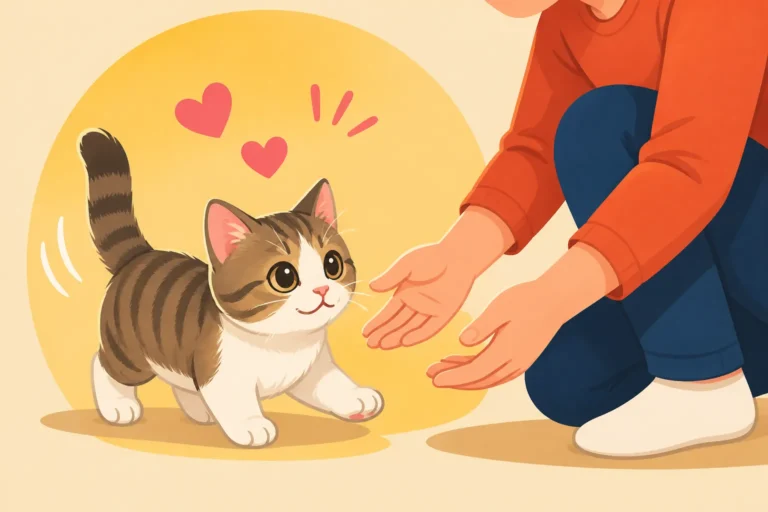
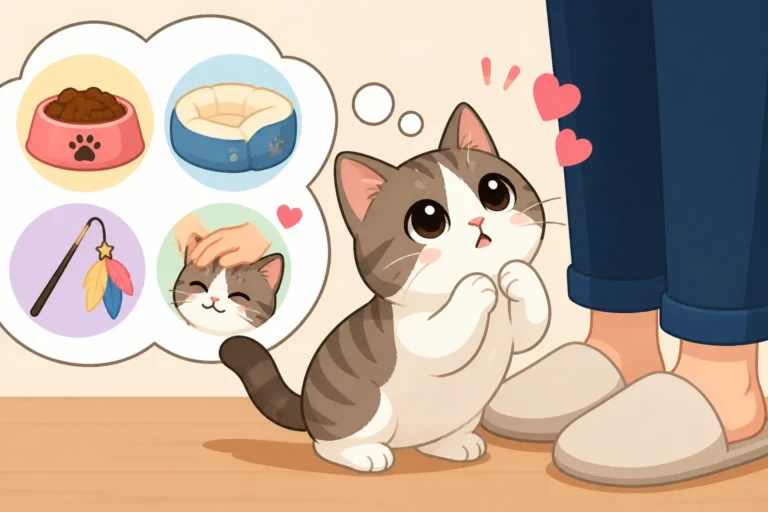
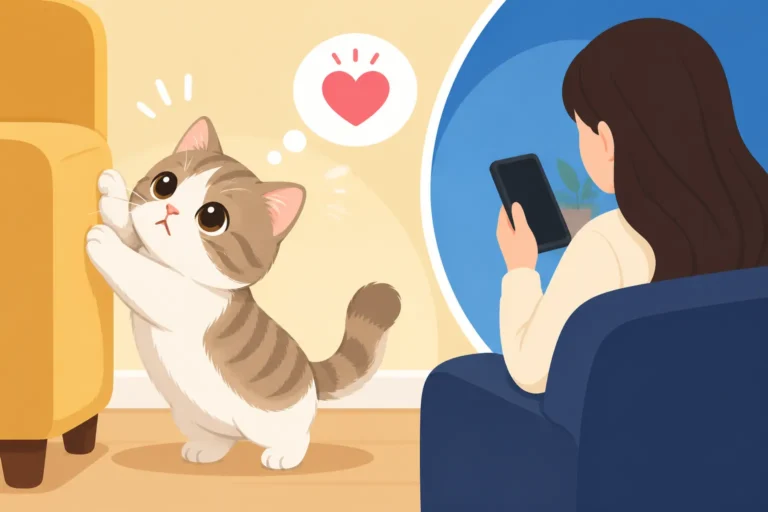
Their methods of asking vary, but they're usually quite clear. You might notice your Munchkin sitting patiently at your feet, gazing up at you with large, pleading eyes. Sometimes, they'll emit a specific, soft "mew" or a questioning "chirp" directed squarely at you. This isn't just random meowing; it's a distinct request, a subtle nudge for assistance. Other times, they might rub against your legs, weave between your ankles, and then pivot to look up at the sofa, making eye contact as if to say, "Hey, I need a lift!" I've had Munchkins who would lightly tap my leg with a paw, then look from my hand to the high surface, clearly indicating their wish. It's a sweet, almost polite way of communicating their needs. You'll soon learn your own Munchkin’s particular lexicon of requests. If you're wondering how verbose they can be, you might be interested in How Much a Munchkin Talks When It Wants Lifting – they definitely have their ways! Understanding How a Munchkin Asks When It Cannot Reach You is key to fostering a strong, responsive relationship. Responding to these cues quickly and gently helps build their trust and confidence, reinforcing that you are their reliable "personal elevator."
Creating a "No Jump" Zone: Adapting Your Home
Making your home Munchkin-friendly is less about a complete overhaul and more about thoughtful additions and adjustments. The goal is to create an environment where your cat can navigate freely and safely, reaching all their desired spots without the strain of high jumping. This isn't just about convenience for them; it's about their long-term health and happiness.
Ramps and Steps: Essential Mobility Aids
If you own a Munchkin, ramps and steps are not luxuries; they are truly essential equipment. These simple additions can transform your home, giving your cat independence and protecting their joints. Think of them as custom infrastructure designed for short-legged residents.
- Ramps: Ramps are fantastic for providing a continuous, gentle incline to higher surfaces. They are particularly good for older Munchkins or those with any degree of joint stiffness, as they eliminate even the smallest "step-up." When choosing a ramp, consider the angle; a steeper ramp will be harder to use and potentially more jarring on descent. A gradual slope is always better. Look for ramps with a non-slip surface, like carpet or textured fabric, to provide good traction. You can find excellent options on Amazon or at specialized pet supply stores. Place them strategically at the side of your bed, leading up to a favorite armchair, or even to a low windowsill.
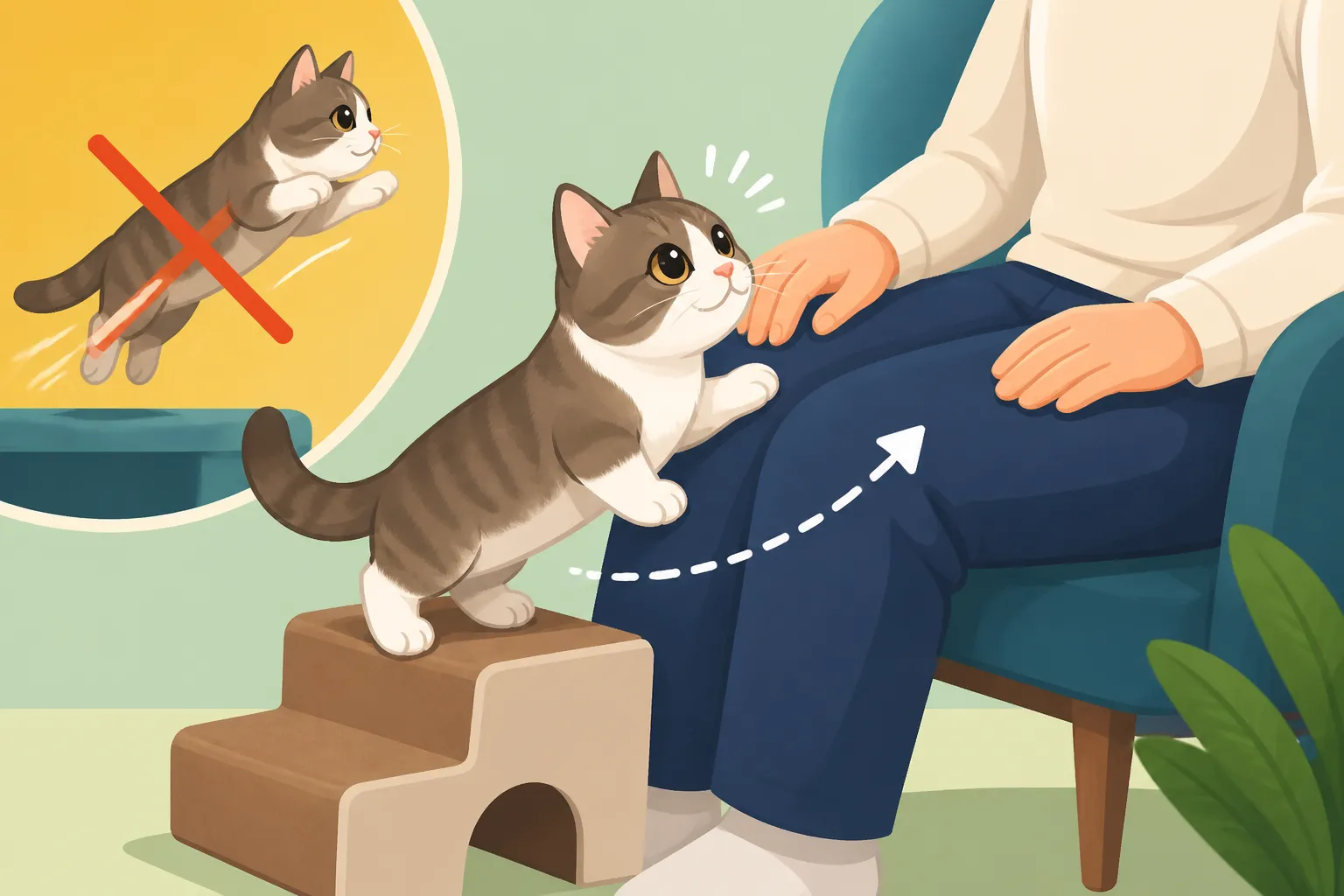
- Steps: Pet steps, or "stairs," are another excellent option, especially for slightly higher furniture. They typically come with two to four steps, each offering a small, manageable rise. Again, non-slip surfaces are crucial, and sturdy construction is paramount to prevent wobbling, which can deter a cautious cat. Steps are often a bit more compact than ramps, making them suitable for smaller spaces.
It's really important to remember that Ramps and Steps Are Munchkin Equipment, Not Luxuries – they're a vital part of proactive care. You'll likely need several throughout your home to cover key access points. Don't be surprised if your Munchkin needs a little encouragement at first. Introducing them with treats, toys, and praise can help. For more guidance on this, consider reading How to Teach a Munchkin to Use Steps.
Here’s a quick comparison of ramps versus steps:
| Feature | Pet Ramps | Pet Steps |
|---|---|---|
| Angle/Gradient | Continuous, gentle incline | Series of distinct, smaller risers |
| Ease of Use | Generally easiest, especially for stiff cats | Requires more individual "steps" and slight jumps |
| Space Needed | Tends to be longer, requires more floor space | More compact, good for tight spots |
| Cost Range | Varies widely by material and length | Generally similar to ramps, depending on size/material |
| Traction | Needs consistent non-slip surface | Each step needs non-slip tread |
| Ideal For | Beds, large sofas, older or less agile cats | Armchairs, small sofas, window perches |
Strategic Furniture Placement
Beyond buying dedicated mobility aids, a smart layout of your existing furniture can make a world of difference for your Munchkin. Think like your cat: how would you traverse the room if every jump was a major undertaking?
Start by identifying your Munchkin’s favorite spots. Do they love to nap on the armchair near the window? Or do they always try to get onto your bed in the morning? Once you know their preferred destinations, look for ways to create a 'path' using your furniture.
For example, if your sofa is a prime napping spot, try placing a sturdy end table or a large, firm ottoman right next to it. This provides an intermediate hop-off point, breaking down one large jump into two smaller, easier ones. Similarly, if your Munchkin yearns for a window view, a low bookshelf or a robust cat tree with closely spaced platforms can serve as a multi-stage ascent. This proactive approach to arranging your home is incredibly helpful and much more effective than simply hoping they'll learn to jump higher. Learning How to Rearrange a Room So a Munchkin Can Climb is a game-changer for their independence. Even moving a chair a few inches closer to a dresser can create a new accessible route for them.
Ensuring Safe Descents
While we often focus on how Munchkins get up, it's equally, if not more, important to consider how they get down. The impact of jumping down from a height, even a moderate one, can be jarring on their short legs and potentially their spine. Many cats, Munchkins included, find descending more challenging than ascending because it requires absorbing impact. That's why Why Coming Down Is Harder Than Going Up for a Munchkin is a concept worth understanding.
To minimize this impact, ensure there's a soft, forgiving landing spot below any areas your Munchkin might jump from. A thick rug, a cushioned pet bed, or even a strategically placed pile of soft blankets can make a huge difference. If you have ramps or steps, encourage your Munchkin to use them for both ascent and descent. You can entice them with treats or toys at the bottom of the ramp to reinforce the downward movement. The goal is to make every movement as gentle and low-impact as possible, reducing the cumulative stress on their delicate skeletal structure over their lifespan.
The Benefits of a Jump-Free Lifestyle for Your Munchkin
Adopting a "no jump" philosophy for your Munchkin isn't about limiting them; it's about empowering them to live a fuller, more comfortable, and healthier life. The adaptations you make to your home and your understanding of their unique needs will pay dividends in their well-being and your shared bond.
Protecting Their Precious Joints and Spine
This is arguably the most significant benefit of creating a jump-free environment. A Munchkin’s short legs mean that their joints, particularly in their front limbs, experience different stresses than those of a long-legged cat. Each time they jump and land, especially from a height, there’s an impact. Over time, repeated high-impact activities can contribute to premature wear and tear on cartilage and ligaments. For this reason, many owners worry Whether a Munchkin Gets Arthritis Earlier. While not a given for every Munchkin, minimizing unnecessary strain is always a good preventative measure.
Think about Why a Munchkin's Shoulders Wear First – these front joints bear a significant portion of their weight, especially during landings. Similarly, What Repeated Landing Does to a Munchkin's Elbows highlights how these crucial hinge joints are impacted. By providing ramps, steps, and soft landing zones, you are directly reducing the physical stress on these areas. This preventative care helps maintain their mobility, comfort, and quality of life well into their senior years. It means they can continue to explore, play, and cuddle without the underlying risk of pain or discomfort from overworked joints, ensuring they remain spry and happy for as long as possible.
Enhanced Bond and Communication
When you adapt your home to your Munchkin's physical needs, you're doing more than just moving furniture; you're building a deeper level of trust and communication. They learn that you understand their limitations and that you're there to help them navigate their world. This fosters a sense of security and strengthens your bond significantly.
Think about it: when your Munchkin asks for help to get onto your lap, and you respond by gently lifting them, you're reinforcing that you are a safe, responsive caretaker. They don't have to struggle or feel frustrated; they know their requests will be met. This can lead to a more relaxed and affectionate cat, one that's confident in its ability to access its favorite people and places. For example, by teaching them cues or recognizing their gentle requests, you're engaging in a unique form of dialogue. Learning Teaching a Munchkin to Come When It Is Time to Be Lifted is a perfect example of this. It's not just about a command; it's about mutual understanding and cooperation. It communicates to your Munchkin that you are attuned to their needs, validating their existence and unique way of moving through the world. This mutual respect makes for an incredibly rewarding companionship, where their comfort and your attentiveness create a harmonious home life.
Disclaimer
This article is for general informational purposes only and does not constitute professional advice. Laws, prices and regulations vary by location and change over time. Consult a qualified professional for guidance on your specific situation.