Why a Munchkin Cannot Escape a Confrontation
One of the most heart-wrenching realities for Munchkin cat owners is understanding that these adorable, short-legged felines, despite their playful spirit and loving nature, are physically limited when it comes to escaping stressful or confrontational situations. Unlike their long-legged counterparts who can bound to safety onto a bookshelf, a high perch, or over a fence, a Munchkin's unique anatomy means they simply cannot vertically retreat from a perceived threat, leaving them vulnerable. This guide will delve into these specific limitations, explore common scenarios where they face these challenges, and provide practical advice to ensure your Munchkin lives a safe and calm life.
The Unique Physical Limitations of a Munchkin Cat
It’s easy to look at a Munchkin and see just another cat, albeit a very cute one with unusually short legs. But those short legs fundamentally change how they interact with their environment, particularly when they feel threatened. Their entire predatory instinct, which usually relies on agility and vertical escape, is fundamentally altered, often leaving them without a quick way out of trouble.
The Inability to Jump or Climb to Safety
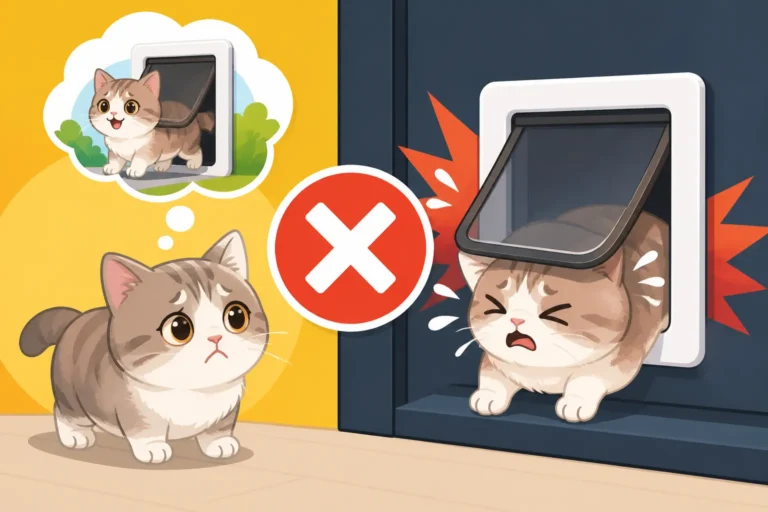
Imagine a standard cat: startled, it arches its back, hisses, and in a flash, springs onto the nearest high surface – the kitchen counter, the top of a cat tree, or even the top of a door frame. This vertical escape is a cat's primary defense mechanism against perceived danger, whether it’s a boisterous child, an overly enthusiastic dog, or a sudden loud noise. For a Munchkin, this option is largely off the table.
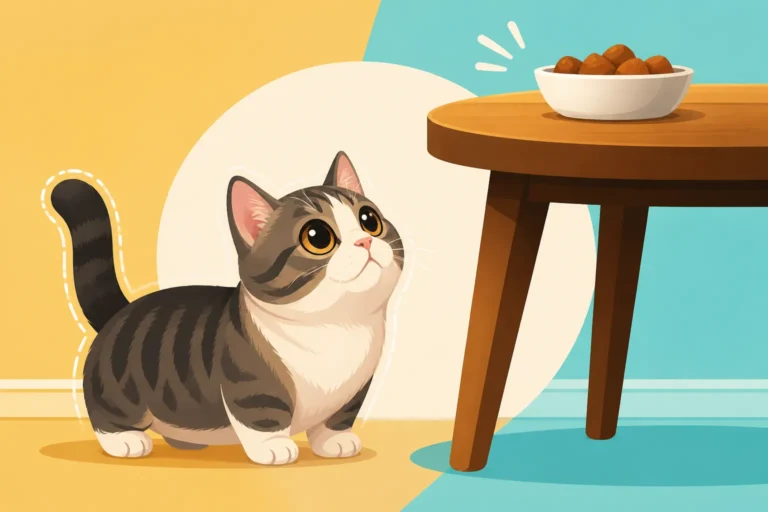
Their shortened limbs, a result of their unique genetic mutation, mean that impressive, high jumps are simply not possible. While they can and do jump, it’s typically to lower surfaces like a sofa or a low chair, and even then, it requires more effort and calculation. A normal cat might clear a five-foot fence in a single bound, but a Munchkin would struggle immensely with even a foot-high obstacle. This isn't just about reaching a favorite sleeping spot; it's about survival. If something frightens them on the ground, they can't simply vanish upwards into safety. This limitation is why it's crucial to understand Why a Munchkin Cannot Make the Kitchen Counter and adapt your home accordingly.
Limited Speed and Agility in Tight Spaces
While Munchkins are surprisingly fast on the flat, often described as having a ferret-like gait, this speed comes with its own caveats. They can dart across a room with impressive velocity, and their low center of gravity even helps them How a Munchkin Changes Direction at Speed with surprising dexterity. However, this ground-level agility doesn't always translate into effective escape in all scenarios.
Think about navigating a cluttered room, or trying to weave through someone's legs. A long-legged cat might be able to easily step over obstacles or quickly change direction to bypass a barrier. A Munchkin, with its belly often just inches from the floor, has to contend with every small object as a potential impediment. They might be quick, but if their escape route is blocked by furniture legs, toys, or even a discarded cushion, that speed can be severely hampered. They are built for flat-out sprints, not for complex obstacle courses under pressure. If they get cornered, even their ground-level speed might not be enough to get them out of a tight spot.
Predatory vs. Prey Instincts in a Challenging Body
Cats are both predators and prey. They are hunters by nature, but they also possess strong instincts for self-preservation, which often means escaping danger. For a typical cat, the ability to climb, hide in high places, or dart away quickly allows them to fulfill both roles. They can stalk prey from a low vantage point and then leap to safety when a threat appears.
A Munchkin, however, has a body that often puts these instincts at odds. They still have the drive to stalk, chase, and play, as evidenced by How Much Floor Level Play a Munchkin Needs. They are still very much cats! But their physical form fundamentally limits their ability to enact the "prey" part of their instinctual repertoire. When a perceived threat emerges, their natural inclination to flee is often met with the stark reality of their physical limitations. They can't climb, and if their ground escape route is compromised, they can quickly feel trapped. This can lead to heightened anxiety, stress, or even aggressive defensive behaviors if they feel utterly cornered. It's a fundamental conflict between their innate programming and their unique physical makeup.
Common Confrontation Scenarios for Munchkins
Because of their unique physical build, Munchkins are particularly vulnerable in situations that a standard cat might easily navigate or escape. Owners need to be acutely aware of these scenarios to proactively protect their furry friends.
Interactions with Other Pets
This is perhaps one of the most common and concerning confrontation scenarios for a Munchkin. Many households have multiple pets, and while the intention is always for them to coexist peacefully, dynamics can shift, and accidents can happen.
Even a well-meaning dog, wagging its tail, can become an accidental threat. A dog might playfully chase, wanting to engage, but the Munchkin has nowhere to climb to escape. Why a Munchkin Cannot Get Away From a Dog highlights this crucial point. The size disparity alone means that even a gentle nudge from a large dog can be overwhelming, and a true confrontation could be catastrophic. The Munchkin cannot retreat up a cat tree, onto a table, or into another room by simply scaling a baby gate. Their only option is to run on the ground, which might not be enough if the dog is persistent or if they are in a confined space.
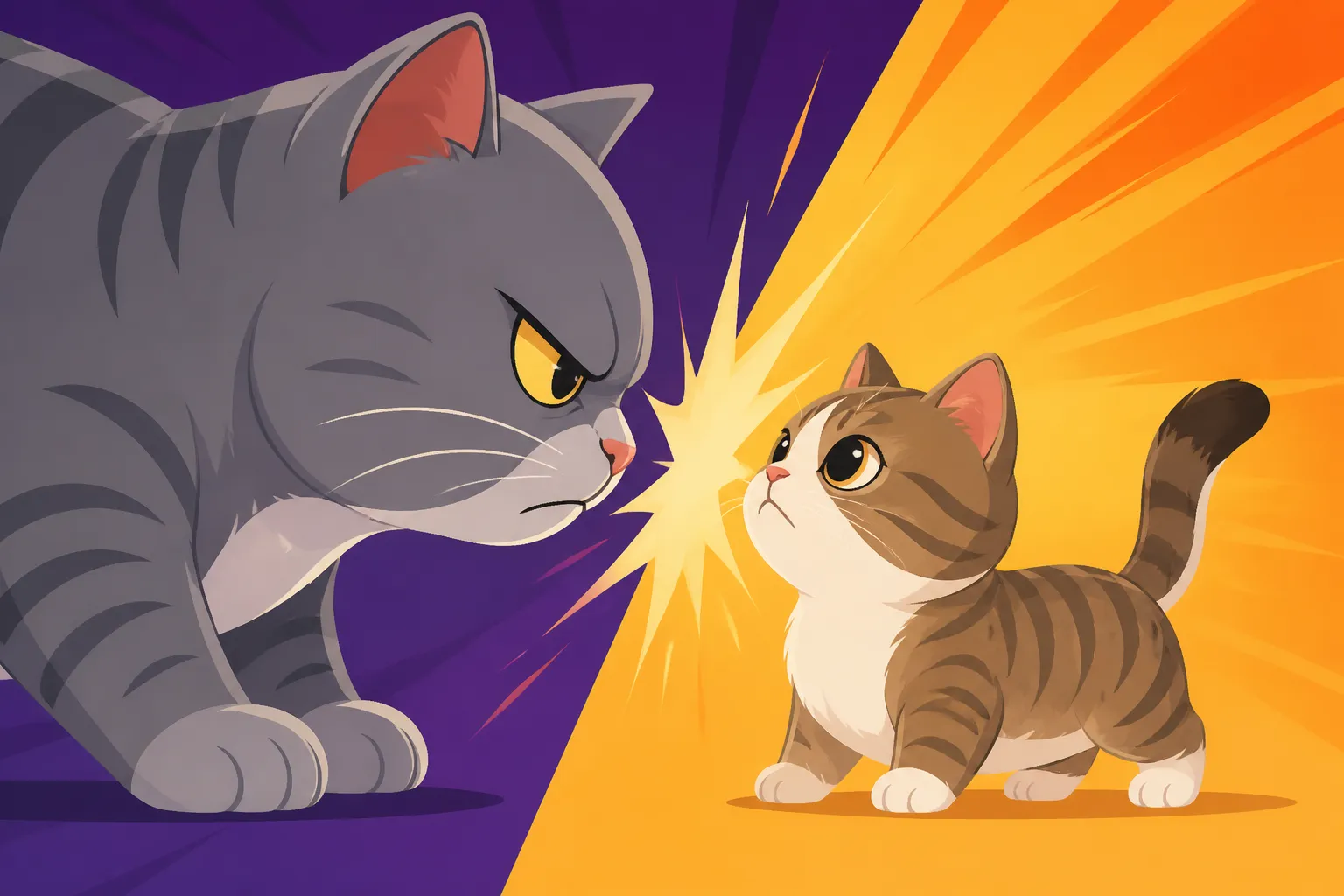
Similarly, interactions with longer-legged cats can pose a challenge. While many multi-cat households thrive, sometimes a more dominant or boisterous cat might inadvertently bully a Munchkin. A long-legged cat can quickly establish dominance by reaching higher spots, blocking access, or even playfully swiping from an elevated position. The Munchkin, unable to reciprocate or escape to an equally high, safe perch, can feel intimidated and stressed. This is a real concern, as detailed in Whether a Munchkin Is Bullied by a Normal Legged Cat, and it requires careful observation and intervention from the owner to ensure harmonious living.
Children and Unaware Guests
While Munchkins are generally known for their affectionate and playful temperaments, they are still living creatures with boundaries, and those boundaries become particularly important given their physical limitations. Young children, especially toddlers, can unknowingly become a source of stress or even danger.
A crawling baby or a curious toddler often operates at the Munchkin's eye level, and their interactions can be unpredictable. Children might not understand a cat's subtle signals of discomfort. They might grab, pull, or simply get too close, and the Munchkin has no easy way to remove itself from the situation. Why a Munchkin Cannot Climb Out of a Child's Reach emphasizes this vulnerability. They can't jump onto a high shelf or a counter to escape the attention. Owners must be vigilant and teach children appropriate ways to interact with cats, always ensuring there's a quick escape route available for the Munchkin.
The same applies to guests who are unfamiliar with a Munchkin's unique needs. A visitor might accidentally step on a Munchkin that they didn't see near their feet, or they might try to engage in play that the cat finds overwhelming without realizing it cannot retreat. Educating guests about your Munchkin's limitations and supervising all interactions is paramount to preventing accidental harm or undue stress.
Unexpected Hazards and Environmental Threats
Beyond living beings, the general environment can present unique confrontation challenges for a Munchkin. What might be a minor inconvenience for a regular cat can be a serious threat to a Munchkin.
Imagine a sudden, loud noise – a dropped pot, a vacuum cleaner starting, or a sudden clap of thunder. A long-legged cat might instantly dash under a bed or behind a sofa, or even up onto a cabinet. A Munchkin's low stature means that going under furniture might be easy, but if they are caught in the open, their escape options are limited. They can't scale a tall cat tree or find a high hiding spot, which can exacerbate their fear and make them feel utterly exposed.
Furthermore, household items that fall from a height – a book from a shelf, a picture from a wall, or even a heavy decorative object – pose a greater risk to a Munchkin who cannot quickly dart out of the way or climb onto a safer vantage point. Even everyday furniture like a rocking chair or a recliner can become a hazard if a Munchkin is resting underneath and cannot quickly move when it shifts. It's not just about active threats; it's about the general vulnerability to the everyday movements and incidents within a home that a more agile cat could easily avoid.
Strategies for Preventing Confrontations and Ensuring Safety
Given their limitations, preventing confrontations is far more effective than trying to manage them once they've started. Creating a safe, predictable environment and careful management are key to your Munchkin's well-being.
Creating a Safe, Multi-Level Environment
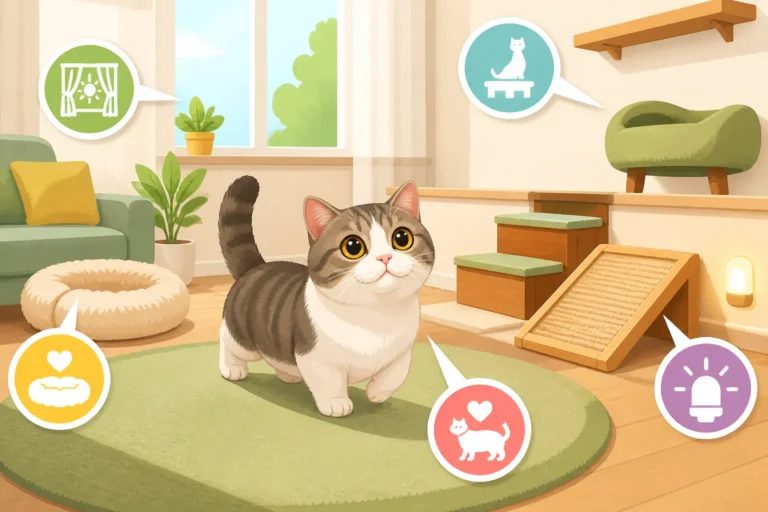
Since vertical escape is limited, providing accessible vertical spaces becomes crucial for a Munchkin's sense of security. This means thinking horizontally and creatively about how they can access higher spots safely.
Ramps and steps are not luxuries; they are essential equipment for a Munchkin. These allow your cat to reach sofas, beds, windowsills, and other elevated areas without dangerous jumps. Ramps and Steps Are Munchkin Equipment, Not Luxuries is a must-read for any owner. You can find pre-made ramps on sites like Amazon, or even build your own. The key is to ensure they are stable, have a non-slip surface, and are not too steep. A good guideline for optimal comfort and joint health is that the incline should be gentle.
Cat trees also need special consideration. A standard cat tree with widely spaced platforms will be useless. Look for cat trees specifically designed for senior cats or those with mobility issues, featuring close-set platforms or gentle ramps built into the structure. Which Cat Tree Layout Suits a Munchkin provides excellent guidance here. Even building "cat highways" with shelves, steps, and platforms along walls can provide safe, elevated routes for your Munchkin to navigate their territory without ever having to make a risky leap.
Supervised Interactions and Designated Safe Zones
Active supervision is non-negotiable, especially when introducing new elements to your Munchkin's environment, be it a new pet, a new person, or even a new piece of furniture. You are your Munchkin's primary protector.
When other pets are present, especially dogs, ensure interactions are always supervised. Use baby gates to separate spaces, giving your Munchkin dog-free zones where they can relax and feel secure. This is particularly important for dogs that are not cat-savvy. For multi-cat households, ensure the Munchkin has exclusive access to certain high spots via ramps, where other cats cannot easily follow. Food and water bowls should also be placed in easily accessible, safe locations, often at floor level, as highlighted in Why a Munchkin's Food and Water Belong at Floor Level.
Designate specific "safe zones" for your Munchkin. This could be a room where they can retreat, a catio with low-level climbing structures, or even just a cozy, enclosed bed under a table where they feel protected. Teach children to respect these spaces and never bother the cat when it's there. Always instruct guests on how to appropriately interact with your Munchkin, emphasizing gentle movements and avoiding picking them up unless absolutely necessary, and only then How to Lift a Munchkin Correctly. These precautions will dramatically reduce the chances of your Munchkin experiencing a confrontation they cannot escape.
Training and Socialization for Managing Stress
While environmental adaptations are critical, a well-socialized and trained Munchkin can also better cope with potential stressors, even if they can't physically escape.
Early socialization is vital. Expose your Munchkin kitten to a variety of sights, sounds, and gentle interactions from a young age. This helps them develop confidence and resilience, making them less prone to extreme fear responses when faced with something new. A well-adjusted Munchkin might be less likely to panic in a minor confrontation.
Training can also play a significant role. Teaching your Munchkin to respond to their name, or to cues like "come" or "retreat," can allow you to call them to safety before a situation escalates. You can also teach them to use their ramps and steps reliably on cue. How to Teach a Munchkin to Use Steps gives valuable advice on this. Positive reinforcement training with treats and praise can make these lessons fun and effective. While you can't train away their physical limitations, you can empower them with tools to navigate their world more confidently under your guidance.
| Confrontation Scenario | Prevention Strategy | Intervention Strategy | Essential Equipment (Example Brand) |
|---|---|---|---|
| Boisterous Dog | Supervise all interactions, use baby gates. | Calmly remove Munchkin to a separate room. | Pet gates (e.g., from Amazon), secure carrier |
| Curious Child | Educate child on gentle handling, designate quiet zones. | Gently guide child away, offer toy to distract cat. | Floor-level cat beds, pet playpen |
| Loud Noise | Create easily accessible hiding spots. | Speak calmly, offer comfort in a safe, quiet space. | Covered beds, blankets |
| Dominant Cat | Provide multiple, accessible high perches for Munchkin. | Separate cats, ensure individual resources (food, litter). | Cat trees with close platforms (e.g., from Amazon), ramps |
| Cluttered Room | Keep floor clear, provide clear pathways. | Create clear path for escape, guide cat out. | Storage solutions for toys |
Recognizing Stress Signals and Intervening Effectively
Even with the best preventative measures, sometimes a Munchkin will find themselves in a stressful situation. Knowing how to read their body language and intervene quickly and calmly is paramount to their safety and well-being.
Identifying Early Signs of Discomfort
Cats are masters of subtle communication. They don't always yowl or hiss immediately; often, their early signals of discomfort are quiet and easily missed if you're not paying close attention. For a Munchkin, these early warnings are even more critical because their escape options are so limited.
Look for a sudden stiffening of the body, particularly if they are frozen in place rather than moving. Their ears might flatten slightly or turn sideways, indicating they are alert and feeling defensive. Their pupils might dilate, making their eyes appear darker and rounder, even in good light. A slight twitching of the tail tip, rather than a full, relaxed wag, can also indicate unease. They might crouch lower to the ground, almost trying to make themselves invisible, which is a common stress response. Sometimes, you might notice very quick, shallow breathing or a shift in their gaze, trying to keep an eye on the perceived threat. If you see any of these signs, it's time to act. Don't wait for a full-blown confrontation; intervene at the first hint of stress.
Immediate Intervention Techniques
When you recognize those subtle signs of stress, immediate and calm intervention is crucial. Your goal is to remove the Munchkin from the situation without adding to their fear or distress.
First and foremost, stay calm yourself. Your anxiety will only escalate the cat's fear. Speak in a low, soothing voice. If the threat is another animal or a child, redirect their attention away from the Munchkin first. For example, toss a toy for the dog or engage the child in another activity in a different part of the room. Once the immediate pressure is off, gently approach your Munchkin. Avoid sudden movements or reaching down aggressively, which could be perceived as another threat.
Offer a safe route, or if necessary, carefully pick up your Munchkin, ensuring you support their entire body, especially their spine, as you lift them. Gently carry them to a pre-established safe zone – perhaps a quiet room with a closed door, or a cozy, covered bed where they can decompress. The key is to remove them from the stressor efficiently and without making them feel more trapped or handled roughly. This calm, consistent response builds trust and reinforces that you are their protector.
Long-Term Behavioral Support
If your Munchkin frequently exhibits signs of stress or fear in situations that aren't inherently dangerous, or if they struggle to cope even after you've made environmental adjustments, it might be time to seek professional guidance.
Persistent anxiety can lead to behavioral problems like inappropriate urination, excessive grooming, or even aggression, and it can also take a toll on their physical health over time. A veterinary check-up is always the first step to rule out any underlying medical issues that could be contributing to their behavior. A vet can also discuss anxiety-reducing supplements or, in some cases, medication that might help.
Beyond medical intervention, a certified feline behaviorist can offer tailored strategies. They can help you identify specific triggers, suggest further environmental enrichment, and teach you advanced techniques to help your Munchkin build confidence and manage stress. Remember, addressing these issues proactively not only improves your Munchkin's quality of life but also strengthens the bond you share. Ensuring your Munchkin feels safe and secure in their home is the greatest gift you can give them.
Disclaimer
This article is for general informational purposes only and does not constitute professional advice. Laws, prices and regulations vary by location and change over time. Consult a qualified professional for guidance on your specific situation.