Why a Munchkin’s Sofa Needs Access
It’s a familiar scene: you settle onto the sofa, ready for a cozy evening, and your sweet Munchkin looks up at you with those big, soulful eyes, wanting to join but simply unable to make the leap. The frustration isn't just theirs; it's yours too, watching them try and fail, or perhaps resorting to plaintive meows. For a Munchkin cat, a seemingly simple piece of furniture like a sofa can become an insurmountable mountain, leading to physical strain, emotional distress, and a feeling of being left out. This guide will dive deep into why your Munchkin needs dedicated access to your sofa and how you can make sure their favorite snuggle spot is always within reach.
Understanding the Munchkin's Unique Mobility Needs
It's easy to forget that while their personalities are as boundless as any other cat, their physical capabilities are distinctly different. Their short legs, while adorable, fundamentally change how they navigate the world, especially when it comes to vertical spaces.
The Anatomy Behind the Access Challenge
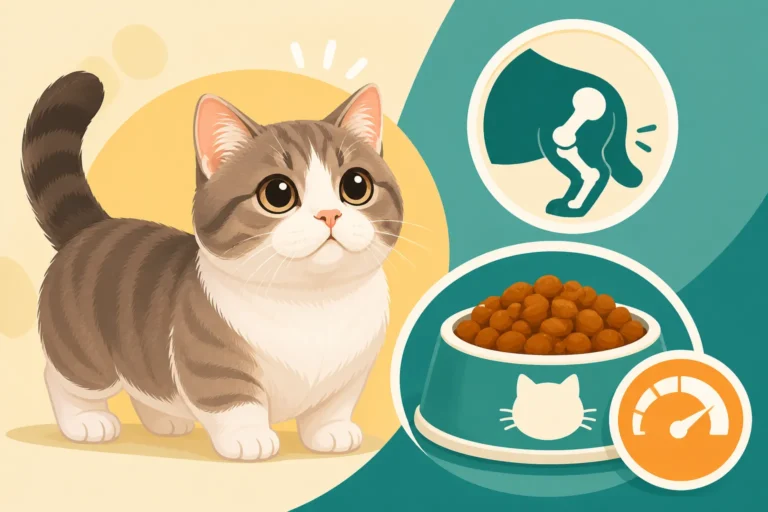
Munchkin cats possess a genetic mutation known as pseudoachondroplasia, which results in abnormally short limbs. While their spinal column is typically of normal length, their legs are significantly abbreviated. This isn't just about appearing shorter; it dramatically alters their biomechanics. A regular cat uses its powerful hind legs to launch itself upwards, leveraging its long, flexible spine for balance and reach. A Munchkin, however, lacks this natural leverage. Their shorter legs mean they have less spring and a lower center of gravity, making high jumps inefficient and often impossible. Imagine trying to jump onto a kitchen counter with only half your normal leg length – it's a monumental task, if not outright dangerous. This applies equally to a sofa, which for a Munchkin can feel as high as a human's kitchen counter.
Their unique conformation means that the forces exerted on their joints during a jump or landing are distributed differently. Repeated, strenuous jumps onto and off furniture can put undue stress on their shoulders, elbows, and spine. While they are incredibly agile on the flat, their prowess diminishes rapidly when verticality is introduced. Understanding this isn't just about sympathy; it's about acknowledging a fundamental biological reality that impacts their daily life and long-term health. Ignoring it is setting them up for discomfort and potential injury down the line.
Why Jumping Isn't a Reliable Solution
You might see your Munchkin attempt a jump to the sofa and occasionally succeed, perhaps scrabbling their way up. But this isn't a sign that they "can do it"; rather, it's a testament to their determination and often, a cry for help. These attempts are frequently accompanied by awkward landings and a visible strain. When a normal-legged cat jumps, it's a fluid, almost effortless motion. For a Munchkin, it's a concerted, often clumsy effort that can lead to misjudgments. They might miss the landing, slip, or fall, leading to sprains, bumps, or more serious injuries. How high a Munchkin can actually jump is far less than a standard cat, and relying on them to exert themselves for every sofa visit is simply unsustainable.
Furthermore, repeated jumping, even if successful, compounds wear and tear on their joints over time. This can accelerate the onset of conditions like arthritis, particularly in their front legs and shoulders, which bear the brunt of landings. Why a Munchkin's shoulders wear first is directly related to the impact forces they experience. As they age, their ability to jump will naturally decline, making these once-challenging feats completely impossible and leading to increased isolation if no alternatives are provided. Relying on their innate feline athleticism, which is present but differently expressed, rather than providing accessible solutions, is a disservice to their long-term well-being.
The Emotional Impact of Inaccessibility
Beyond the physical strain, consider the emotional toll being unable to reach cherished spots takes on your Munchkin. Cats are creatures of comfort and routine, and for many, the sofa is a prime location for napping, observing their surroundings from a slightly elevated vantage, and, most importantly, bonding with their human companions. When they are consistently excluded from these moments, they can experience feelings of frustration, anxiety, and even sadness. They might resort to constant meowing, pawing at the sofa, or repeatedly attempting to jump, only to fall back down. This isn't just cute persistence; it's a genuine desire for connection and comfort.
Imagine being unable to join your family in the living room, always just out of reach of the communal space. Over time, this can lead to a withdrawn demeanor, as they learn that trying is futile. Conversely, ensuring easy access fosters a sense of security, belonging, and independence. They know they can come and go as they please, choosing when to nap beside you or retreat for some quiet time on their own, all without needing your assistance. This autonomy is crucial for a cat's mental well-being, allowing them to fully participate in household life rather than being a perpetual spectator from floor level. What a Munchkin Does When It Cannot Get Away from frustration is often to simply give up.
Practical Solutions for Sofa Access
The good news is that making your sofa accessible for your Munchkin isn't complicated. It usually involves introducing assistive devices that cater to their unique mobility. The key is to make it easy, safe, and intuitive for them.
Ramps: The Gentle Slope to Comfort
Ramps are often the preferred solution for Munchkins because they eliminate the need for jumping entirely, providing a continuous, gradual incline. This is particularly beneficial for their joints and spine, as it removes any impact stress. When choosing a ramp, consider its length, width, and surface. A longer ramp will have a shallower incline, which is much easier and safer for your Munchkin to navigate. Short, steep ramps might feel intimidating or even dangerous. Look for ramps that are at least 12-16 inches wide to give them ample space and confidence as they ascend or descend.
The surface of the ramp is equally important. It should provide good traction to prevent slips. Carpeted ramps, or those with a non-slip textured surface, are ideal. Many pet supply stores, including large online retailers like Chewy and Amazon, offer a variety of pet ramps designed specifically for small dogs and cats, which work perfectly for Munchkins. You can find options that blend seamlessly with your home decor, from wooden ramps with carpet treads to lightweight plastic ones. How to teach a Munchkin to use a ramp involves patience and positive reinforcement, often by luring them with treats or their favorite toy. Once they learn, it becomes second nature.
Steps: Building a Miniature Staircase
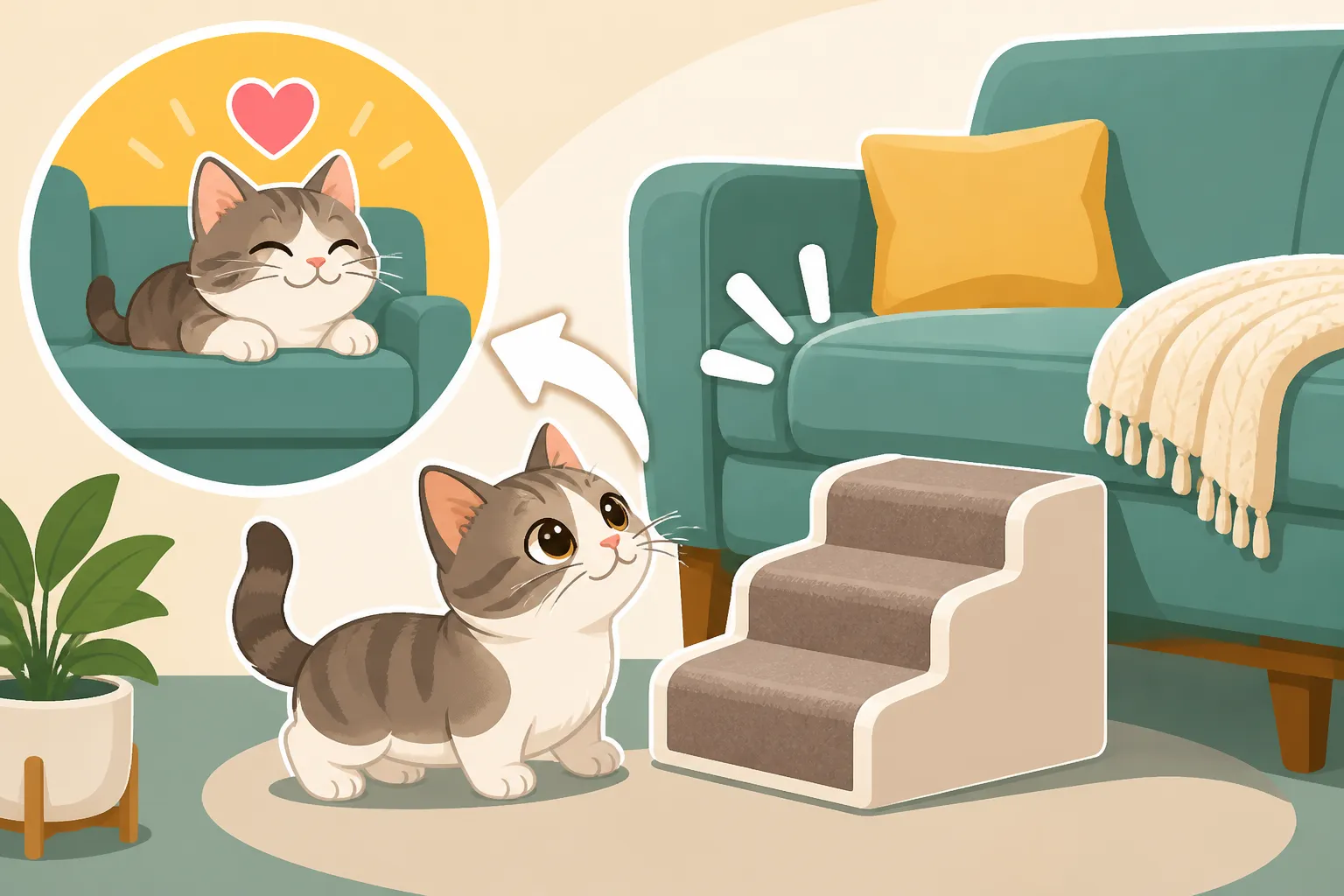
Pet steps are another excellent option, especially if you have limited space for a ramp or if your Munchkin prefers a more defined climb. Think of them as miniature stairs designed for feline use. Like ramps, the key considerations are height, depth, and surface. Each step should be low enough for your Munchkin to comfortably ascend without straining, typically no more than 4-6 inches high. The depth of each step should allow their entire body to rest on it, providing a stable platform before the next step.
Again, a non-slip surface is crucial. Carpeted steps are excellent, providing both grip and comfort. Many commercially available pet steps are lightweight and can be easily moved, allowing you to try them in different locations or move them to other furniture. Some even come with storage compartments, which is a nice bonus. You can find a range of styles and materials, from soft foam steps to sturdy wooden ones, on platforms like Chewy or Amazon. Remember to ensure the steps are stable and won't wobble or tip when your Munchkin uses them. How far apart to space a Munchkin's steps is important; they need to be close enough for easy progression.
| Feature | Pet Ramp | Pet Steps |
|---|---|---|
| Pros | Gentle incline, no jumping, ideal for seniors or cats with joint issues, lower impact | Space-saving, often more affordable, good for confident climbers, clear progression |
| Cons | Can be bulky, requires more floor space, some cats prefer defined steps | Still requires some lifting action, less suitable for severe mobility issues, higher impact than ramps |
| Ideal For | Older Munchkins, cats with existing joint pain, very young kittens, shy cats | Confident Munchkins, smaller living spaces, cats that prefer a "staircase" feel |
| Materials | Wood, plastic, carpeted surfaces | Foam, wood, plastic, carpeted covers |
| Placement | Beside the sofa, ideally at a slight angle | Directly next to the sofa |
Strategically Placed Furniture as Stepping Stones
Sometimes, you don't even need to buy a specific pet ramp or steps! You can get creative with existing furniture to create an accessible pathway to the sofa. Think of it as building a natural staircase out of what you already have. A sturdy ottoman, a low-lying coffee table, or even a stack of firm cushions can serve as excellent intermediate steps. The goal is to break down the large jump into several smaller, manageable hops. For example, if your sofa is quite high, you could place a large, stable ottoman right in front of it. Your Munchkin can jump onto the ottoman, and then easily step or make a small hop from the ottoman onto the sofa.
The key here is stability and height. Any "stepping stone" furniture must be robust and not prone to tipping or sliding. It also needs to be at an appropriate height – not too low that it doesn't help, and not too high that it still requires a difficult jump. How a Munchkin uses furniture as a staircase is something they will naturally attempt, but you can guide and enhance this by making sure the "steps" are safe and convenient. This approach can be particularly cost-effective and allow for a more integrated look within your living space.
Choosing the Right Access Solution for Your Home
Selecting the perfect access solution isn't a one-size-fits-all situation. It depends on several factors, from your living space to your Munchkin's individual needs and preferences.
Assessing Your Sofa and Space
Before you buy anything, take a good look at your sofa and the surrounding area. How high is your sofa from the floor? Measure this distance accurately. This will help you determine the necessary height of steps or the ideal length and incline of a ramp. Is there ample space next to the sofa for a ramp, or is a more compact set of steps a better fit? Ramps, especially those with a gentle slope, can take up a fair amount of floor space, which might not be practical in a small apartment. Steps, while requiring less horizontal space, still need to be wide and deep enough for comfortable use.
Consider the material and color of your sofa. While not strictly functional, you might prefer a ramp or steps that complement your existing furniture, especially if they will be a permanent fixture in your living room. A ramp or set of steps that clashes horribly could be an eyesore, so keeping aesthetics in mind is reasonable. Think about where your Munchkin typically likes to access the sofa. Do they always try from one specific end? Placing the access solution in their preferred spot will increase its chances of being used successfully. How to set up ramps around a Munchkin's house involves thinking about their natural traffic patterns.
Considering Your Munchkin's Personality and Age
Every cat is an individual, and your Munchkin's personality plays a big role in which solution they'll prefer. Some cats are bold and will quickly take to new objects, while others are more timid and might need more time and encouragement. A nervous cat might find a ramp less intimidating than steps, as it feels like a continuous, steady surface. A more adventurous Munchkin might enjoy the defined platforms of steps. Consider their age as well. A young, spry Munchkin might handle steps with ease, but as they reach their senior years, a ramp will be far kinder to their aging joints. When a Munchkin counts as senior is generally around 8-10 years old, and their mobility can start to decline around this time.
If your Munchkin has any pre-existing conditions, like early signs of arthritis or a known spinal issue, a ramp is almost always the safer and more comfortable choice, as it eliminates all impact. Observe how your Munchkin attempts to get onto the sofa currently. Do they struggle with the initial hop? Do they slip often? These observations can give you clues about their current abilities and help you choose the most supportive solution. Remember, the goal is to make access easy for them, not just possible.
Maintenance and Safety Considerations
When investing in an access solution, think about its long-term viability. Is it easy to clean? Cats shed, and pet ramps or steps can quickly accumulate fur. Removable, washable covers or surfaces that can be easily wiped down are a big plus. Durability is also key; you want something that will withstand daily use and remain stable over the years. Look for non-toxic materials, especially if your Munchkin is prone to chewing.
Safety is paramount. The chosen ramp or steps must be stable and secure. They should not wobble, slide, or tip over when your Munchkin uses them. Rubberized feet or anti-slip pads on the bottom are essential. If it's a ramp, ensure it connects securely to the sofa or has a lip that prevents it from slipping away. For steps, make sure each platform is sturdy and broad enough. Periodically check for any wear and tear, especially on carpeted surfaces or connecting hardware, and replace or repair as needed. An object that once seemed safe can become a hazard if it deteriorates. A Munchkin owner budgets for furniture modifications (What a Munchkin Owner Spends on Furniture Modifications) precisely because these are long-term investments in their cat's health and happiness.
The Broader Impact of an Accessible Home
Making your sofa accessible for your Munchkin isn't just about a single piece of furniture; it's part of creating an entire home environment that supports their unique needs, contributing significantly to their overall health and happiness.
Enhancing Quality of Life and Preventing Injury
When a Munchkin can easily access their favorite spots, their quality of life improves dramatically. They can join you for cuddles, enjoy a sunny nap on the cushions, or simply feel more integrated into the family's activities without stress or struggle. This seamless access reduces the daily strain on their body, which in turn helps prevent injuries. Each successful, easy ascent to the sofa means one less awkward jump, one less hard landing, and less cumulative stress on their joints, particularly their delicate elbows and shoulders. What repeated landing does to a Munchkin's elbows is a significant concern for long-term joint health.
By providing ramps or steps, you're not just offering convenience; you're proactively safeguarding their physical health. This preventative care can reduce the likelihood of costly vet visits for sprains, muscle strains, or exacerbated arthritis down the road. It ensures that their natural playful behavior isn't hindered by physical limitations or the fear of injury. An accessible home allows your Munchkin to live a full, joyful life, exploring their territory and interacting with their environment without unnecessary physical barriers.
Fostering Independence and Reducing Stress
A Munchkin that can get onto the sofa without assistance is a more independent and confident cat. They don't have to wait for you to lift them, nor do they have to endure the frustration of trying and failing. This autonomy is vital for their mental well-being, allowing them to exert more control over their daily routine and choose when and where they want to relax or socialize. This feeling of self-sufficiency greatly reduces stress. Constant reliance on an owner, or the inability to reach desired locations, can lead to chronic low-level stress which impacts overall health.
When your Munchkin knows they have a reliable way to get onto the sofa, they’ll be more relaxed and engaged. They'll greet visitors at floor level, but then they can retreat to the comfort of the sofa on their own terms if they feel overwhelmed, or simply when they want to snuggle up. This fosters a stronger bond with you, as interactions become less about "lifting me please" and more about shared, comfortable moments. Teaching a Munchkin to come when it is time to be lifted can still be useful for other situations, but for routine sofa access, independence is key.
Future-Proofing for Your Senior Munchkin
While a young Munchkin might be quite spry, time marches on for all our beloved pets. As your Munchkin ages, their mobility will naturally decrease. Arthritis can set in, muscles may weaken, and even the smallest jump can become difficult or painful. By establishing accessible routes to furniture like the sofa early on, you are future-proofing your home and preparing for their senior years. A ramp that was once a convenience will become an absolute necessity. What an old Munchkin stops being able to do often includes jumping onto furniture they once managed.
Getting them accustomed to using ramps or steps from a young age means that these aids will be a natural part of their environment when they need them most. You won't have to introduce a new, potentially confusing change during a time when they are already less adaptable and more vulnerable. This foresight ensures that your senior Munchkin can continue to enjoy their favorite sofa spot, maintaining their comfort and connection with you well into their golden years. It’s an act of love that pays dividends in their health and happiness for their entire lifespan.
Disclaimer
This article is for general informational purposes only and does not constitute professional advice. Laws, prices and regulations vary by location and change over time. Consult a qualified professional for guidance on your specific situation.