How to Pad a Munchkin’s Landing Spot
As a Munchkin cat owner, you know firsthand that while their short legs are incredibly endearing, they also present a unique set of challenges. One of the biggest worries many of us have is watching our little ones jump off furniture. It might look cute, but the repeated impact on their joints and spine can really add up over time. This guide is all about giving you practical, empathetic advice on how to create safe, padded landing spots for your Munchkin, making their home environment as comfortable and protective as possible.
Why a Munchkin's Landing Spots Need Special Attention
Let's be honest, watching a Munchkin leap off a sofa or bed can make your heart skip a beat. Unlike their long-legged cousins, Munchkins have a very different biomechanical reality, and understanding this is the first step to truly protecting them. Their unique anatomy means that even a seemingly small jump can have a much greater impact on their delicate structure.
The Unique Physics of a Munchkin's Jump
A normal-legged cat has a natural spring and shock absorption system built into their longer limbs. When they jump down, their longer legs extend, distributing the force of the landing across more joints and muscles, often with a fluid roll that cushions the impact. Think of it like a professional gymnast landing – all that grace and controlled movement.
For a Munchkin, it's a completely different ballgame. Their shorter legs mean they can't extend as much, and the force of gravity is condensed into a much more compact landing. This isn't to say they don't have incredible agility – they are often surprisingly fast on the flat and quite adept at navigating their world. However, when it comes to dropping down from a height, their shorter limbs mean a quicker, sharper deceleration. The bones and joints in their legs and spine bear a more direct brunt of the landing force. This is particularly true for their front legs, which often take the initial shock. It's why we need to be extra vigilant about where and how they land. How Many Inches a Munchkin Can Jump highlights just how capable they are, but capability doesn't always equate to long-term safety.
The Long-Term Impact on Joints and Spine
Imagine constantly landing flat-footed after a jump; that’s a bit like what happens to a Munchkin. Over years, this repetitive stress can contribute to chronic issues. The joints in their elbows and shoulders, in particular, are prone to wear and tear. What Repeated Landing Does to a Munchkin's Elbows and Why a Munchkin's Shoulders Wear First delve deeper into these specific vulnerabilities. It's not about immediate pain necessarily, but the cumulative effect of hundreds, even thousands, of landings.
Beyond the limbs, the spine is another area of concern. While a Munchkin's spine is generally considered to be of normal length, the forces transmitted upwards from constant impacts can still cause issues over time, especially if they carry excess weight. The short legs also mean that if they misjudge a jump, there's less 'give' to correct themselves, increasing the risk of an awkward landing or a tumble. Ensuring soft landings helps mitigate this daily micro-trauma, contributing to their overall comfort and health as they age, hopefully delaying the onset of stiffness and discomfort.
Identifying Key Landing Zones in Your Home
Before you can pad every landing spot, you need to know where your little explorer is actually launching themselves from. Observing your Munchkin's daily routine is key here. They're creatures of habit, and you'll likely notice certain pieces of furniture become their regular launchpads.
Common Furniture Hotspots
Think about where your Munchkin loves to hang out. Sofas and chairs are almost always prime jump-off points. They love being up high, surveying their kingdom, and often snuggle next to us. When it's time to get down for a meal, a trip to the litter box, or just a burst of zoomies, off they go! Beds, especially taller ones, are another major spot. They might love sleeping with you, but getting down in the morning or for a midnight snack can be a significant drop.
Even window sills and cat trees can be problematic if the drop-off to the floor is considerable. Remember, a Munchkin might use furniture as a staircase to reach greater heights, but what goes up, must come down. How to Arrange a Room So a Munchkin Can Climb offers ideas for making the climb easier, but the descent still needs addressing. Take a walk around your home with "Munchkin eyes." What heights do they regularly ascend and descend from? Mark these spots mentally or even physically with a sticky note for a few days to get a true picture of their habits.
The Unseen Perils of Everyday Surfaces
It's not just the height, but also the landing surface that matters. A plush carpet might offer some natural cushioning, but hard floors like tile, hardwood, or laminate are much less forgiving. A Munchkin landing directly onto these surfaces from a height can experience a much harsher impact. This is where those cumulative micro-traumas can really build up.
Beyond the direct impact, slipping on hard, uncarpeted surfaces upon landing can lead to splayed legs or an awkward fall, potentially straining ligaments or causing injury. Imagine trying to land from a jump onto an ice rink – it's a bit of an exaggeration, but you get the idea. Even if the jump isn't from a great height, a bad landing on a slippery surface can lead to a more significant injury than a graceful one on a soft surface. We want to protect them from both the impact and the potential for a misstep.
Practical Solutions for Padding Landing Spots
Okay, so we know why we need to do this and where to focus our efforts. Now, let's get into the nitty-gritty of how to actually pad those landing spots effectively. It's about combining comfort, safety, and practicality.
Choosing the Right Materials
When it comes to padding, you're looking for materials that offer good shock absorption without being so squishy that they become unstable. Here are some top contenders:
- Memory Foam Mats/Rugs: Memory foam is fantastic because it contours to distribute weight, offering excellent cushioning. You can find small memory foam bath mats that work perfectly for individual landing spots. Brands often carry these, and places like Amazon have a huge selection. Look for ones with non-slip backing!
- Thick, High-Pile Rugs or Carpets: If you have hard floors, placing thick, high-pile rugs strategically under common jump-off points can make a world of difference. The density and pile height provide a soft buffer. Consider a sheepskin rug for a luxurious, extra-soft landing.
- Orthopedic Pet Mats/Beds: These are designed with pets in mind, often using supportive foam. They come in various sizes and can be ideal for larger landing areas, like next to a bed or sofa. Many pet supply stores, like Chewy, offer a wide range of orthopedic options.
- Dense Foam Squares: Craft foam or upholstery foam can be cut to size and covered with fabric for a custom solution. The key is density – you don't want something that flattens completely on impact.
- Thick Quilts or Folded Blankets: For a quick, temporary, or budget-friendly solution, several layers of a thick, soft quilt or folded blanket can provide some cushioning. Just ensure they don't slide around, which could make the landing worse.
When selecting materials, always prioritize non-slip features. A pad that slides when your Munchkin lands is more dangerous than no pad at all.
DIY vs. Store-Bought Solutions
You've got options depending on your budget, time, and DIY inclination!
Store-Bought Solutions:
- Pros: Convenient, often aesthetically pleasing, and designed for purpose. Many pet ramps and steps already come with padded surfaces. You can find ready-made mats, rugs, and orthopedic beds from retailers like Amazon, Chewy, or your local pet store.
- Cons: Can be more expensive, and you might not find the exact size or shape for every unique spot in your home.
- Tips: Look for washable covers on pet beds and mats. For rugs, consider those specifically marketed as "comfort mats" for kitchens, as they often have extra cushioning.
DIY Solutions:
- Pros: Cost-effective, customizable to perfectly fit awkward spaces, and allows for creative expression. You can recycle old blankets, towels, or even cut up an old yoga mat for thinner padding.
- Cons: Requires more effort and time. The quality of cushioning and non-slip properties might vary depending on your materials and skill.
- Tips: If you're using foam, choose a durable fabric like canvas or denim to cover it, making sure it's securely attached so it doesn't bunch up. For smaller spots, even a stack of old towels held in place by a non-slip rug pad underneath can provide a temporary soft landing.
Here's a quick comparison of material attributes:
| Material Type | Cushioning Level | Durability | Non-Slip Potential | Washability | Best Use Case |
|---|---|---|---|---|---|
| Memory Foam Mat | High | Medium | Good (with backing) | Varies | Under beds, sofas, specific jump spots |
| Thick Pile Rug/Carpet | Medium to High | High | Varies (needs pad) | Low to Medium | Area rugs, under high-traffic jump zones |
| Orthopedic Pet Bed | High | High | Good | High (removable cover) | Dedicated rest/landing zones |
| Dense Foam Squares | Medium to High | Medium | Low (needs covering) | Low (foam itself) | Custom shapes, under fabric covers |
| Folded Blankets | Medium | Low | Low (needs anchoring) | High | Temporary, quick fixes, smaller spots |
Integrating Ramps and Steps for a Smoother Descent
Ultimately, the best way to pad a landing spot is to eliminate the need for a harsh landing altogether! Ramps and steps are game-changers for Munchkins. Instead of dropping down, they can walk or gently step down, which significantly reduces the impact on their joints and spine. How to Teach a Munchkin to Use a Ramp is an excellent resource if your kitty is new to these mobility aids.
- Pet Ramps: These are ideal for allowing a gradual descent from higher surfaces like beds and some sofas. Look for ramps with a gentle slope and a non-slip surface. Brands like Chewy and Amazon offer many different styles and materials.
- Pet Steps: For slightly lower furniture, or as an intermediate step on a multi-tiered journey, pet steps work wonderfully. Ensure the steps are wide enough and not too high for your Munchkin's short legs. Why an Old Munchkin Stops Using Its Ramp is a stark reminder that even with training, sometimes a ramp becomes too steep as they age, making steps a better alternative.
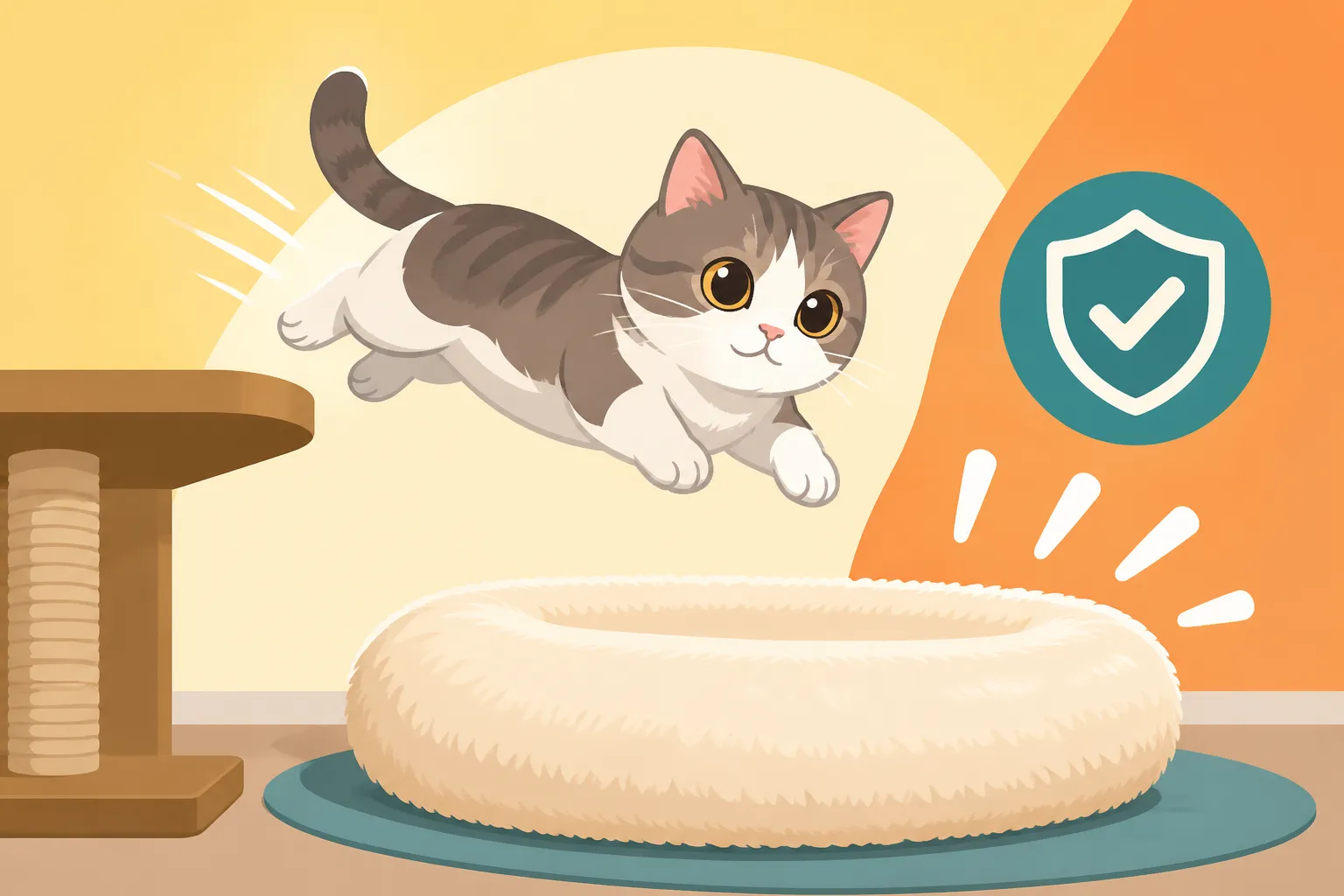
- Combining Ramps and Padding: Even with ramps and steps, it’s a good idea to have a padded landing at the bottom. Think of it as an extra layer of protection, just in case they decide to skip the last step, or if they take a flying leap of joy down the ramp. A soft mat at the end of a ramp or staircase ensures maximum safety.
The goal is to make every ascent and descent as gentle as possible. This isn't just about preventing injury; it's about making their movement comfortable and confident throughout their lives. Whether a Munchkin Should Be Discouraged From Jumping delves into the balance between allowing natural feline behavior and protecting their physical well-being.
Maintaining Your Munchkin's Safe Environment
Installing pads and ramps is a fantastic start, but maintaining that safe environment is an ongoing commitment. Just like you'd check your own stairs for loose railings, you need to regularly assess your Munchkin's mobility aids and landing zones.
Regular Inspection and Replacement
Life happens! Pads can wear down, blankets can shift, and even ramps can get wobbly over time. It's a good habit to regularly check all your padded landing spots and mobility aids.
- Check for Wear and Tear: Look for flattened areas in foam, frayed edges on rugs, or signs that the material is losing its cushioning properties. A thin, worn-out mat won't offer much protection.
- Assess Stability: Make sure ramps are securely anchored and don't wobble. Steps should be stable and not slide when your Munchkin uses them. If a non-slip backing is losing its grip, it's time for replacement or to add a separate non-slip rug pad underneath.
- Cleanliness: Accidents happen, and pet products can get dirty. Keep your pads and rugs clean, as matted fur or dried spills can change the texture and friction, potentially affecting their safety or comfort. Many pet mats have removable, washable covers, which makes this easier.
- Re-evaluate as Your Munchkin Ages: As your Munchkin enters their senior years, their needs might change. What was a perfectly fine ramp or step when they were young might become too steep or too high as they experience stiffness or arthritis. What an Old Munchkin Stops Being Able to Do covers these age-related challenges. You might need to add more padding, lower step heights, or even adjust the furniture they use.
Encouraging Safe Jumping Habits
Beyond just physical modifications, we can also gently encourage our Munchkins to use the safe routes we've provided. They're smart, and with a little encouragement, they'll often opt for the easier, safer path.
- Positive Reinforcement: When your Munchkin uses a ramp or steps, offer praise, a gentle pat, or a tiny treat. Make it a positive experience!
- Strategic Placement: Place toys or treats at the bottom of a ramp or on the steps to encourage them to descend that way. You can even place a favorite blanket or a cozy bed at the top of a ramp, making the ramp the obvious pathway to their comfort spot.
- Avoid Encouraging High Jumps: While it's tempting to watch them try to leap onto high surfaces, try not to actively encourage jumping from significant heights, especially if there isn't a safe landing spot. Redirect their play to floor-level activities that are safer for their joints. How Much Floor Level Play a Munchkin Needs suggests plenty of fun, safe play ideas.
- Consistent Environment: Try to keep your home layout consistent once you've established safe routes. Frequent rearranging might confuse your Munchkin and lead them to try unsafe jumps again while they're relearning the environment.
- Weight Management: This might seem unrelated, but keeping your Munchkin at a healthy weight is paramount for joint health. Every extra ounce puts more strain on their short legs and spine during movement, especially jumping. Why Weight Is More Dangerous on a Munchkin truly emphasizes this point. A lean Munchkin will have an easier time navigating their world and a reduced risk of joint issues.
By taking these steps, you're not just protecting your Munchkin from immediate injury; you're investing in their long-term health, comfort, and quality of life. Our short-legged friends deserve all the help we can give them to live full, happy lives without unnecessary strain.
Disclaimer
This article is for general informational purposes only and does not constitute professional advice. Laws, prices and regulations vary by location and change over time. Consult a qualified professional for guidance on your specific situation.