Whether a Teacup Munchkin Exists at All
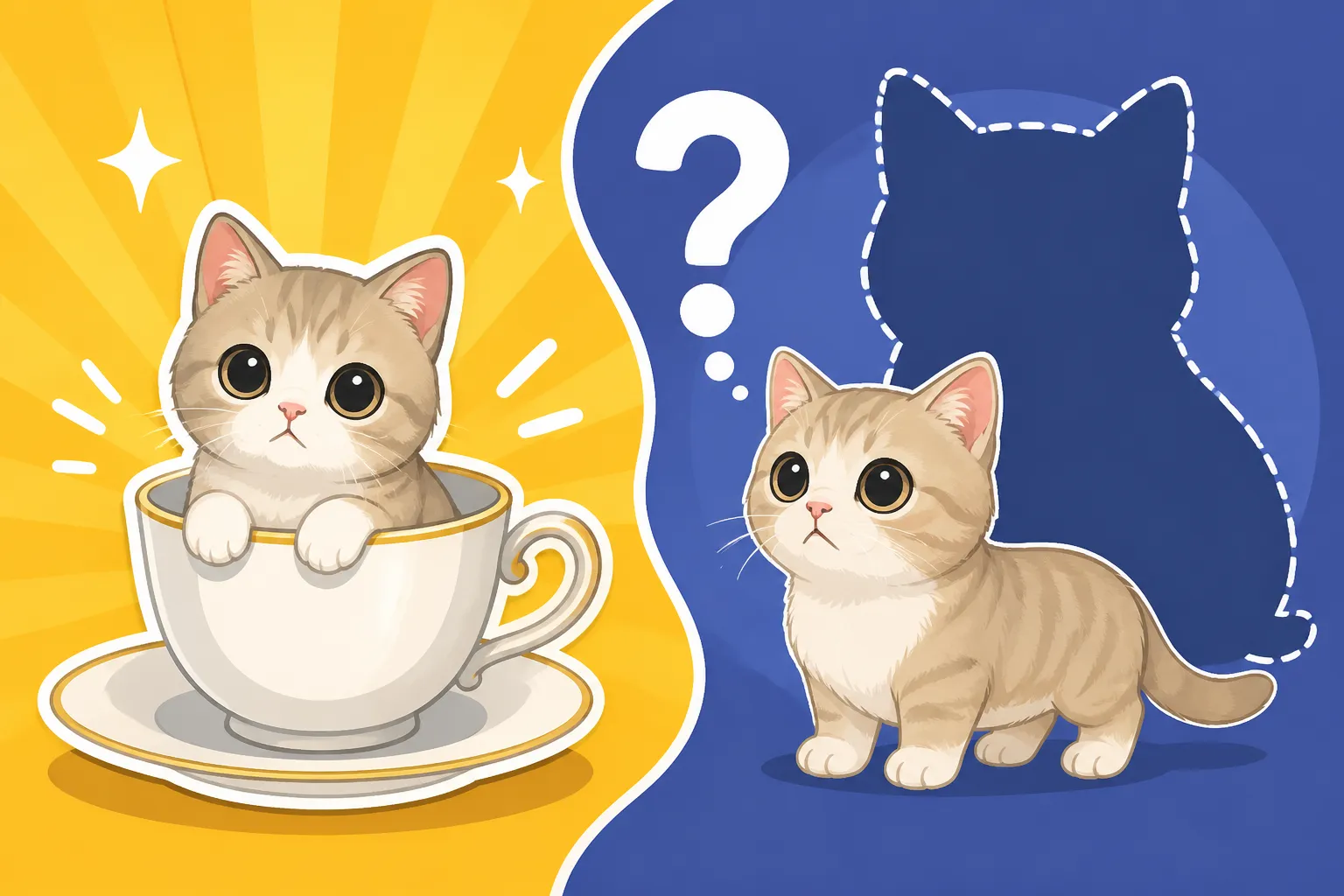
It's easy to get caught up in the adorable imagery of a 'teacup' pet – a tiny, miniature version of your favorite breed, small enough to fit in a handbag. But when it comes to Munchkin cats, this charming notion often leads to confusion and raises serious questions about responsible breeding. Many prospective owners find themselves wondering if a 'Teacup Munchkin' is a distinct, recognized variety, or simply a clever marketing ploy. This comprehensive guide will unravel the truth, distinguishing official breed standards from misleading labels, and equip you with the knowledge to make informed decisions about welcoming a Munchkin into your home.
The Truth Behind "Teacup" Pets: History and Misconceptions
The term "teacup" has been a buzzword in the pet world for years, conjuring images of impossibly small, delicate animals. It's especially prevalent in the dog world, with breeds like "teacup Poodles" or "teacup Chihuahuas" often commanding higher prices. But what does "teacup" actually mean, and does it hold any weight in the official lexicon of cat breeding, particularly for a breed as unique as the Munchkin?
Historically, the term "teacup" emerged as a marketing strategy rather than an official breed designation. It's used to describe animals that are significantly smaller than the accepted breed standard, often representing the runt of a litter or being selectively bred for extreme miniaturization. The appeal is undeniable: a pet that stays kitten-sized forever or one that is genuinely portable. However, this pursuit of extreme smallness often comes with a hefty price, both for the buyer and, more significantly, for the animal's health. When a breeder advertises a cat as "teacup," it should immediately raise a red flag and prompt a deeper investigation into their practices.
The average cat owner, understandably charmed by the idea of an extra-small companion, might not realize that "teacup" is not recognized by major cat registries like The International Cat Association (TICA), which is the primary registry for the Munchkin. There are no breed standards, no show classes, and no official recognition for a "teacup" size variant within the Munchkin breed or any other cat breed, for that matter. It's purely a descriptor used by sellers, often to leverage a higher price point or to differentiate smaller-than-average kittens. This can be deeply misleading, implying a unique, desirable trait when, in reality, it often points to a kitten at the very low end of the weight scale, potentially due to poor nutrition or underlying health issues that contribute to stunted growth.
The Marketing Tactic of "Teacup"
It’s crucial to understand that "teacup" is almost exclusively a marketing tactic. Breeders or sellers who use this term are often trying to tap into a niche market of buyers seeking something perceived as even more special or rare than a standard Munchkin. They might highlight a kitten's small size to suggest it's a unique variant, distinct from "mini" or "toy" sizes, which are also often unofficial descriptors. This can be especially problematic because genuine Munchkins already possess a unique dwarfism, and adding another layer of "teacup" can obscure the actual genetic realities. Why a Teacup Munchkin Listing Is a Scam delves deeper into how these listings can be deceptive.
This marketing spin can lead to inflated prices for kittens that are merely small, rather than a distinct, healthy variety. For someone new to the breed, seeing "teacup Munchkin" might suggest a recognized, ultra-miniature version, leading them to believe they are getting something extraordinary. However, without official recognition or clear genetic markers for such a size, it’s simply a subjective label. The true value of a Munchkin should come from its health, temperament, and adherence to the breed standard, not an arbitrary size descriptor invented for sales.
Differentiating "Dwarfism" from "Teacup"
It's important to distinguish between the natural dwarfism that defines the Munchkin breed and the unofficial term "teacup." Munchkins are characterized by Why Munchkin Dwarfism Is Called Autosomal Dominant, a genetic mutation that results in their characteristically short legs while maintaining a normal body length and size. This is a specific genetic trait that has been studied and understood. It's not about being universally tiny; it's about leg length.
A "teacup" designation, on the other hand, implies a cat that is overall significantly smaller than even a standard-sized cat, including its body, head, and all proportions. While some Munchkins may naturally be on the smaller side of the breed's typical weight range, they are not a "teacup" version in the same way a truly miniature dog might be. The Munchkin's dwarfism affects only the long bones of the legs, not the entire skeletal structure or overall body size. Therefore, attempting to breed for an even smaller overall size in a Munchkin could introduce additional, potentially harmful genetic traits or exacerbate existing health predispositions. What Pseudoachondroplasia Does to a Munchkin's Legs explains the specific nature of their dwarfism.
Official Munchkin Standards: Size, Leg Length, and What's Recognized
When we talk about the Munchkin cat, we're talking about a breed with a very specific, TICA-recognized standard. This standard focuses on overall body type, head shape, coat, and, crucially, leg length. However, nowhere in these official documents will you find any mention of "teacup," "mini," or "toy" size distinctions.
The TICA breed standard describes the Munchkin as having a moderate body type, neither cobby nor svelte. They typically weigh between 5 and 9 pounds for females and 6 to 10 pounds for males, similar to many domestic cats. Their defining characteristic is their short legs, which can vary in length, but the body itself is proportionate to that of a normal-sized cat. The dwarfism affects the length of the long bones in their legs, but their torso and head are usually of typical feline dimensions.
Understanding Leg Length Categories, Not Overall Size
Within the Munchkin breed, there are informal distinctions related to leg length, often used by breeders, but these are not about overall body size. These terms typically include:
- Standard/Short-legged: These are Munchkins with moderately short legs, fitting within the accepted range for the breed. They can navigate their environment quite well, though they can't jump as high as a long-legged cat.
- Rug Hugger/Super-short: These Munchkins have extremely short legs, sometimes giving them a lower-to-the-ground appearance. While adorable, this extreme shortness can sometimes pose greater mobility challenges. How Much a Rug Hugger Munchkin Costs often reveals these command higher prices due to their rarity and exaggerated trait.
It's vital to remember that these are descriptive terms, not separate breed classifications or indications of a "teacup" size. A "rug hugger" still has a body size within the normal range for a Munchkin; it's just their legs that are shorter. The TICA standard focuses on a healthy, balanced cat, and extreme features, especially those that compromise mobility or health, are typically considered faults in the show ring. What a Munchkin Looks Like Against the TICA Standard provides a detailed overview of what reputable breeders and judges look for.
Why Breeders Grade Leg Length
Reputable breeders will assess a Munchkin kitten's leg length, often at around 12 weeks, to understand how well it conforms to the breed standard and to ensure its mobility is not severely impacted. This assessment helps them place kittens appropriately – some might be better suited as pets, while others might meet the more stringent requirements for showing.
This practice is about evaluating a specific physical trait (leg length) relative to the breed standard, not about classifying kittens into arbitrary "teacup" categories based on overall miniature size. The goal is to produce healthy, well-adjusted cats, not to create the smallest possible feline at the expense of its well-being. A breeder's transparency about leg length and potential mobility differences is a sign of ethical practice, unlike a seller who simply labels a small cat "teacup" for profit.
The Problem with "Teacup Munchkin" Listings: Marketing vs. Reality
When you encounter a listing for a "Teacup Munchkin," it's important to approach it with a healthy dose of skepticism. As established, this isn't an officially recognized variant. So, what could a seller mean by this, and why is it problematic?
Often, "Teacup Munchkin" refers to a Munchkin that is simply on the smaller side of the normal weight range for the breed. Just like in any litter, some kittens will be larger, and some smaller. A breeder might highlight a particularly small kitten as "teacup" to make it seem more unique or desirable, potentially justifying a higher price. However, this doesn't mean it's a distinct sub-breed with special genetics for overall miniature size. It simply means it's a small Munchkin. Why a Munchkin Advertised as Teacup Is a Scam explores the financial implications of such misleading advertising.
The danger lies in the implication. The term "teacup" can lead buyers to expect an impossibly tiny cat, which might not be realistic or healthy. It can also encourage unethical breeding practices where breeders deliberately try to produce the smallest cats possible, sometimes at the expense of health and vigor.
| Feature | Official Munchkin Breed | "Teacup Munchkin" (Marketing Term) |
|---|---|---|
| Recognition | TICA recognized breed (various leg lengths accepted) | NOT officially recognized by any major cat registry |
| Defining Trait | Chondrodysplasia (short legs, normal body length) | Implies overall miniature size (smaller than breed standard) |
| Size Variability | Natural variation in weight (5-10 lbs adult) | Suggests significantly smaller than typical Munchkin |
| Breeding Focus | Health, temperament, adherence to breed standard | Potentially breeding for extreme smallness, often for profit |
| Health Risks | Associated with short legs (e.g., joint issues, lordosis) | Potentially increased risk of runts, fragile bones, organ issues |
| Pricing | Based on pedigree, conformation, health guarantees | Often inflated due to perceived rarity/novelty |
The Lure of the "Exclusive" Kitten
The desire for something rare or exclusive is strong, and "Teacup Munchkin" taps right into that. People are willing to pay more for what they perceive as unique. Unfortunately, this often leads to situations where breeders prioritize small size over genetic health and proper conformation. A kitten marketed as "teacup" might actually be a runt, a cat with a slower growth rate due to underlying health issues, or even a premature birth. While some runts grow up to be perfectly healthy, marketing them specifically as "teacups" without disclosing the reasons for their small size is disingenuous.
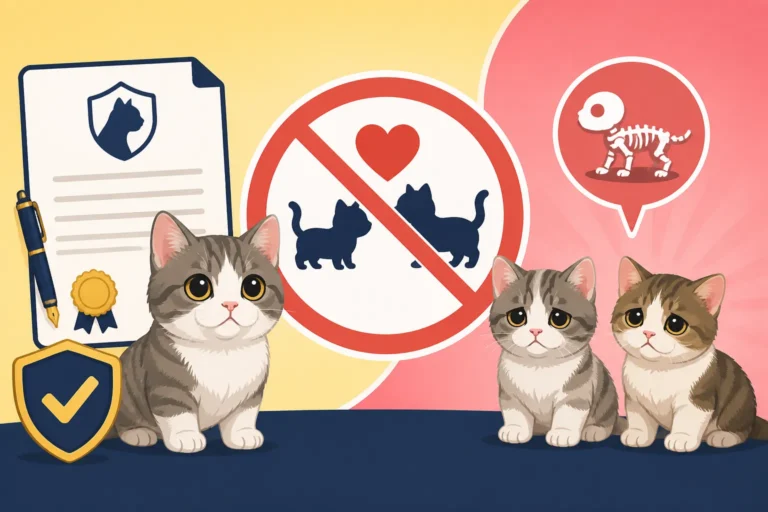
Moreover, if a breeder is truly aiming for "teacup" size, they might be breeding smaller cats to smaller cats, which can inadvertently concentrate undesirable recessive genes or simply result in weaker, less robust offspring. It’s a concerning practice, especially since the Munchkin breed already requires careful breeding to avoid complications like Munchkin Dwarfism Is Dominant and Lethal in Two Copies. Responsible breeders focus on health and quality, not just the smallest possible size.
Due Diligence When Purchasing a Munchkin
If you're considering a Munchkin, it's paramount to find a reputable breeder who prioritizes the health and well-being of their cats above all else. Don't be swayed by trendy, unofficial terms like "teacup." Instead, focus on:
- Breeder Transparency: A good breeder will be upfront about the parents' health, the kitten's development, and any potential health considerations. They'll readily share medical records and pedigrees. What a Munchkin Breeder Should Be Able to Show You outlines critical documents and practices.
- Health Guarantees: Look for a breeder who offers comprehensive health guarantees, especially concerning genetic conditions common in the breed.
- Vet Checks: Ensure the kitten has had thorough vet checks, vaccinations, and deworming.
- Observe the Parents: If possible, meet the kitten's parents. This gives you an idea of their temperament, size, and overall health. If a breeder is only showing you small kittens and claiming they are "teacups," without allowing you to see the parents, it's a major red flag.
- Ask About Leg Length: Inquire about the kitten's specific leg length and how it compares to the TICA standard. A breeder should be able to discuss these nuances rather than simply relying on vague terms.
Health Concerns and Ethical Breeding for Size
The pursuit of "teacup" size in any animal, including Munchkin cats, often comes with significant health risks. Breeding for extreme smallness can exacerbate existing health issues or introduce new ones that compromise the cat's quality of life.
Munchkin cats, by their very nature, already carry a genetic mutation for dwarfism. While generally healthy when responsibly bred, they are more prone to certain conditions due to their unique conformation. These can include What Lordosis Does to a Munchkin, a spinal curvature, and What Pectus Excavatum Does to a Munchkin's Chest, a sunken chest. While not all Munchkins will develop these, breeding for even smaller overall size can potentially worsen these predispositions or lead to new skeletal problems.
Risks of Extreme Miniaturization
When breeders attempt to create "teacup" versions of any breed, they may be selecting for the smallest, sometimes weakest, individuals. This can lead to:
- Fragile Bones: Severely undersized cats can have more delicate bones, making them prone to fractures and injuries, especially with their active Munchkin personalities.
- Organ Problems: Internal organs might not develop proportionately or could be compromised in extremely small cats, leading to issues with heart, lungs, or other vital systems.
- Immune System Compromise: Runts or those bred for extreme smallness can have weaker immune systems, making them more susceptible to illnesses and infections.
- Birthing Difficulties: Breeding extremely small queens can lead to complications during pregnancy and birth, endangering both the mother and kittens.
- Early Onset of Age-Related Issues: While Munchkins generally live The Twelve to Fifteen Years a Munchkin Usually Gets, those bred for extreme miniaturization might experience health declines earlier due to their compromised systems.
Ethical breeding prioritizes the health and genetic diversity of the breed. It means breeding healthy animals to healthy animals, with a focus on improving the breed standard and ensuring the well-being of future generations. It explicitly avoids breeding for exaggerated or detrimental traits, such as extreme smallness labeled as "teacup."
The Role of Responsible Pet Ownership and Nutrition
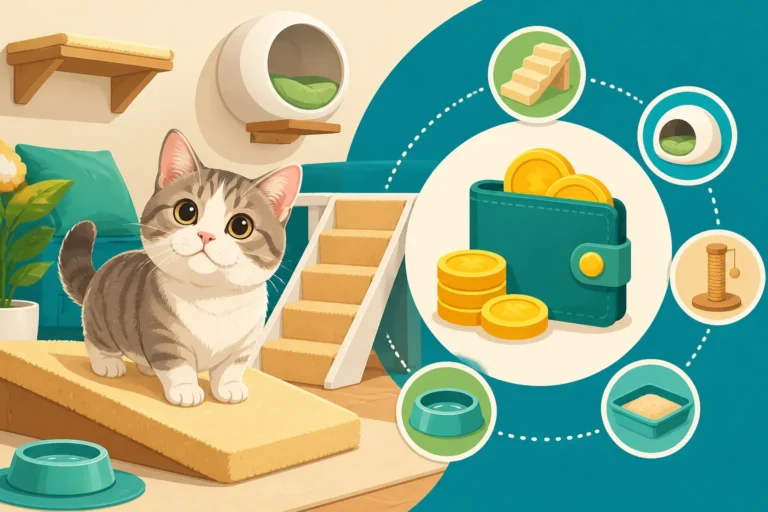
Even if you acquire a naturally small Munchkin, responsible care is paramount. These cats already require thoughtful living arrangements, such as Ramps and Steps Are Munchkin Equipment, Not Luxuries to help them reach elevated surfaces safely without straining their backs or joints. Adding extreme smallness to the equation only heightens the need for meticulous care.
Nutrition also plays a critical role. Very small cats might have different caloric needs, and precise feeding is essential to prevent both obesity and malnourishment. Tailored nutritional support can help, but it's always best to consult with your veterinarian for specific dietary recommendations. Furthermore, consider pet insurance providers like Healthy Paws, who can offer coverage for unexpected health issues, which might be more prevalent in unusually small or fragile cats. Why Weight Is More Dangerous on a Munchkin highlights the importance of keeping a Munchkin lean, regardless of its size.
Ultimately, the term "Teacup Munchkin" is a red herring. It's a marketing gimmick, not a recognized breed or size variant. A true Munchkin is defined by its unique leg length, and its overall size should fall within healthy, established breed standards. By understanding the difference between official breed definitions and informal, often misleading, marketing terms, you empower yourself to make a truly informed and ethical choice when bringing a Munchkin into your life.
Disclaimer
This article is for general informational purposes only and does not constitute professional advice. Laws, prices and regulations vary by location and change over time. Consult a qualified professional for guidance on your specific situation.