How a Munchkin Gets Where It Wants Without Jumping
One of the most common frustrations for new Munchkin cat parents is watching their adorable, short-legged companion struggle with vertical challenges. They can't just leap onto the kitchen counter for a daring reconnaissance mission or spring onto the tall cat tree like their long-legged cousins. This guide is all about understanding how these special felines navigate their world without the benefit of towering jumps, and how you, as a loving owner, can help them thrive.
Understanding the Munchkin's Physical Realities
Before we dive into their clever navigation tactics, it's essential to understand the unique physical makeup of a Munchkin cat. Their distinct short legs aren't just a cute aesthetic; they're a fundamental aspect of their biomechanics and impact every movement they make.
The Mechanics of Short Legs
Munchkins have a genetic mutation known as pseudoachondroplasia, which results in disproportionately short limbs. Unlike some forms of dwarfism that affect overall body size or spinal development, the Munchkin gene primarily targets the long bones of the legs. This means that while their legs are significantly shorter, their body length and torso are generally proportional to a regular-sized cat. They aren't "miniature" cats; they're regular-sized cats on short stilts, so to speak. This distinction is crucial because it means their spine and internal organs are typically of normal length and proportion, unlike some other dwarf breeds where spinal issues can be more intrinsic to the dwarfism itself. The bones in their legs, particularly the humerus and femur, are shorter and sometimes slightly bowed, which is why a Munchkin's front legs might sometimes appear to angle outwards slightly. This conformation impacts their leverage and power for vertical movements.
Why Jumping is a Challenge
Imagine trying to jump as high as you normally would, but your legs are suddenly half their usual length. That's a bit like what a Munchkin cat experiences. Their short limbs mean they have less leverage to propel themselves upwards. A normal cat uses the powerful muscles in its hindquarters and the spring in its long legs to launch itself, absorbing the impact with equal grace. For a Munchkin, this biomechanical advantage is severely reduced. Every jump requires significantly more effort relative to the height gained, and the landing can place disproportionate stress on their shoulders and elbows.
Instead of a fluid, soaring leap, a Munchkin's attempt at a high jump often looks more like a frantic scramble, a series of short, choppy boosts, or a complete misjudgment of distance. They might try repeatedly, which can be frustrating for them and worrying for you. While they can still achieve impressive heights for their stature – often reaching the top of a low armchair or a step stool – scaling a kitchen counter or a tall bookshelf in one go is simply beyond their physical capabilities. How High a Munchkin Can Actually Jump The impact of repeated jumping from even moderate heights can also contribute to wear and tear on their joints over time, making it something to monitor and manage carefully.
Energy Conservation and Gait
Despite their vertical limitations, Munchkins are far from slow or sluggish. In fact, their low center of gravity and unique gait make them surprisingly agile and fast on flat surfaces. Their movement is often described as resembling a ferret's – a low, quick, almost weaving run rather than the high-stepping trot of a normal cat. This isn't just a quirky visual; it's an efficient mode of locomotion for their body type. They conserve energy by staying close to the ground, using minimal vertical oscillation while maximizing horizontal speed. This particular gait, a low-slung scurry, allows them to accelerate rapidly and change direction with remarkable ease. While they might struggle to clear a hurdle, they can dart around obstacles and chase toys across the living room floor with an enthusiasm that belies their stature. This ground-hugging movement is their evolutionary adaptation, helping them to be effective predators and playful companions within their physical constraints.
The Art of the Scramble: Floor-Level Mobility
While Munchkins might not be champion high-jumpers, they are masters of ground-level navigation. Their short legs and unique body shape equip them with a distinct advantage when it comes to speed, agility, and maneuvering in their low-lying world.
Speed and Agility on Flat Surfaces
It’s truly something to behold a Munchkin cat when it decides to really move on a flat surface. You might expect them to be slow due to their short legs, but prepare to be surprised! Their low center of gravity means they are incredibly stable, even at high speeds. This stability allows them to unleash a burst of speed that can catch you off guard. Picture a little furry torpedo zipping across the living room carpet, often faster than their long-legged counterparts can get up to full pace. They don't have to worry about tipping over or losing balance in the same way, which makes them incredibly efficient in short, sharp dashes. Whether they're chasing a laser pointer dot or playing tag with another cat, their ability to accelerate quickly and maintain a rapid pace on level ground is undeniable. It's a testament to how well adapted they are to their unique physical form. How Fast a Munchkin Runs on Level Ground
Cornering and Maneuvering
Where a normal cat might slow down a fraction to round a tight corner, a Munchkin can often pivot on a dime. Their low-slung bodies act like a finely tuned race car, hugging the "track" of the floor. This superior stability isn't just about speed in a straight line; it translates into exceptional maneuverability. They can weave around chair legs, dart under coffee tables, and change direction with an almost fluid motion, making them surprisingly adept at navigating cluttered spaces or playing hide-and-seek. Why a Low Center of Gravity Helps a Munchkin Corner Their compact form allows them to squeeze into tight spots that a lankier cat might struggle with, turning household furniture into an elaborate obstacle course they can conquer with ease. This agility is a huge part of their playful nature and their ability to keep up with, and often outmaneuver, other pets during a lively play session.
Using Paws for Grip and Balance
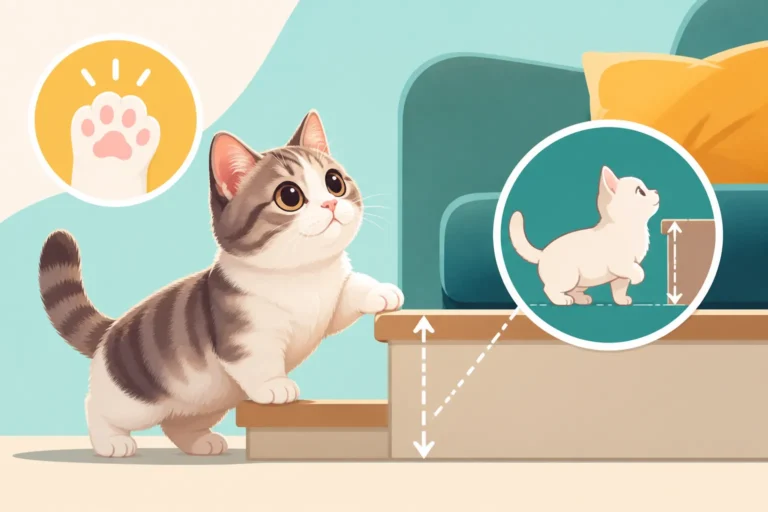
Since vertical propulsion isn't their strong suit, Munchkins rely heavily on their paws for grip and balance, especially when attempting to gain a little height. You'll often see them engaging their claws more deliberately to hook onto carpet, fabric, or even the slight indentations in wood floors when they're trying to leverage themselves upwards. Instead of pushing off explosively, they might "climb" short vertical surfaces using a series of smaller, controlled pushes and pulls with their front paws, almost like a miniature rock climber. This focus on grip also means that appropriate flooring is even more important for a Munchkin. Slippery surfaces like polished tile or laminate can be challenging, as they reduce the traction needed for their quick dashes and attempts to gain purchase. Soft rugs, carpeted areas, and textured runners provide the necessary grip, enhancing their confidence and making their movements more efficient and less strenuous on their joints.
Creative Climbing: Utilizing the Environment
While the traditional cat leap might be off the table, Munchkins are remarkably resourceful when it comes to ascending. They've developed a unique repertoire of tactics to reach higher ground, often turning everyday furniture into their own personal, multi-level playground.
The "Staircase" Method
You won't see a Munchkin make a single, graceful bound onto a tall bed or a windowsill. Instead, they employ what I like to call the "staircase" method. This involves a series of calculated, smaller jumps, using intermediate pieces of furniture as stepping stones. For example, to get onto a sofa, they might first jump onto a low ottoman, then onto a cushion, and finally onto the sofa itself. To reach a bed, they might utilize a stack of books, a small stool, or even a strategically placed pet ramp. Each step is a manageable jump, breaking down a seemingly insurmountable vertical challenge into a series of smaller, achievable feats. This approach requires more planning and effort than a single leap, but it allows them to access many of the same elevated spots that a normal-legged cat would. Observing their method reveals an intelligent problem-solving ability, as they learn the safest and most efficient "routes" through their home. How a Munchkin Uses Furniture as a Staircase
Gripping and Pulling Themselves Up
Beyond simply jumping, Munchkins often combine a push with a pull, using their front paws and claws to grip and haul themselves upwards. Imagine a cat trying to get onto a plush, upholstered armchair. Instead of just launching themselves, they might grab onto the fabric with their front claws, using that purchase to pull their body up while simultaneously pushing with their back legs. This is particularly evident on carpeted cat trees or scratching posts that offer good traction. They become adept at finding seams in upholstery, rough textures, or even the slight edge of a cushion to get that extra bit of leverage. This technique minimizes the explosive power needed for a true jump and instead relies on a more controlled, strength-based ascent. It's less about raw athletic prowess and more about clever physics and determined effort.
The Limits of Vertical Access
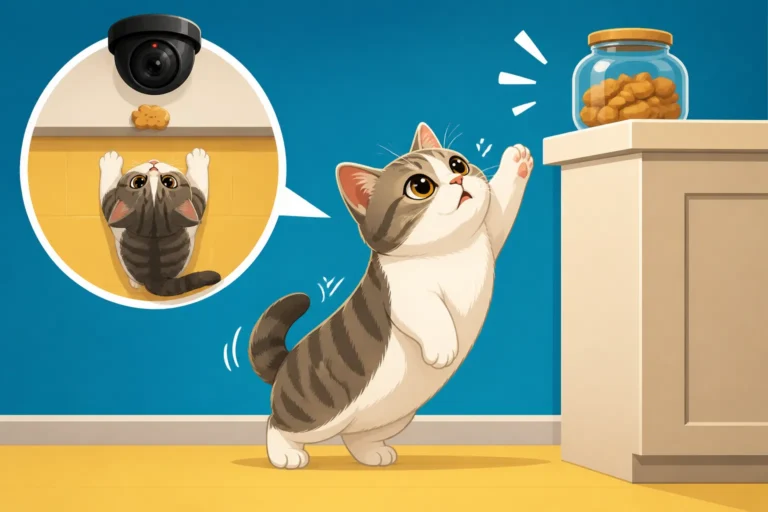
Despite their ingenuity, there are definitely limits to a Munchkin's vertical access, and this can be a source of real frustration for both them and their human companions. High kitchen counters, tall bookshelves, the very top of a standard-sized cat tree, or a lofty windowsill remain largely inaccessible without direct human intervention or specially designed aids. Why a Munchkin Cannot Make the Kitchen Counter It’s not uncommon to see a Munchkin staring longingly at a bird outside a high window or pacing below a counter where an interesting smell emanates. They might try a few hopeful, unsuccessful jumps, perhaps letting out a plaintive meow or rubbing against your legs in an attempt to communicate their desire to be lifted. These limitations aren't just about missing out on prime napping spots; they can also affect their sense of security, as cats naturally seek high vantage points for safety and observation. Understanding these boundaries is key to adapting your home to ensure they feel safe, stimulated, and able to explore their world as much as possible.
The "Prairie Dog Sit" and Its Purpose
One of the most endearing and recognizable behaviors of a Munchkin cat is their distinctive "prairie dog sit." If you've ever seen a meerkat standing upright, you'll immediately understand the posture. It's more than just a cute trick; it's a clever adaptation to their short stature.
What is the Prairie Dog Sit?
The "prairie dog sit" is precisely what it sounds like: a Munchkin cat will sit up on its hind legs, often with its front paws tucked close to its chest or dangling gracefully, much like a meerkat or a prairie dog scanning its surroundings. The Prairie Dog Sit Only a Munchkin Does They maintain this upright posture, sometimes for several seconds, balancing on their haunches. Their tail might act as a counterbalance, providing stability. It’s a moment of quiet observation, a pause in their busy day, and it never fails to melt the hearts of anyone witnessing it. This unique stance sets them apart visually from most other cat breeds and is a direct consequence of their short legs, which make it more comfortable to sit upright than to constantly stretch and crane their neck.
Reasons for Sitting Upright
So, why do they do it? The primary reason is to get a better view. With their short stature, the world from a Munchkin's perspective can be quite low to the ground. Sitting up on their hind legs gives them those precious extra inches of height, allowing them to survey their environment, spot a toy hidden behind furniture, or simply get a clearer picture of what their human is doing. It's their way of overcoming their physical limitations to satisfy their natural feline curiosity. They might use it to gauge a jump, to assess a perceived threat, or to simply observe the comings and goings in the household. It’s an invaluable tool for information gathering and helps them understand their surroundings more fully. It’s also often a form of communication; an alert prairie dog sit can signal interest, attention, or even a plea for interaction.
Spinal Considerations
Naturally, when you see a cat sitting in such an unusual posture, concerns about their spine might arise. For Munchkins, while the prairie dog sit is a natural behavior, it's worth understanding the context. Munchkins have a normal length spine for a cat of their overall size, not a shortened or compressed one. Why a Munchkin's Spine Is Normal Length The act of sitting upright itself is generally not considered harmful for a healthy Munchkin. They engage their core muscles and balance, much like any animal would. However, if a Munchkin also suffers from conditions like lordosis (a severe inward curvature of the spine) or pectus excavatum (a sunken chest), then prolonged or excessive instances of this posture could theoretically exacerbate discomfort or strain. This is why it's so important to purchase from a reputable breeder who screens for these conditions and to have regular veterinary check-ups to monitor your Munchkin's spinal health. Generally, for a healthy Munchkin, the prairie dog sit is a perfectly normal and safe behavior, a charming manifestation of their clever adaptations. Whether the Prairie Dog Sit Strains a Munchkin's Spine
Navigating the Home: Owner-Assisted Movement
Let's be real: sometimes, no amount of creative scrambling or prairie-dog sitting will get your Munchkin where they want to be. That's where you come in! Becoming your Munchkin's personal elevator service is a natural part of living with these charming cats, and it fosters a beautiful bond.
Asking for Help
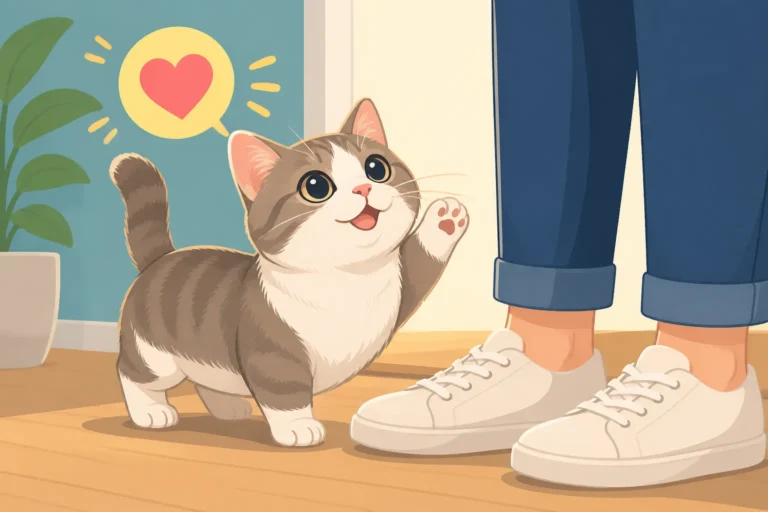
Munchkins are incredibly intelligent and quickly learn that their human companions are the key to accessing those high-up places. They develop a range of adorable behaviors to ask for assistance. You might notice them rubbing against your legs with particular urgency, looking up at the desired destination (like the bed or sofa), and then back at you with pleading eyes. Many Munchkins will vocalize, letting out soft meows or chirps, or even a persistent, attention-seeking trill. Some will paw gently at your leg, trying to draw your attention. They learn very quickly that persistence pays off! It's a sweet form of communication that strengthens the bond between you, as they trust you to help them reach their goals. How a Munchkin Asks When It Cannot Reach You
Safe Lifting Techniques
When your Munchkin asks for a lift, it's important to do so safely to avoid any strain on their spine or joints. The key is to support their entire body, treating them almost like a delicate package.
- Support the hindquarters: Always place one hand under their rear end and hind legs. This takes the weight off their spine and prevents them from dangling uncomfortably.
- Support the chest: Use your other hand to support their chest and front half. This ensures their body remains level and secure.
- Lift smoothly: Avoid sudden jerks or twists. Lift them gently and place them down equally smoothly on their desired surface.
- Never lift by the front legs: This puts immense strain on their shoulder joints and spine and can cause serious injury. Always ensure their weight is supported from underneath.
By following these simple techniques, you ensure that every lift is a comfortable and positive experience for your Munchkin, reinforcing their trust in you.
Integrating Lifting into Daily Life
Over time, helping your Munchkin navigate vertical spaces just becomes a seamless part of your daily routine. You'll instinctively bend down to lift them onto the bed for cuddles, place them on a low chair so they can watch the world outside the window, or give them a boost to the top of a favorite cat tree platform. You become their personal set of stairs, and honestly, it’s one of the most endearing aspects of sharing your life with a Munchkin. Many owners even find themselves preemptively lifting their Munchkin, anticipating their needs before they even ask. This constant interaction and physical assistance deepen your connection, turning simple acts of mobility into moments of affection and mutual understanding. While ramps and steps are fantastic tools, the human touch remains an invaluable part of a Munchkin’s life, transforming accessibility into connection.
Enrichment and Play at Ground Level
Munchkins are playful, curious cats, and their unique physical build means that their play and enrichment needs are somewhat different from a long-legged cat. Focusing on ground-level activities is key to keeping them happy, healthy, and mentally stimulated.
Tailoring Playtime
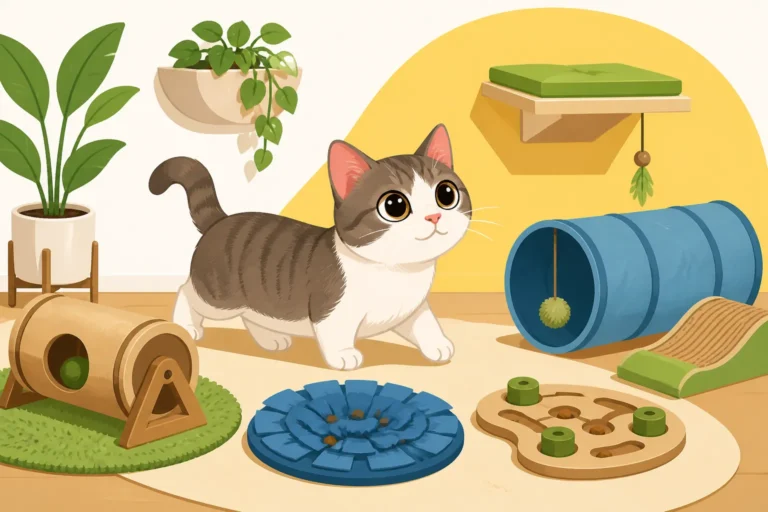
Forget the towering cat trees that require Olympic-level jumping. For a Munchkin, playtime is all about engagement at their level. Wand toys are an absolute hit because they can chase and pounce without needing to leap excessively. Imagine a feather wand being dragged across the floor, mimicking prey – your Munchkin will dart, pounce, and roll with incredible agility. Laser pointers also provide endless entertainment, allowing them to chase and "hunt" without any vertical challenges. Rolling balls, crinkle toys, and small plush mice scattered on the floor encourage their natural hunting instincts. Puzzle feeders that are easy to reach into and manipulate at ground level are also excellent for mental stimulation, turning mealtime into a game. The goal is to provide activities that engage their speed, agility, and predatory drive without putting undue stress on their short legs and joints. Which Toys Work at a Munchkin's Height
The Joy of Floor-Level Exploration
Because their perspective is lower, Munchkins tend to explore their world with a different kind of intensity. They notice all the tiny details on the floor that might escape a taller cat's gaze. Dust bunnies become fascinating creatures, crumbs are treasures, and the shadows playing on the floor become an entire universe to investigate. This can lead to some truly adorable moments as they meticulously sniff and bat at things others might overlook. Providing varied textures on the floor, like different rugs, mats, or even a crinkly paper tunnel, can add to their sensory enrichment. They'll crawl, slither, and pounce through these low-lying landscapes, fully immersed in their unique ground-level adventures. Their proximity to the floor means they're always "in the thick of it," giving them a very hands-on (or paws-on!) approach to exploring their home.
The Hoarding Instinct
Many Munchkin owners observe a charming, often hilarious, hoarding instinct in their cats. Because they operate predominantly at floor level and can't easily reach higher stashing spots, they tend to "collect" and hide small, interesting objects in easily accessible, low-lying places. This might be under the sofa, in a pet bed, or behind a low piece of furniture. Their treasures can range from hair ties and bottle caps to small toys, pen lids, or even shiny bits of paper. Why a Munchkin Hoards Small Objects It's an extension of their natural predatory and playful instincts – they "catch" these items and then "cache" them in a secure, floor-level spot. Providing them with a designated "treasure box" or a low basket filled with safe, small toys can be a wonderful way to indulge this instinct and keep them entertained. Just be mindful of what they might try to hoard, ensuring no small, ingestible items are left within their reach.
Adapting Your Home for a Non-Jumping Munchkin
Living with a Munchkin means embracing a slightly different perspective on home decor and functionality. Rather than expecting your cat to adapt to a human-centric, vertically designed home, the most compassionate and practical approach is to adapt your home to them.
The Importance of Ramps and Steps
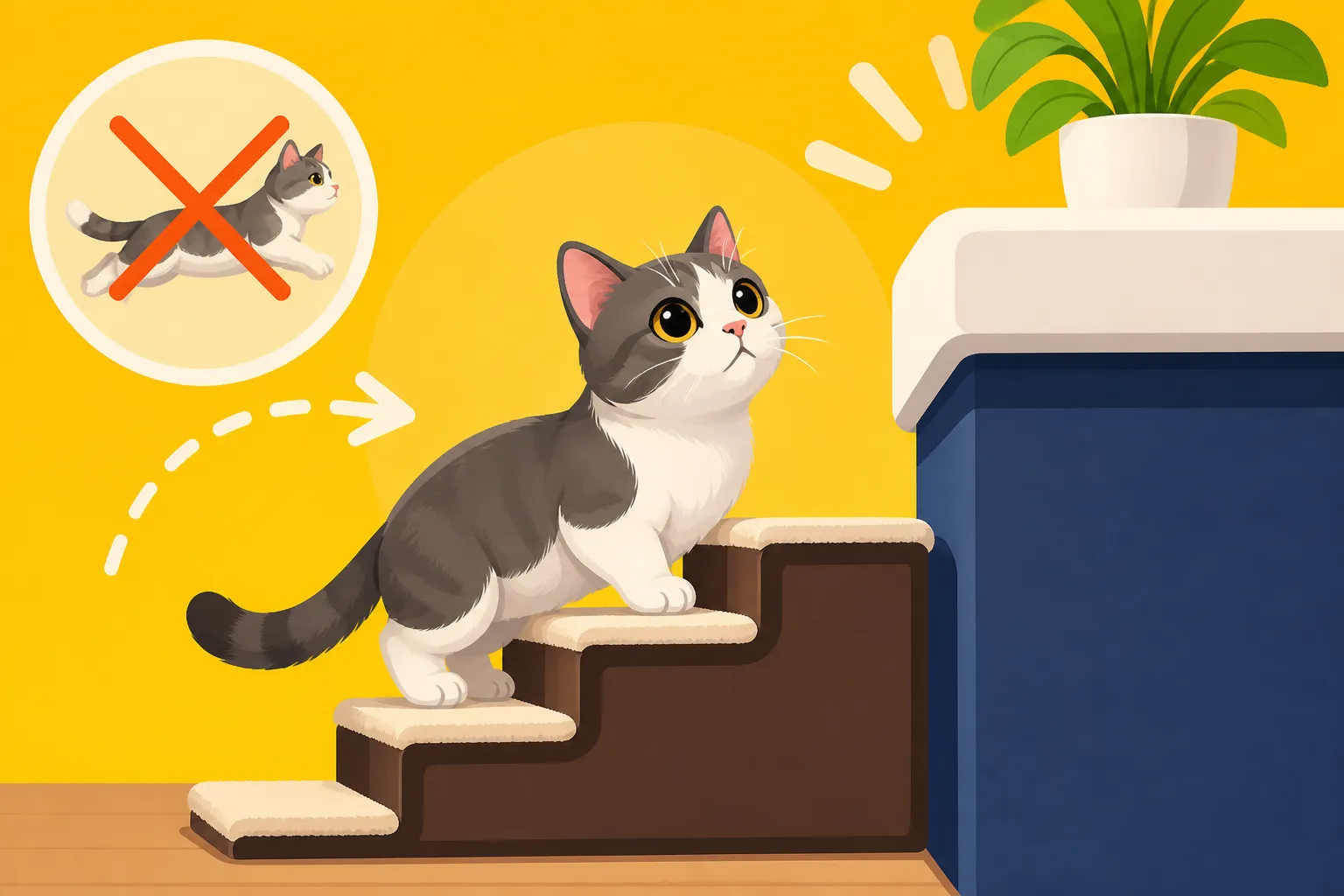
This is perhaps the single most crucial adaptation you can make. Ramps and steps are not luxuries for a Munchkin; they are essential equipment that directly supports their health and well-being. Think of ramps leading up to sofas, beds, windowsills, and any other elevated surface your Munchkin might want to access. Steps work well for shallower rises, like getting onto a dining chair or a lower cat tree platform.
- Angle is key: Ramps should not be too steep. A gentle incline is easier on their joints and less intimidating.
- Surface matters: Choose ramps and steps with a non-slip, carpeted, or textured surface to provide good grip.
- Placement: Place them strategically where your Munchkin naturally tries to get up or down. A ramp to the sofa for cuddles, steps to the bed for sleeping, and perhaps a small ramp or stool to a favorite window perch.
By providing these aids, you prevent unnecessary strain from repeated, difficult jumps and ensure your Munchkin can safely enjoy all the comforts of home. Ramps and Steps Are Munchkin Equipment, Not Luxuries
Furniture Arrangement for Accessibility
Beyond dedicated ramps, you can thoughtfully arrange your existing furniture to create natural "cat highways" for your Munchkin.
- Staggered heights: Position ottomans, low bookshelves, sturdy storage cubes, or even strategically placed pet beds next to taller furniture like sofas. This creates a series of manageable steps for them to ascend.
- Clear pathways: Ensure there are clear, unobstructed paths at floor level between important areas like their food bowl, litter box, and favorite resting spots.
- Window access: If your Munchkin loves to look out the window, place a low table, chest, or sturdy step stool directly beneath a window to give them a safe, easy viewing platform. This allows them to indulge their curiosity without needing to jump to uncomfortable heights.
A little forethought in furniture placement can make a world of difference, allowing your Munchkin to navigate their territory with confidence and independence.
Safe Zones and Retreats
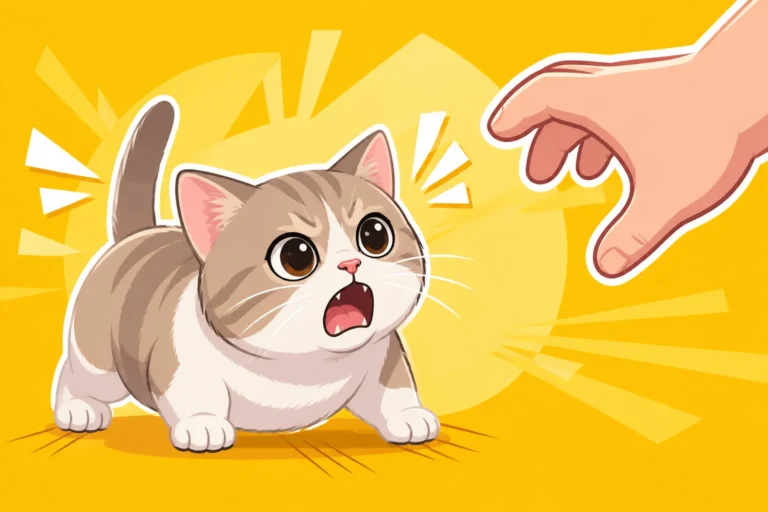
One often-overlooked aspect of vertical limitation is the inability to escape from perceived threats by climbing high. In a multi-pet household or one with small children, a Munchkin can't simply jump onto a high shelf to get away from an overly enthusiastic dog or a curious toddler. Why a Munchkin Cannot Climb Out of a Child's Reach
- Low, enclosed spaces: Provide safe, floor-level retreats where your Munchkin can feel secure. Cat caves, tunnels, enclosed pet beds, or even a sturdy cardboard box can serve as excellent hideaways.
- "Munchkin-only" areas: Consider a baby gate for certain rooms or areas to create a quiet zone where your Munchkin can relax undisturbed. Ensure the gate has a cat-flap or a gap for your Munchkin to pass through, but which larger pets cannot.
- Elevated perches with ramp access: If you want them to have an elevated lookout, make sure it's accessible via a ramp or a series of steps, and that it offers a secure, stable surface once they're up there. This gives them the option to be high without the risk of a perilous jump.
Creating these safe, accessible zones ensures your Munchkin feels secure and stress-free in their environment, knowing they always have a comfortable and unreachable (to others) retreat.
Long-Term Considerations for Munchkin Mobility
Just like with any breed, the care and adaptation for a Munchkin isn't a one-time setup. It's an ongoing commitment, especially as they age, to ensure their continued comfort and quality of life. Thinking ahead about their mobility will serve them well throughout their lifespan.
Monitoring for Changes in Gait or Activity
As your Munchkin ages, it's really important to keep a close eye on their movement patterns. Early signs of stiffness, discomfort, or reduced mobility might be subtle, but they can indicate the onset of joint issues like osteoarthritis, which can affect Munchkins just like any other cat, sometimes exacerbated by the extra strain on their shorter legs. At What Age a Munchkin Starts to Stiffen Watch for things like:
- Reluctance to use ramps or steps they once navigated easily.
- Hesitation before jumping onto low furniture.
- A change in their "ferret-like" run, perhaps becoming more stiff or less fluid.
- Favoring one leg, or a general reduction in their overall activity levels.
- Difficulty with grooming their hindquarters, which can be a sign of back or hip discomfort.
Regular veterinary check-ups are crucial, and don't hesitate to mention any changes you observe, no matter how minor they seem. Early detection allows for earlier intervention, which can significantly improve their comfort and mobility.
Weight Management and Joint Health
This point cannot be stressed enough: weight control is paramount for a Munchkin cat. Every extra pound a Munchkin carries places disproportionate stress on their short legs and spine. Their compact stature means that even a small amount of excess weight can drastically impact their mobility, accelerate joint wear, and lead to discomfort. Why Weight Is More Dangerous on a Munchkin Imagine carrying a heavy backpack all day, every day – that's what extra weight feels like for a Munchkin.
- Portion control: Measure their food precisely according to their ideal weight and activity level, rather than free-feeding.
- Appropriate diet: Choose high-quality cat food that provides balanced nutrition without excessive calories.
- Regular weighing: Weigh your Munchkin regularly at home to track their weight. Even a quarter-pound fluctuation can be significant for them.
- Active play: Encourage daily, floor-level play to keep them active and help burn calories.
Maintaining a lean body condition is the single most effective way to protect their joints and spine, ensuring they can move comfortably throughout their lives.
Senior Care and Continued Adaptation
As your Munchkin enters their senior years (typically around 8-10 years old), their needs for mobility assistance will likely increase. What was once a manageable step might become too difficult, and even gentle ramps could seem too steep. What an Old Munchkin Stops Being Able to Do
- Lowering access points: Consider lowering their favorite window perch even further, or ensuring all their preferred sleeping spots are at floor level or accessible via very shallow ramps.
- Soft landings: Provide extra soft bedding and cushioned landing zones around areas where they might still attempt small jumps, to minimize impact.
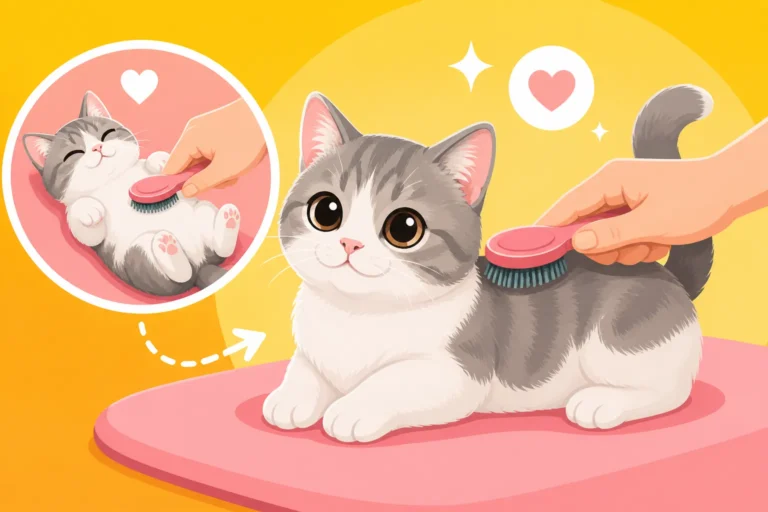
- Grooming assistance: Older Munchkins may struggle even more to groom their hindquarters. Be prepared to step in with regular brushing and occasional sanitary clips to prevent matting and skin issues.
- Easy access to essentials: Ensure their food, water, and litter boxes are always within easy, non-strenuous reach, ideally on the same floor level where they spend most of their time.
The goal is to proactively adjust their environment to match their evolving physical capabilities, allowing them to age gracefully and comfortably, surrounded by ease and love.
| Mobility Challenge | Munchkin Adaptation / Behavior | Owner Solution / Home Modification | Benefits |
|---|---|---|---|
| High Vertical Jumps (e.g., counter) | "Staircase" method via furniture, attempts to pull | Ramps, steps, lower furniture, lifting | Reduces joint strain, increases access, builds trust |
| Seeing Over Obstacles | The "Prairie Dog Sit" | Low perches, window access points | Satisfies curiosity, mental stimulation |
| Reaching Grooming Spots | Uses available flexibility, relies on rough surfaces | Regular brushing, professional grooming | Prevents mats, promotes hygiene, comfort |
| Navigating Slippery Floors | Increased paw grip, careful movement | Rugs, carpet runners, non-slip mats | Improves traction, prevents falls, reduces stress |
| Escaping Threats (other pets/kids) | Seeks low hiding spots, communicates need for help | Safe, low retreats, designated "Munchkin-only" areas with gates | Provides security, reduces anxiety |
| Playing with High-hanging Toys | Focuses on ground-level pouncing and chasing | Wand toys, laser pointers, rolling balls | Stimulates natural instincts, provides exercise |
| Aging Stiffness/Arthritis | Reduced activity, reluctance to move, altered gait | Veterinary care, joint supplements, steeper ramps/steps adjustments | Manages pain, maintains mobility, improves quality of life |
Disclaimer
This article is for general informational purposes only and does not constitute professional advice. Laws, prices and regulations vary by location and change over time. Consult a qualified professional for guidance on your specific situation.