Whether Short Legged Cats Existed Before the Munchkin
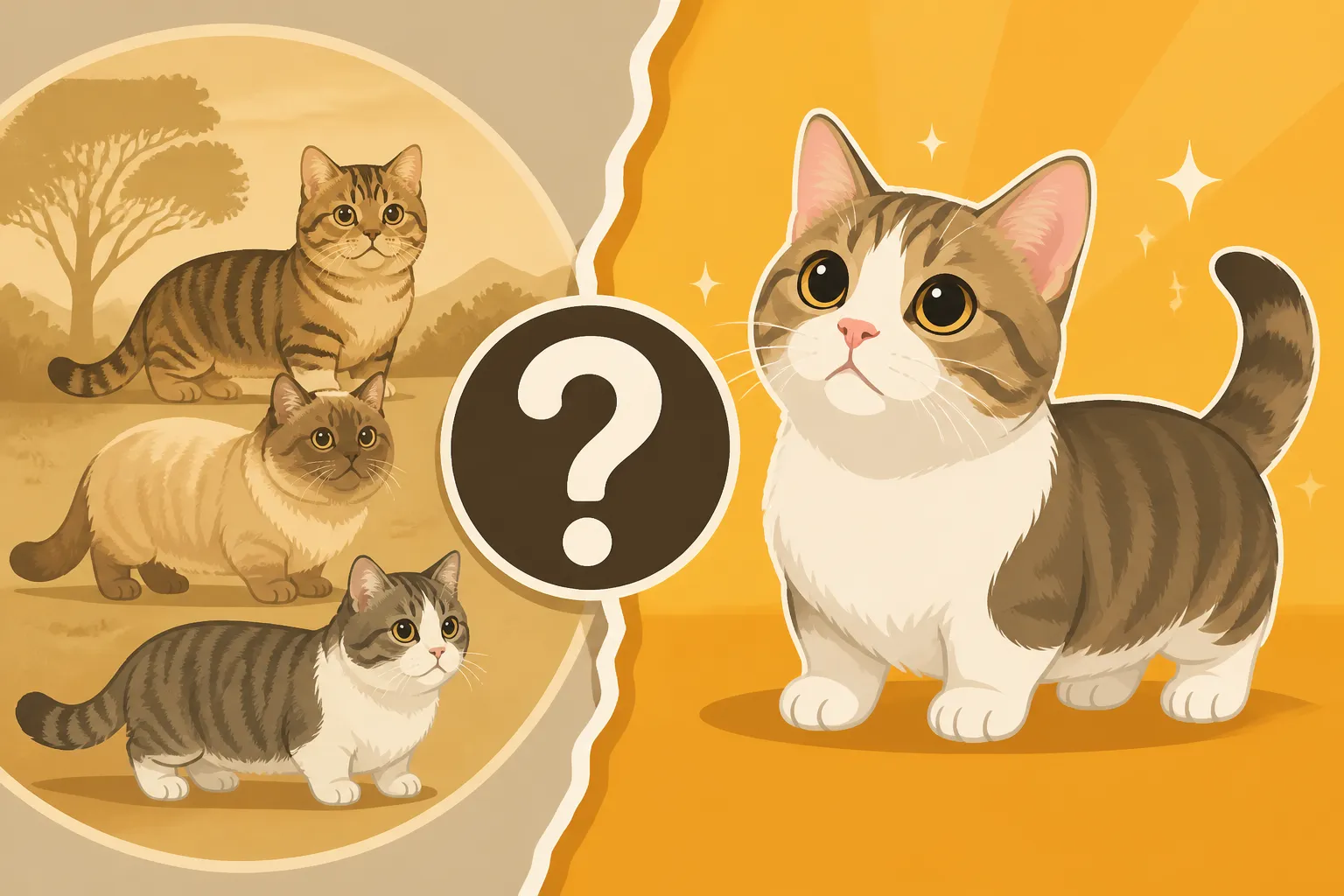
It’s a common misconception that the short-legged Munchkin cat is a completely novel phenomenon, a product of modern selective breeding. But the truth is, cats with remarkably short legs have popped up throughout history, long before the modern Munchkin ever purred its way into our homes. This guide delves into the fascinating history of these unique felines, exploring documented instances of short-legged cats that predate the Munchkin breed we know today.
The Allure of Short-Legged Felines: A Historical Perspective
There's something undeniably captivating about a cat with notably short legs. Their unique gait and endearing appearance often lead people to believe they are a recent development, a "designer breed" crafted in a lab. This perspective, while understandable, often overlooks the rich tapestry of feline genetic diversity that has existed for centuries.
The Modern Mythology of the Munchkin's Origins
When you hear about the Munchkin cat, the story usually starts in Louisiana in 1983 with a stray named Blackberry, who was found under a truck. This is indeed the foundational story for the contemporary Munchkin breed, a tale of a spontaneous genetic mutation that was then carefully nurtured and developed. This distinct origin story often makes it seem as though short-legged cats were an entirely new concept at that time. It's easy to fall into the trap of thinking that such a unique physical trait must be a modern creation, especially with how heavily the breed's origins are discussed within the cat fancy. But the reality is a little more nuanced, showing that while the Munchkin breed is modern, the trait itself has a much longer, albeit less documented, history. You can learn more about its beginnings in The Munchkin Started Under a Truck in Louisiana in 1983.
Why the Idea of "Newness" Shapes Perceptions
The idea that the Munchkin is a brand-new phenomenon often stems from our collective memory (or lack thereof) regarding historical feline traits. Before the internet, before widespread photographic evidence, and certainly before genetic testing, unusual traits in animals might be observed locally, perhaps even reported in a newspaper, but they rarely gained global recognition or a sustained following. This lack of continuous record-keeping means that while short-legged cats might have appeared and disappeared over generations, they never really entered the mainstream consciousness as a distinct "type" of cat. Their unique appearance was perhaps seen as an anomaly rather than a potential lineage, making the emergence of the modern Munchkin feel like a startling new arrival.
Early Documented Accounts of Short-Legged Cats
While the Munchkin breed as we know it is a relatively recent development, historical records show that short-legged cats have indeed appeared spontaneously in various parts of the world. These accounts, though not always as detailed or as scientifically rigorous as modern breed documentation, offer compelling evidence that the genetic mutation responsible for short legs isn't exclusive to the Munchkin's lineage.
The British Breed that Never Was: 1944 and Beyond
One of the most widely cited historical accounts of short-legged cats comes from Great Britain in 1944. A veterinary report described a lineage of healthy, short-legged cats that had been observed for several generations. These cats were noted for their ability to run and climb just like their long-legged counterparts, albeit with a slightly different agility. The report indicated that the trait was passed down through families, suggesting a dominant genetic mutation, much like the one seen in Munchkins today. This particular line of cats, however, seems to have vanished or at least was never intentionally preserved or developed into a recognized breed. Imagine a world where this British line had been championed and documented; the history of short-legged cats might look very different. The details surrounding this fascinating report can be further explored in What Britain Recorded in 1944 That Resembled a Munchkin.
The Mysterious "Stalingrad Cats" of Wartime Russia
Another intriguing, though more anecdotal, report comes from wartime Russia. German soldiers stationed near Stalingrad during World War II reportedly observed a population of short-legged cats in the region. These cats, much like their British counterparts, were described as robust and perfectly adapted to their environment, navigating the harsh conditions of the besieged city with surprising resilience. The exact nature of their short legs, whether it was the same genetic mutation as the Munchkin or a different form of dwarfism, remains unknown due to the circumstances and lack of detailed study. These "Stalingrad cats" serve as another fascinating footnote in the history of naturally occurring short-legged felines, reminding us that nature often finds a way to present unique variations. You can delve deeper into these stories in Whether Wartime Russia Had Munchkin Type Cats.
Other Historical Mentions: Scattered Reports from Around the Globe
Beyond these two more prominent examples, whispers of short-legged cats have surfaced in various corners of the globe over the centuries. From isolated village tales to brief mentions in local animal observations, the trait seems to have appeared sporadically. These reports, while often lacking the comprehensive detail needed for scientific classification, collectively paint a picture of a recurring genetic anomaly. These were not intentional breeds but rather natural occurrences, cats living their lives in various communities, often blending into the background until their distinctive appearance caught someone's eye. The very fact that these spontaneous manifestations did not lead to sustained breed development highlights the significant difference between a naturally occurring trait and one intentionally preserved through breeding programs.
The Key Difference: Spontaneous Mutation vs. Intentional Breeding
The existence of historically documented short-legged cats doesn't diminish the unique origin of the modern Munchkin; rather, it provides a broader context. The crucial distinction lies in how these traits were handled and whether they led to a sustained, recognized breed.
How Natural Mutations Arise in Cat Populations
Genetic mutations are a fundamental part of evolution and population diversity. They occur spontaneously, often without any known cause, altering the genetic code of an individual. In the case of short-legged cats, a mutation in a specific gene affects the development of the long bones in their legs, leading to what's known as chondrodysplasia or pseudoachondroplasia. This isn't a targeted change but a random event that, if viable and not detrimental to survival, can be passed down to offspring. This is exactly what happened with the ancestral short-legged cats observed in Britain and Russia – a natural occurrence that simply happened. These mutations are part of what makes the feline gene pool so incredibly rich and varied, from coat colors to ear shapes, and yes, even leg length.
The Intentional Development of the Modern Munchkin
The story of the modern Munchkin, originating from Blackberry and her offspring like Toulouse, is different precisely because humans intervened with intent. After observing the unique short-legged trait, individuals made a conscious decision to breed these cats selectively to preserve and propagate the characteristic. This wasn't just a spontaneous appearance; it was the deliberate creation of a new breed standard. Breeders carefully paired short-legged cats with normal-legged cats (never two short-legged cats, due to lethal gene implications) to establish a stable lineage. This thoughtful, if sometimes controversial, approach allowed the trait to be documented, refined, and eventually recognized by organizations like TICA (The International Cat Association). The journey from a lone stray to a recognized breed is a testament to this intentional breeding effort.
Why Earlier Short-Legged Lines Died Out
So, if short-legged cats appeared before, why aren't they around today as established breeds from those eras? The answer often comes down to a combination of factors, primarily the lack of intentional breeding and documentation. Without dedicated efforts to breed for the trait, these spontaneous mutations often fade back into the general cat population. Perhaps the cats were spayed or neutered, preventing the trait from being passed on. Or maybe the local community simply didn't see the need or value in preserving such a unique physical characteristic, allowing the lines to naturally dissipate over time. The concept of "purebred" cats, with carefully tracked pedigrees and defined standards, is itself a relatively modern phenomenon. In earlier times, cats were largely appreciated for their pest control abilities, and their appearance was secondary. This lack of focused breeding for the trait is a primary reason Why Earlier Munchkin Type Cats Died Out.
Understanding the Genetic Basis of Short Legs
To truly grasp the history of short-legged cats, it's helpful to understand the genetic mechanism behind their distinctive appearance. The specific type of dwarfism seen in Munchkin cats is not the only way a cat can have short legs, but it's the one that has been purposefully propagated.
The Autosomal Dominant Trait in Munchkins
The short-legged trait in Munchkin cats is caused by an autosomal dominant gene. "Autosomal" means the gene is located on a non-sex chromosome, so it affects both male and female cats equally. "Dominant" means that a cat only needs to inherit one copy of this gene from one parent to express the short-legged characteristic. This is a critical point: if a cat receives even one copy of the gene, it will have short legs. A cat with two copies of the gene, however, is not viable and typically results in embryonic fatality, which is why Munchkin Dwarfism Is Dominant and Lethal in Two Copies. This genetic understanding is why responsible breeders only ever mate a short-legged Munchkin with a normal-legged cat, ensuring that no kitten inherits two copies of the gene. This intricate dance of genetics is fascinating and key to the breed's continued existence, and you can read more about it in Why Munchkin Dwarfism Is Called Autosomal Dominant.
Differentiating Types of Dwarfism in Cats
It's important to recognize that not all instances of short legs or small stature in cats are due to the same genetic cause as the Munchkin. There are various forms of dwarfism, some of which come with significant health challenges. For example, some forms of dwarfism can lead to severe skeletal abnormalities, disproportionate body parts, or even organ dysfunction. The Munchkin's specific form of pseudoachondroplasia primarily affects the length of the long bones in the limbs, while the cat's spine and overall body length typically remain normal. This distinction is crucial when discussing the health and welfare of short-legged cats. The presence of short legs alone doesn't tell the whole story; the underlying genetic cause and its broader effects on the cat's health are paramount. This is a key part of How a Munchkin Differs From a Dwarf Cat.
The Role of Selective Breeding in Maintaining the Trait
For the Munchkin breed, selective breeding has been instrumental in maintaining and refining the short-legged trait while striving for overall feline health and temperament. Breeders meticulously choose breeding pairs to ensure genetic diversity and to avoid perpetuating any associated health issues. This process involves careful health screening and an understanding of the genetic inheritance patterns. Without selective breeding, the Munchkin trait would likely remain a sporadic occurrence, much like its historical predecessors. This ongoing human involvement is what transforms a naturally occurring mutation into a stable, recognized breed. It's a continuous commitment to the breed's standards and welfare, ensuring that future generations of Munchkins embody the desired characteristics responsibly.
The Impact of Historical Context on Breed Acceptance
The journey of short-legged cats from anecdotal mentions to a recognized breed is deeply intertwined with societal views on animal traits and the evolving landscape of cat fancy. The way an unusual physical characteristic is perceived can drastically affect its fate.
Societal Views on Anomalies in Animals
Historically, anomalies in animals were often viewed with a mix of curiosity, superstition, or indifference. A short-legged cat in an agrarian society might be seen as nothing more than a curious farm cat, perhaps even prized for its unique hunting style close to the ground. There wasn't a formal structure for "recognizing" or intentionally breeding for such traits. The focus was on utility and survival. As societies modernized and the concept of companion animals grew, so did the interest in unique appearances. The shift from seeing a cat as purely functional to a beloved pet opened the door for appreciating and even seeking out distinctive traits. However, this also brought a new layer of ethical consideration, especially when those traits might impact the animal's health or mobility.
The Ethical Debates Surrounding Short-Legged Breeds
The emergence of the Munchkin in the late 20th century ignited a passionate debate within the cat fancy, one that continues to this day. Critics argue that intentionally breeding for short legs, a form of dwarfism, is unethical due to potential health concerns, such as spinal issues or mobility limitations. Proponents, on the other hand, emphasize that healthy Munchkins live full, active lives and that the breed is no more prone to genetic defects than many other recognized breeds. This debate highlights how far our understanding of animal welfare has come and how different people weigh aesthetics against potential welfare implications. The historical context of naturally occurring short-legged cats, which reportedly lived normal lives without human intervention, sometimes plays into these discussions, offering a perspective that the trait itself isn't inherently problematic. The controversy around this breed is well-known, as Why the Munchkin Divides the Cat Fancy More Than Any Breed.
The Munchkin's Journey Through Cat Registries
The differing views on short-legged cats are starkly illustrated by their acceptance (or rejection) by various cat registries around the world. TICA (The International Cat Association) recognized the Munchkin as a championship breed in 1994, acknowledging its stable genetic trait and the dedication of its breeders. This was a significant milestone, cementing its place in the world of pedigreed cats. However, many other prominent registries, such as the Cat Fanciers' Association (CFA) in the United States and the Governing Council of the Cat Fancy (GCCF) in the UK, have explicitly refused to recognize the Munchkin. Their reasons often cite concerns over animal welfare and the ethical implications of breeding for a genetic mutation that causes chondrodysplasia. This split in recognition reflects the ongoing global debate and the varying standards different organizations apply to new breeds. For more on this, check out Which Registries Refuse the Munchkin Today.
What This Means for Today's Munchkin Enthusiasts
Understanding the historical lineage of short-legged cats offers a richer appreciation for the modern Munchkin. It grounds the breed in a natural phenomenon, even as it underscores the responsibility involved in its contemporary stewardship.
Appreciating the Munchkin's Unique Place in History
The Munchkin isn't just a quirky, short-legged cat; it's a living testament to a genetic anomaly that has appeared repeatedly in feline populations throughout history. Its unique place lies in being the first short-legged cat line to be intentionally preserved and developed into a recognized breed. This journey, from spontaneous mutation to a beloved companion animal, highlights the ongoing interaction between nature and human stewardship. When you see a Munchkin playfully scurrying across the floor or performing its signature "prairie dog" sit, you're not just observing a cute cat; you're witnessing the successful perpetuation of a trait that once appeared and disappeared without fanfare, now living on due to dedicated human effort.
The Importance of Responsible Breeding and Care
Given the historical context and the ongoing ethical debates, responsible breeding and diligent care are paramount for Munchkin cats. Owners and potential owners should prioritize health and well-being above all else. This means seeking out breeders who are transparent about their cats' health, conduct genetic screenings, and provide documentation of their lineage. A good breeder should be able to show you medical records and discuss the health of the parents. You should also ensure you are ready to provide an adapted home environment, with ramps and steps, to help your short-legged companion navigate their world safely and comfortably, minimizing any strain on their unique physique. You can find many useful supplies for adapting your home, from low-entry litter boxes to joint-supporting food, at retailers like Chewy. A responsible breeder also understands that the short-leg gene is autosomal dominant and how to avoid lethal combinations, which means they will always outcross to normal-legged cats. This commitment ensures that the Munchkin's unique charm continues for generations to come, built on a foundation of health and ethical practice. To understand what to look for in a breeder, refer to What a Munchkin Breeder Should Be Able to Show You.
| Feature | Pre-Munchkin Short-Legged Cats (Reported) | Modern Munchkin Cat |
|---|---|---|
| Origin Type | Spontaneous mutation | Spontaneous mutation, then selective breeding |
| Persistence | Died out, no sustained lines | Sustained and propagated by breeders |
| Documentation Level | Anecdotal reports, newspaper clippings | Extensive breed standards, genetic studies (modern era) |
| Breed Recognition | None | TICA (The International Cat Association) recognized |
| Breeding Intent | Natural occurrence, incidental breeding | Intentional propagation of the short-leg trait |
Disclaimer
This article is for general informational purposes only and does not constitute professional advice. Laws, prices and regulations vary by location and change over time. Consult a qualified professional for guidance on your specific situation.