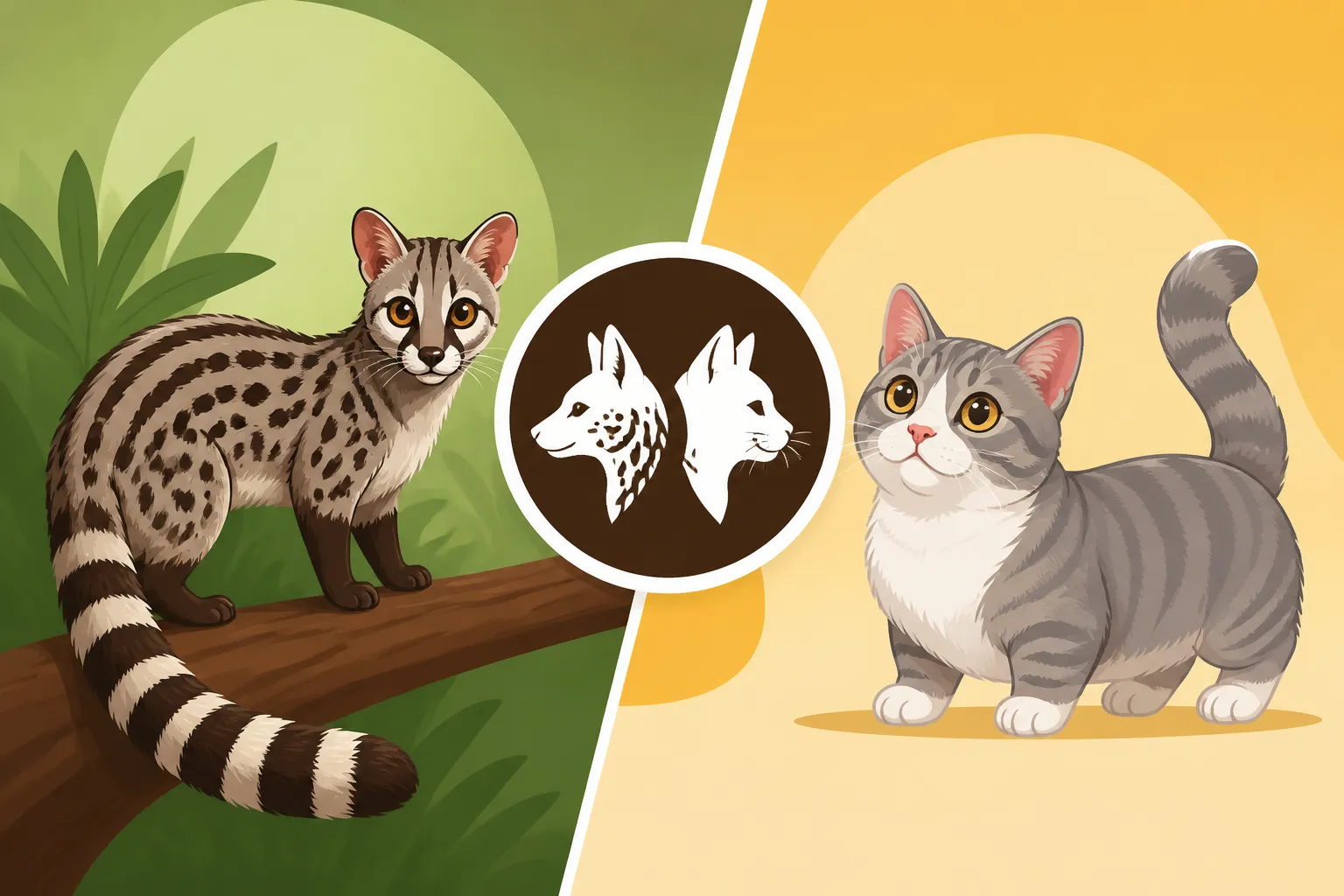
What a Genetta Is and How It Relates to the Munchkin
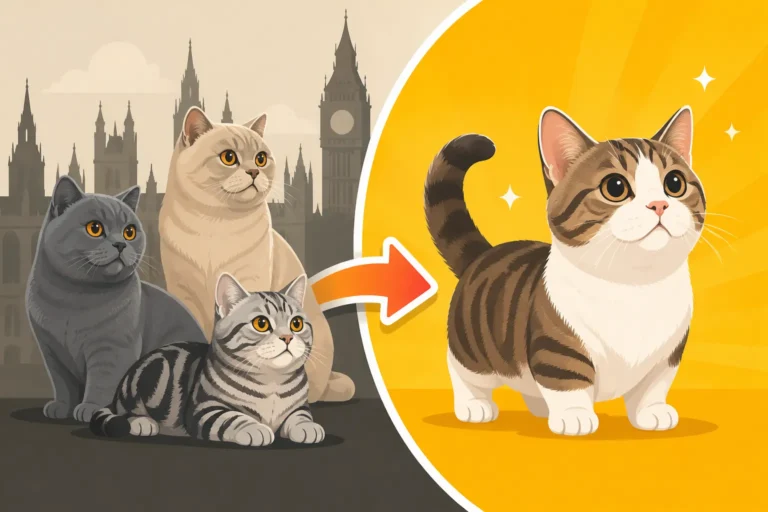
A cat advertised as a Genetta can look like a tiny, spotted wildcat, but the name describes a domestic-cat breeding project—not a cross with a genet. The Munchkin connection is the short-legged trait: Genettas are bred using Munchkin ancestry, often alongside other domestic breeds selected for coat pattern and appearance. Here’s how that relationship works, what varies between cats, and what to consider before bringing one home.
What a Genetta is
A domestic cat bred for a wild-looking appearance
A Genetta is a domestic cat developed to resemble a genet, a small, spotted mammal with a long body and ringed tail. Despite the name and appearance, a Genetta is not a genet hybrid. Genets are not cats, and the Genetta breed name refers to a resemblance, not wild-animal ancestry.
The Genetta breeding project is commonly associated with combining Munchkin ancestry with domestic cats selected for traits such as spots, coat color, and a long, athletic-looking body. Bengal cats and Savannah cats are among the breeds sometimes discussed in connection with the project, but the precise ancestry can differ between breeders and lines. The label alone doesn’t tell you exactly which breeds appear in a particular cat’s pedigree.
That variation matters if you’re comparing kittens. Two cats both advertised as Genettas may not share the same mix of ancestry or the same degree of short-legged conformation. Ask the breeder to explain the individual kitten’s pedigree and what they mean when they use the name.
Why the name can be confusing
“Genetta” sounds like a formal breed name, but it is not as consistently defined as the name of a long-established, widely standardized cat breed. Breed recognition, registration, and standards can vary among organizations. A breeder may use the name for a particular breeding line or type of cat even when the label does not come with one universally accepted definition.
This makes documentation especially useful. Ask whether the kitten has registration papers, what organization issued them, and whether those papers identify the cat as a Genetta or record its parent breeds. Papers can help clarify what the breeder is claiming, but they do not, on their own, prove health, temperament, or responsible breeding practices.
It’s also worth separating a breed label from an individual cat’s needs. A Genetta may be social and energetic, or more reserved; it may have a coat that needs little maintenance, or a longer coat that tangles easily. Don’t assume a name guarantees a particular personality or care routine. The best questions are about the kitten in front of you and the cats in its family.
How the Genetta relates to the Munchkin
Munchkin ancestry supplies the short-legged trait
The Munchkin’s defining feature is its short legs, which result from a genetic variant affecting limb development. Genetta breeders use Munchkin ancestry to produce cats with that short-legged appearance. Other domestic-cat ancestry may contribute traits breeders want in the coat, body shape, or overall look.
A kitten’s leg length is not a reliable guide to its whole genetic background. In Munchkin breeding, a short-legged cat is generally paired with a normal-legged cat rather than another short-legged cat. In a typical mating involving a short-legged Munchkin carrying one copy of the variant and a normal-legged cat, kittens may inherit different leg types. The exact outcome for a particular kitten should be discussed with the breeder, not guessed from photos of its parents.
For more on the inheritance behind the trait, see How Munchkin Dwarfism Is Inherited and Why a Munchkin Is Always Bred to a Normal Legged Cat. These explain why short-legged appearance is connected to a specific breeding decision rather than simply being a cosmetic feature.
Genetta does not mean “a different kind of Munchkin”
A Genetta and a Munchkin are related through ancestry, but the terms are not interchangeable. “Munchkin” refers to a recognized short-legged cat type, while “Genetta” is used for a cat bred toward a particular wild-inspired appearance. A Genetta may have Munchkin ancestry and short legs, but the name also reflects the breeder’s goals for its look and lineage.
This distinction can be easy to miss in online listings. A seller may emphasize “Munchkin” because shoppers recognize the short legs, or “Genetta” because the coat pattern and long, spotted look stand out. Ask what the label means in that cattery and which traits are present in the kitten’s parents. If the explanation is vague, the advertisement is not a substitute for a clear pedigree.
Munchkin ancestry is also only one part of the picture. If other breeds are included, their typical activity levels, grooming needs, and potential inherited health concerns may be relevant too. A helpful breeder should be able to discuss the whole family tree, not just the trait that makes the kitten distinctive. How Many Breeds Descend From the Munchkin gives broader context on Munchkin-related breeding, while Which Cats a Munchkin May Be Outcrossed To explains why outcrossing is part of the breed’s history.
Appearance, temperament, and everyday care
The look can vary from cat to cat
Genettas are often described as having short legs, a long-looking body, spots, and a tail with contrasting bands. But these features are not necessarily identical in every cat sold under the name. Coat pattern, leg length, body proportions, and coat type can vary with ancestry and the breeder’s selection goals.
Photographs can be misleading. A kitten’s pose, camera angle, and age may make its legs look shorter or its body more elongated than they are. Ask for videos of the kitten walking, turning, and playing on a level surface. Seeing the parents move can also help you understand the range of body types in the line. A healthy-looking walk is useful information, though it cannot replace a veterinary examination.
A practical comparison is:
| Feature | Genetta | Munchkin |
|---|---|---|
| What the name usually describes | A domestic-cat breeding project with a genet-inspired appearance | A short-legged domestic-cat type |
| Connection between them | Often includes Munchkin ancestry for short legs | The source of the short-legged trait in related breeding lines |
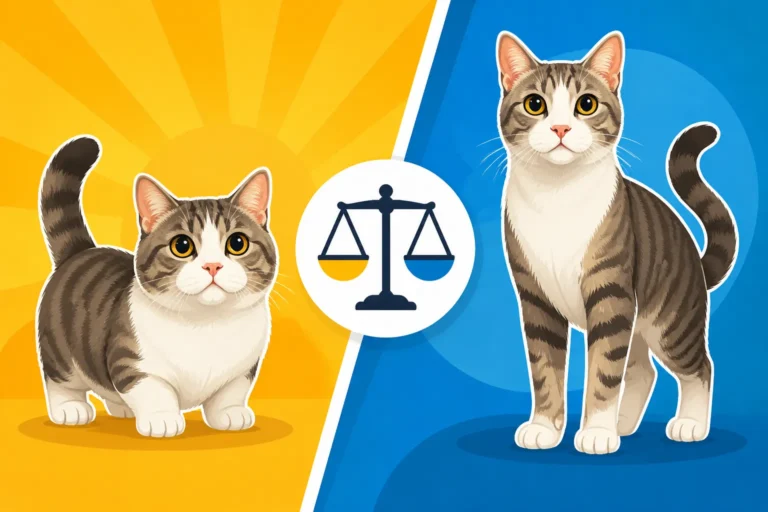
| Appearance | Often selected for spots, a long look, or a ringed-looking tail | Short legs with a body that is generally normal in length |
| Consistency of the label | Can vary by breeder and lineage | More established as a breed name, though recognition varies by registry |
| What to ask a breeder | Which breeds and lines are in the pedigree | How the mating was planned and what health information is available |
Neither column tells you whether an individual cat is healthy or a good fit for your home. Temperament, medical history, socialization, and the breeder’s practices matter more than a striking coat or a particular label.
Short legs may affect access around the home
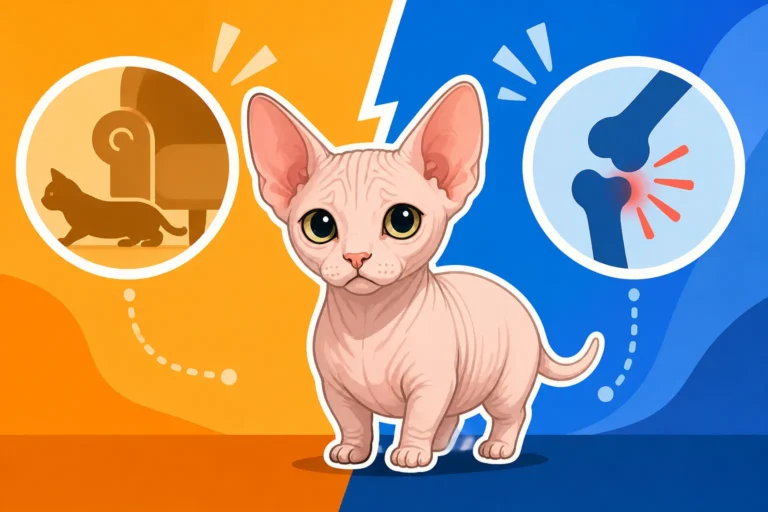
A short-legged cat can move and play, but some ordinary household setups may be harder to navigate. A high-sided litter box, a tall bed, or a favorite window perch may be less accessible than it is for a longer-legged cat. Genetta owners should observe what their own cat can comfortably reach instead of assuming it will manage every standard cat accessory.
Small adjustments can make daily routines easier. Place food, water, and a litter box where the cat can reach them without repeated climbing. If the cat likes getting onto a sofa or bed, stable steps or a gentle ramp may offer an alternative to repeated jumps. Choose sturdy equipment with a surface the cat can grip, and check that it doesn’t slide when used.
For practical setup ideas, see Ramps and Steps Are Munchkin Equipment, Not Luxuries, Why a Munchkin Needs a Litter Box It Can Walk Into, and How to Set Up Ramps Around a Munchkin's House. If you’re shopping, Chewy’s listings can be one place to compare litter boxes and ramps, but measure the access point and check stability rather than relying on a product label.
Coat care depends on the cat’s actual coat, not simply its breed name. A short coat may be straightforward to brush, while longer fur can tangle around the hindquarters or belly. Check those areas regularly, especially if the cat has trouble grooming them well. Chewy carries grooming tools, but the right comb is the one that suits your cat’s coat and can be used comfortably. If mats are tight or close to the skin, ask a groomer or veterinarian for help instead of cutting them out at home.
Health, breeder questions, and choosing responsibly
Understand the welfare discussion
The short-legged trait is a subject of ongoing disagreement. Some owners describe active, playful cats that adapt well to their homes. At the same time, intentionally breeding for a body feature that changes limb development raises welfare questions, and the available information about long-term outcomes can be limited. A particular cat’s comfortable movement does not settle the broader debate about breeding practices.
It helps to separate three questions: Is this individual cat showing signs of discomfort? What health information is available about its family? And how does the breeder manage the risks and responsibilities associated with the traits they are selecting for? A careful answer should acknowledge uncertainty rather than promise that short legs are either harmless in every cat or guaranteed to cause suffering.
A veterinarian can assess gait, body condition, joints, and overall health, and can recommend further evaluation if something seems unusual. At home, pay attention to changes: reluctance to move, difficulty getting into the litter box, reduced play, or a new limp are reasons to arrange a veterinary visit. For broader discussion, see Why Munchkin Crosses Worry Veterinarians and Why Stacking Mutations on a Munchkin Is Criticized.
Questions to ask before committing
A responsible breeder should be willing to discuss the kitten’s parents, lineage, routine veterinary care, and any known health concerns in the family. Ask to see the kitten moving in person or in an unedited video. Find out how the breeder assesses kittens as they grow, what support is provided after adoption, and what the contract says about health and return arrangements.
Be wary of pressure to pay quickly, claims that a distinctive appearance guarantees good health, or a refusal to show where and how the kittens are raised. A breeder should not treat questions about mobility or welfare as an insult. If the seller cannot explain the pedigree clearly, consider whether you are comfortable making a decision with so little information.
| Ask the breeder | Why it matters |
|---|---|
| Which breeds and lines are in this kitten’s pedigree? | Clarifies what the Genetta label means in this cattery |
| Can I see the kitten walk and play? | Shows how the kitten moves in ordinary situations |
| What health concerns have appeared in the family? | Helps you discuss relevant risks with your veterinarian |
| How were the parents selected and paired? | Reveals how the breeder approaches the short-legged trait |
| What veterinary checks has the kitten had? | Establishes what care has already been provided |
| What support or return policy is in the contract? | Clarifies what happens if circumstances change |
If you’re considering a Munchkin-related cat more generally, Whether Buying a Munchkin Is an Ethical Decision can help you think through the welfare questions. Whether a Munchkin Is the Right Cat for You is also useful for considering whether the breed’s needs and the realities of your home fit your expectations.
Plan for the cat you meet, not the label
Before adoption, think about the layout of your home, any resident pets, and how you’ll manage everyday care. A cat that can’t easily get away from a dog or a busy toddler may need carefully managed spaces and supervision. A household with many high surfaces may need accessible routes to favorite resting spots. These are manageable considerations, but they’re easier to address before the cat arrives.
Ask your veterinarian to review the kitten’s records and establish a plan for routine care. Keep the cat at a healthy body condition, since extra weight can make movement more demanding. If the cat seems hesitant about a jump or avoids a route it used to take, don’t assume it is simply being stubborn; changes in behavior can be worth discussing with a vet.
For supplies, Chewy can help you browse options for low-entry litter boxes, grooming tools, or food puzzles, but suitability depends on the individual cat. Check the dimensions, stability, and ease of cleaning, and introduce new equipment gradually. A Genetta’s most useful “special setup” is often not elaborate: it is a home arranged so the cat can reach essentials, move safely, and rest comfortably.
Disclaimer
This article is for general informational purposes only and does not constitute professional advice. Laws, prices and regulations vary by location and change over time. Consult a qualified professional for guidance on your specific situation.