Why a Munchkin’s Gait Looks Different
If you've ever seen a Munchkin cat move, you've probably noticed something immediately distinctive about their gait. It's not quite like any other cat you've encountered, and it often sparks a lot of curiosity – and sometimes, questions about their well-being. This guide is here to unravel the mystery behind that unique movement, explaining exactly why a Munchkin's gait looks so different and what it means for their everyday life.
The Anatomy Behind the Unique Stride
The most striking feature of a Munchkin cat is, of course, their short legs. This isn't just a quirky trait; it's the result of a specific genetic condition that profoundly impacts how they move and interact with their world. Understanding this underlying anatomy is key to appreciating their distinctive stride.
The Shortened Limbs
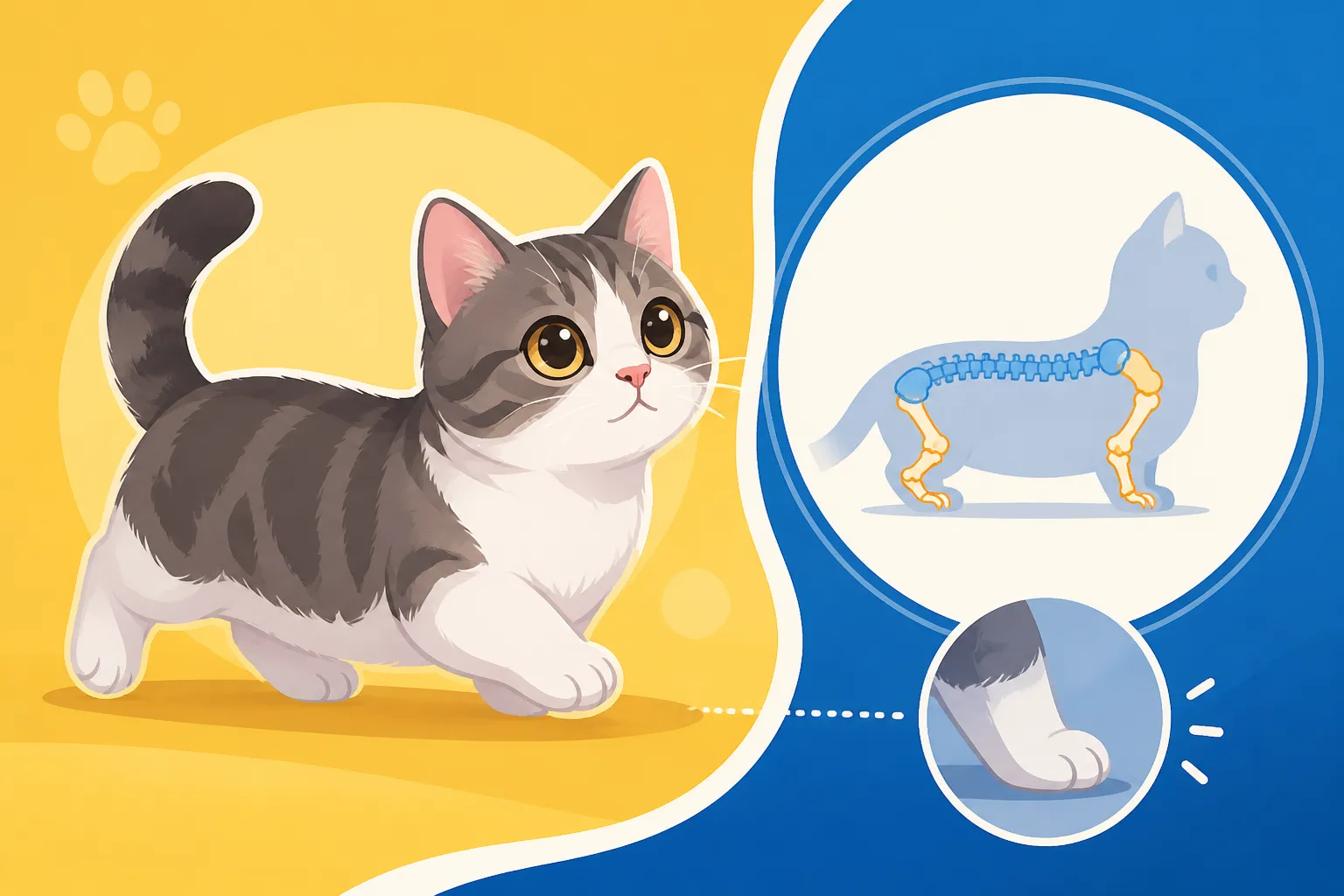
At the heart of the Munchkin's unique physique is a form of dwarfism known as pseudoachondroplasia. Unlike other forms of dwarfism, this particular genetic mutation specifically affects the long bones in their legs, causing them to be significantly shorter than those of a typical cat. Imagine a standard cat's leg bones—the femur, tibia, humerus, and radius—now picture them proportionally condensed. This isn't a case of undeveloped legs, but rather a difference in the length these bones achieve during growth.
This genetic characteristic results in forelegs that often appear slightly bowed and hind legs that are frequently a bit longer than their front counterparts. It's a fundamental architectural change that dictates every aspect of their locomotion. They don't just have "small" legs; their limb structure is inherently different, requiring a completely altered mechanical approach to movement. When you see a Munchkin, the initial visual is their low stature, but it's the specific shortening of these long bones that creates the foundation for their distinct gait. What Pseudoachondroplasia Does to a Munchkin's Legs delves deeper into the specifics of this condition.
Normal Body, Short Legs
One of the biggest misconceptions about Munchkin cats is that they are simply miniature versions of other breeds. This couldn't be further from the truth. While their legs are undeniably short, their body length, torso, and spinal column are typically of normal proportion for a domestic cat. This creates a fascinating and often challenging juxtaposition: a regular-sized cat body perched on significantly abbreviated limbs.
This unique combination means their center of gravity is much lower to the ground than a standard cat's. Instead of having a body that's scaled down to match their legs, they have a full-sized body that their short legs must support and propel. This impacts how weight is distributed across their joints and muscles, influencing their posture and overall balance. A Munchkin isn't a tiny cat; it's a cat with a standard body, whose legs simply didn't grow to the typical length. This is why you'll often hear discussions about Why a Munchkin's Spine Is Normal Length, emphasizing that the condition is specific to the limbs, not the trunk.
Understanding the Distinctive Movements
Given their unique anatomy, it's no surprise that Munchkins have developed a set of movements that are entirely their own. These aren't just minor variations; they are fundamental adaptations that allow them to navigate their world effectively.
The "Ferret-Like" Waddling Gait
If you've spent any time watching a Munchkin move, you've likely noticed a characteristic "waddle" or a slinky, almost ferret-like glide close to the ground. This isn't a sign of clumsiness or discomfort; it's their efficient way of getting around. Their short legs mean they can't achieve the long, elegant strides of a typical cat. Instead, they compensate with rapid, shorter steps, keeping their body low and their movement fluid.
This distinctive gait allows them to maintain momentum and speed without the need for high-impact leaps or stretches. They often appear to glide rather than walk, their body swaying gently as their short limbs work hard beneath them. It's a charming and surprisingly effective way to traverse open spaces, making them appear almost as if they're scurrying rather than trotting. For many, it's this unique waddle that instantly identifies a Munchkin, setting them apart visually from all other cat breeds. You might want to read more about Why a Munchkin Moves Like a Ferret to understand this comparison better.
Compensation and Adaptation
Munchkins are masters of compensation. Since their legs limit their traditional feline movements, they've adapted by utilizing their entire body in a much more integrated way. When a Munchkin runs, for example, you'll notice their back and hips engage in a way that contributes significantly to their propulsion, almost like a slinky stretching and contracting. They don't just rely on leg power; their whole core gets involved.
Furthermore, to maintain stability and balance, especially during quick turns or sudden stops, Munchkins often splay their short legs out slightly. This creates a wider base, enhancing their equilibrium as they navigate corners or descend from low heights. These adaptations are not learned behaviors in the traditional sense; they are inherent, instinctive responses to their unique physical structure. From the moment they take their first steps as kittens, they are naturally developing a movement vocabulary perfectly suited to their bodies. This incredible adaptability is also why Why a Munchkin's Low Body Helps It Chase explains how they can still be surprisingly agile hunters on the ground.
The Impact on Everyday Activities
The Munchkin's distinct gait isn't just an aesthetic curiosity; it has practical implications for their daily life, influencing everything from how they play to how they access their favorite spots.
Running and Cornering
It’s easy to assume that short legs equate to slow movement, but this is one area where Munchkins truly defy expectations. On level ground, a healthy Munchkin can be surprisingly fast. Their low center of gravity, combined with their quick, shuffling steps, allows them to accelerate rapidly and maintain impressive speeds over short distances. They might not cover as much ground per stride as a long-legged cat, but their higher stride frequency makes up for it.
What’s even more remarkable is their ability to corner. That low center of gravity, which might look like a disadvantage, actually becomes an asset when making sharp turns. They can hug the ground and pivot with incredible agility, outmaneuvering other cats in a game of chase on the flat. This makes them delightful playmates, as they can dart and weave through obstacles with surprising grace. If you're curious about their speed, check out How Fast a Munchkin Runs on Level Ground.
Jumping and Climbing Limitations
While Munchkins excel at ground-level agility, their short legs undeniably impose significant limitations on their vertical movement. Jumping onto high surfaces like kitchen counters, tall cat trees, or even some windowsills is simply not within their physical capabilities. They often try, and it's quite common to see a Munchkin repeatedly attempting a jump they can't quite make, fueled by pure cat-logic determination.
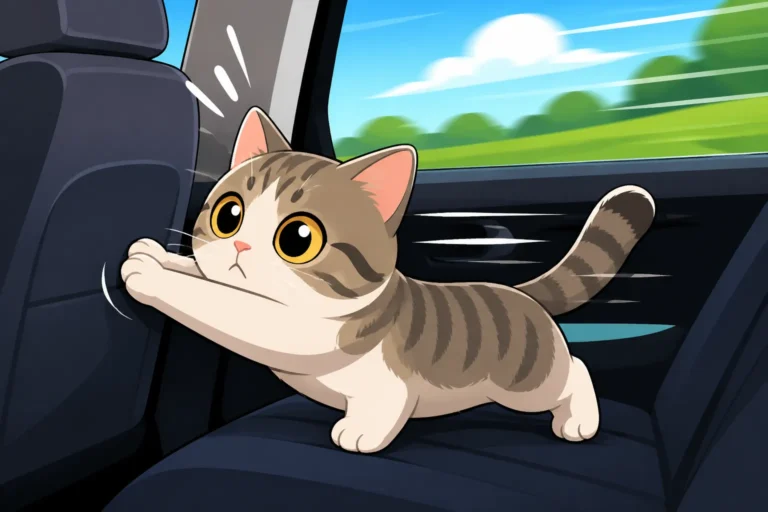
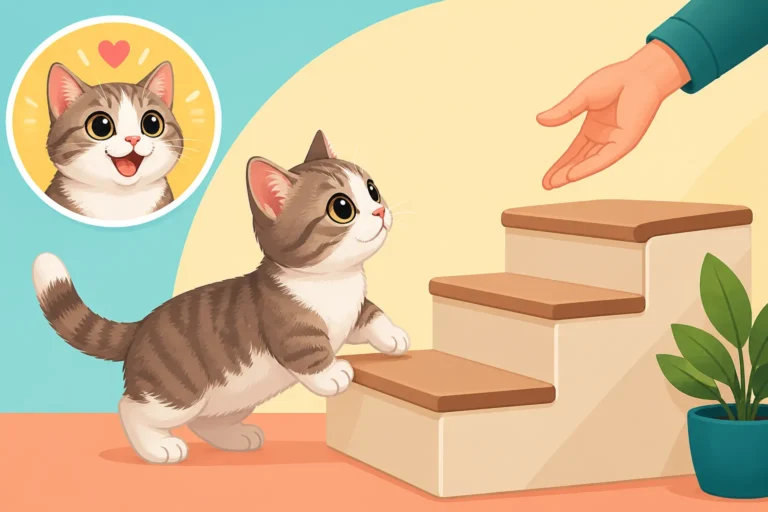
Instead of clearing obstacles with a single leap, Munchkins become strategic climbers. They learn to utilize furniture as a series of steps, turning a bookshelf or a sofa into a navigable staircase. An armchair might be a stepping stone to the sofa, which in turn leads to a coffee table, allowing them to slowly but surely ascend to their desired vantage point. However, direct jumps to significant heights are rare, and attempting them can put undue strain on their spine and joints. Owners often need to provide ramps or pet stairs to help them access beds, sofas, or even window perches safely. How High a Munchkin Can Actually Jump and How a Munchkin Uses Furniture as a Staircase are excellent resources for understanding these limitations and adaptations.
Health Considerations and Gait
It’s natural for a distinctive physical trait like the Munchkin's short legs and unique gait to raise questions about potential health implications. It’s important to understand what is normal for the breed and what might be a sign of a problem.
Normal Variation vs. Problematic Changes
For a healthy Munchkin, their characteristic waddling, ferret-like gait is entirely normal and typically pain-free. It's simply how their body is designed to move. However, like any cat, Munchkins can develop orthopedic issues or other health problems that manifest as changes in their gait. It's crucial for owners to be observant and differentiate between their cat's normal movement pattern and any signs of discomfort.
Look for specific warning signs: a sudden limp, reluctance to use one or more legs, stiffness after resting, an inability to jump even small heights they once managed, or a noticeable change in their usual speed and agility. These could indicate joint pain, arthritis, or another underlying condition that requires veterinary attention. Regular check-ups are vital to monitor their musculoskeletal health. Your vet will likely pay close attention to their movement, as described in How a Vet Watches a Munchkin Walk.
Spinal Concerns and Their Effect on Gait
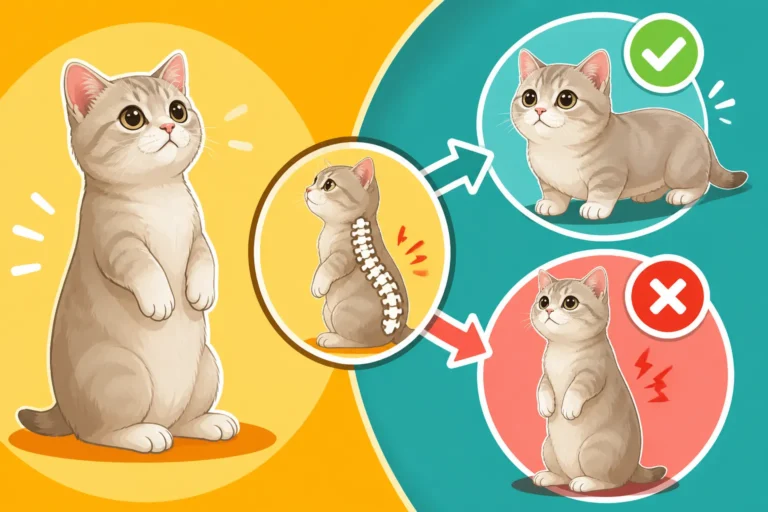
While the Munchkin's shortened limbs are the most obvious aspect of their unique anatomy, some individuals can be prone to certain spinal conditions, the most notable being lordosis. Lordosis is a condition where the spine develops an excessive inward curve, particularly in the lumbar region, causing the back to sag. While not all Munchkins develop lordosis, it's a concern within the breed that prospective owners should be aware of.
Severe lordosis can significantly impact a Munchkin's gait and overall mobility. The pronounced spinal curve places additional strain on the vertebrae and surrounding muscles, potentially leading to pain, discomfort, and nerve compression. A cat with severe lordosis might move with a stiff, unnatural posture, struggle to walk or run, and show signs of weakness in their hindquarters. It's a serious condition that can severely compromise their quality of life, underscoring the importance of responsible breeding practices and early veterinary screening. For more information on this, see What Lordosis Actually Is in a Munchkin and Why a Munchkin's Spine Carries a Load a Normal Cat's Does Not.
Grooming and Lifestyle Adaptations
The Munchkin's unique body shape and gait don't just influence how they move; they also impact their ability to perform basic self-care and necessitate specific adjustments to their living environment.
Self-Grooming Challenges
One of the less obvious but highly practical implications of a Munchkin's short legs and low-slung body is the challenge it poses for self-grooming. A typical cat can twist, stretch, and contort itself into all manner of positions to reach every part of its fur. A Munchkin, however, finds certain areas nearly impossible to reach effectively. Their short legs mean they struggle to reach their hindquarters, the underside of their belly, and even parts of their back.
This limitation is particularly pronounced for long-haired Munchkins, where mats can quickly form in the unreachable areas around their rear and undercarriage. Even shorthaired Munchkins can develop skin issues if these areas aren't kept clean and free of debris. Owners must step in and provide regular grooming assistance, brushing these hard-to-reach spots diligently. This isn't just about aesthetics; it's about preventing discomfort, skin infections, and severe matting that might require professional intervention. Understanding Which Parts of Itself a Munchkin Cannot Reach and Whether Matting Becomes a Health Problem in a Munchkin is vital for their well-being.
Adapting the Home Environment
Living with a Munchkin cat means embracing the fact that their environment needs to be adapted to them, rather than expecting them to adapt to a standard cat's world. With a Munchkin the House Changes, Not the Cat isn't just a catchy phrase; it's a fundamental principle of Munchkin ownership. Their distinct gait and jumping limitations mean that thoughtful modifications can significantly enhance their quality of life.
This includes providing low-entry litter boxes that they can easily step into without straining their back or legs, as many standard boxes have high sides. Ramps and pet stairs are not luxuries but essential equipment, enabling them to safely access sofas, beds, and windowsills that would otherwise be out of reach. Companies like Amazon offer a variety of pet ramps and steps that can be easily integrated into your home. Furthermore, consider non-slip surfaces like rugs or carpet runners on slick floors to give them better traction, preventing slips and falls that could injure their joints. These adaptations ensure they can explore, rest, and relieve themselves comfortably and independently. For comprehensive advice on this, check out Ramps and Steps Are Munchkin Equipment, Not Luxuries.
Comparing the Munchkin's Gait to a Standard Cat's
To truly appreciate the distinctiveness of the Munchkin's movement, it helps to put it side-by-side with a typical domestic cat's gait.
| Feature | Standard Domestic Cat | Munchkin Cat |
|---|---|---|
| Leg Length | Proportionally long, designed for leverage and reach | Significantly shortened, especially long bones |
| Body Position | Elevated, agile, often appears to float over the ground | Low-slung, close to the ground, body appears to glide |
| Stride Length | Long, graceful, covers significant distance per step | Short, quick, shuffling steps, higher frequency of steps |
| Center of Gravity | Higher, allowing for greater verticality | Lower, enhancing ground-level stability and cornering ability |
| Jumping Ability | Excellent, can easily leap onto high surfaces | Severely limited, relies on steps or multi-stage climbing |
| Running Style | Powerful push-off, high-stepping, can appear effortless | Ferret-like waddle, whole-body propulsion, scurrying appearance |
| Overall Impression | Elegant, athletic, capable of vast range of motion | Slinky, charmingly unique, highly adapted for horizontal movement |
Disclaimer
This article is for general informational purposes only and does not constitute professional advice. Laws, prices and regulations vary by location and change over time. Consult a qualified professional for guidance on your specific situation.