Whether a Munchkin Should Be Filmed Walking for the Vet
It’s a common scenario for us cat parents: you notice something a little off with your beloved Munchkin at home, maybe a subtle change in their walk or how they jump. You call the vet, explain your concerns, and then the big day arrives. You get to the clinic, pull your precious cat out of the carrier, and what happens? They suddenly act perfectly normal, or they’re too stressed to move naturally, making it impossible for the vet to see what you've been observing. It’s incredibly frustrating when your furry friend decides to put on their best "nothing to see here" performance right when it matters most. This guide will walk you through why filming your Munchkin's movement at home can be a game-changer for your vet, what exactly to capture, and how to get the most useful footage to help diagnose any potential issues.
Why Filming Your Munchkin's Gait Can Be Invaluable for a Vet Visit
Our Munchkin cats are unique, aren't they? Their adorable short legs give them a distinctive waddle and sometimes a "ferret-like" gait that can be surprisingly fast on the flat. But these very characteristics can also make it challenging to spot subtle changes in their movement, especially for a vet who might only see them for a few minutes in an unfamiliar, often stressful, environment. When you're trying to describe "a funny hop" or "a bit of stiffness" to your vet, words often just don't do it justice.
Think about it: at home, your Munchkin is relaxed. They're navigating their familiar territory, jumping onto their favorite low-set Munchkin Ramps and Steps Are Munchkin Equipment Not Luxuries, stretching, playing, and going about their daily routine. This is when their true movement patterns are on display. In a vet clinic, however, a cat's natural instincts often kick in. They might be nervous, trying to hide, or simply moving in a constricted way due to the small exam room. This "white coat syndrome" for cats means that any subtle limp, struggle with a small jump, or difficulty in transitions that you've been noticing might vanish completely. The vet sees a cat that appears perfectly fine, and you leave feeling unheard and worried.
This is where a video comes in as your secret weapon. It provides an objective record of your Munchkin's movement in their natural habitat, giving your vet crucial insights they simply can't get during a quick exam. It allows them to see the nuances of their gait, the effort involved in certain movements, or even the tell-tale signs of discomfort that might be masked by adrenaline or fear in the clinic. It’s like bringing a slice of your home environment directly to the examination table, giving your vet a much clearer picture of what's truly going on with your furry friend.
Capturing What the Vet Cannot See
The typical vet visit is structured around a physical examination. The vet will palpate joints, observe movement within the confines of the room, and listen to your concerns. But there are inherent limitations. A cat might be stiff from the carrier ride, refuse to walk in a straight line, or simply freeze up. A video allows you to show specific instances of concern – perhaps a stumble getting off the sofa, a reluctance to use a particular ramp, or a change in how they initiate a run. For a Munchkin, whose Why a Munchkin's Spine Carries a Load a Normal Cat's Does Not, even minor changes in gait can be significant indicators of underlying issues that are not immediately obvious.
It also provides a historical record. If you suspect a gradual change, having videos taken a few weeks or months apart can clearly demonstrate progression or regression, which is incredibly difficult to convey through description alone. This visual evidence can validate your observations and help the vet narrow down potential causes, whether it's early signs of arthritis, discomfort from a minor injury, or even a subtle neurological issue.
Reducing Stress for Both You and Your Cat
Let’s be honest, vet visits can be stressful for everyone involved. For your Munchkin, it’s a flurry of strange smells, sounds, and unfamiliar hands. For you, it’s the pressure to accurately describe symptoms and the worry that your cat won't cooperate. Having a video can significantly reduce this pressure. You won’t have to coax your cat into performing or try to replicate a specific movement. Instead, you can focus on comforting your cat during the physical exam while the vet reviews the footage at their leisure, possibly even before they enter the room. This can lead to a more efficient and less stressful consultation, allowing both you and your vet to get to the heart of the matter without relying solely on a stressed cat’s impromptu performance.
What to Focus On When Filming Your Munchkin
When it comes to filming your Munchkin for the vet, it’s not just about hitting record. You want to be strategic to capture the most useful information. Think of yourself as a feline detective, gathering clues through your lens. The goal is to highlight the specific behaviors or movements that worry you, but also to provide context by showing your Munchkin moving generally.
Consider documenting their movement in various situations and on different surfaces. A hard floor might reveal a slip or an uneven weight distribution that carpet could hide. Observe how they navigate tight spaces versus open areas, or how they transition from rest to activity. Your vet is interested in seeing the full spectrum of movement, not just a highlight reel of what's wrong.
Capturing Key Movement Patterns
Start by filming your Munchkin walking on a level surface. A long hallway or an open room is perfect. Get different angles: straight on, from behind, and from the side. You're looking for symmetry, evenness of stride, and any signs of limping, dragging, or reluctance to bear weight on a particular limb. Does one leg seem to swing out more than the other? Do their hips sway excessively?
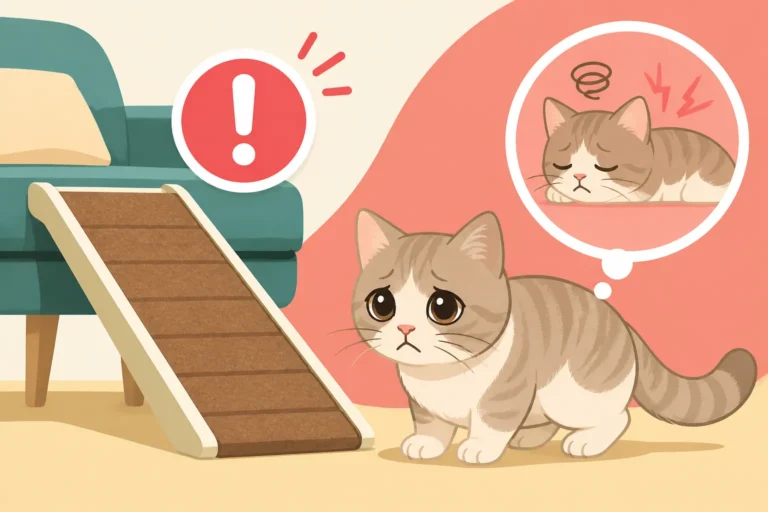
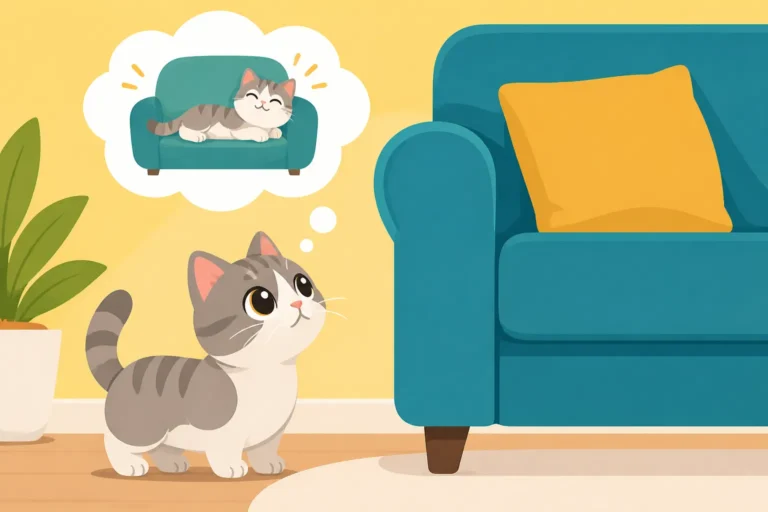
Next, observe how they manage changes in height. This is particularly crucial for Munchkins. Can they still use their Munchkin Ramps and Steps Are Munchkin Equipment Not Luxuries with ease? Do they hesitate before making a small jump onto a sofa or a low bed? Even if they usually make the jump, look for signs of discomfort upon landing, or if they take a moment to "collect" themselves afterward. Pay attention to how they get down from furniture too; this can often reveal more stiffness or pain than going up. You might have noticed that Coming Down Is Harder Than Going Up for a Munchkin.
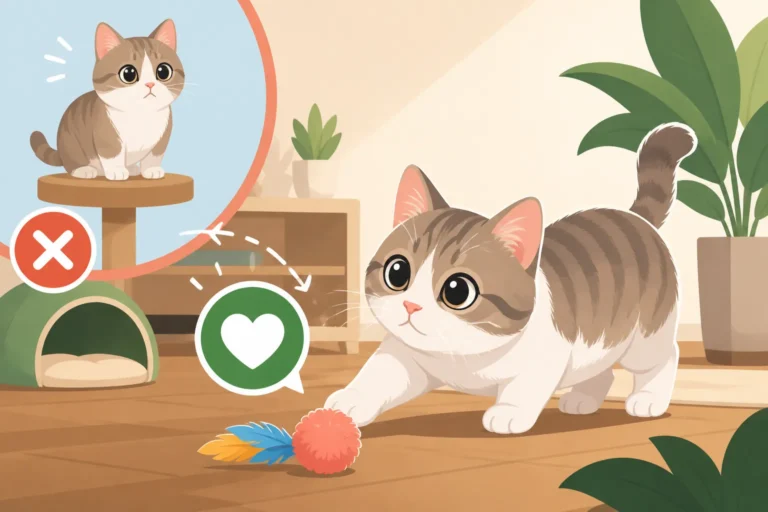
Don't forget to film them in their natural play. A Munchkin’s unique physical structure means their play can look different. Are they still engaging with toys that require quick turns or short bursts of speed? Do they hesitate to pounce or stretch fully? Observe their "prairie dog sit" – that adorable upright posture unique to the breed. While usually a cute behavior, if they seem to struggle to get into or out of it, or can't hold it for long, it could be a subtle sign of spinal discomfort. Whether the Prairie Dog Sit Strains a Munchkin's Spine is a common concern among owners.
Documenting Specific Concerns
If you have a very specific concern, such as difficulty grooming a particular area, a new sensitivity to touch, or a change in how they use the litter box, try to capture that on video too. For instance, if your Munchkin is having trouble reaching their hindquarters for grooming, film them attempting to clean themselves. This visual can help the vet understand the exact limitation. Which Parts of Itself a Munchkin Cannot Reach can change as they age or if they develop joint issues.
If you suspect pain, try to film moments where you see signs of it. This could be flinching when touched, crying out during a specific movement, or even an unusual posture they adopt while resting. These candid moments can be incredibly valuable, as your cat is unlikely to exhibit them on cue at the vet's office.
Here's a quick table to help you organize your filming strategy:
| Area of Concern | What to Film | Why It's Important |
|---|---|---|
| Walking/Gait | Straight line, turns, different surfaces (hardwood, carpet). | Reveals limps, stiffness, uneven weight bearing. |
| Jumping/Climbing | Getting on/off low furniture, using ramps/steps. | Shows difficulty with elevation changes, pain on landing, reluctance to ascend/descend. |
| Play | Running, pouncing, stretching for toys. | Indicates overall mobility, agility, and presence of pain during activity. |
| Grooming | Attempts to groom hindquarters, back, or hard-to-reach areas. | Highlights flexibility limitations, Whether Matting Becomes a Health Problem in a Munchkin. |
| Posture/Rest | Unique resting positions, difficulty getting up after rest, "prairie dog sit" duration. | Can indicate discomfort, stiffness, or spinal issues like What Lordosis Does to a Munchkin. |
| Reactions to Touch | Flinching, vocalizing when a specific area is touched. | Direct evidence of localized pain or sensitivity. |
| Litter Box Use | Entering/exiting the box, posture during elimination. | May reveal discomfort when squatting or stepping over edges. |
Tips for Getting the Best Video for Your Vet
Now that you know what to film, let's talk about how to film it effectively. A shaky, poorly lit video taken from too far away might not be much more helpful than your verbal description. You want to make it easy for your vet to see what they need to see.
Lighting and Clarity are Key
Good lighting is paramount. Try to film in a well-lit room, preferably with natural daylight. Avoid backlighting, which can make your Munchkin appear as a silhouette, obscuring important details. If natural light isn't an option, ensure the room lights are bright enough. Turn on all the lights, open the curtains wide, and try to minimize shadows.
Keep the camera steady. A tripod, or even just bracing your elbows against your body, can make a huge difference. Shaky footage is hard to watch and analyze. If using a phone, ensure the lens is clean for crisp images. Many phone cameras have excellent quality these days, so don't feel you need professional equipment.
Optimal Angles and Distance
Film from a consistent distance that allows your Munchkin to fill a good portion of the frame without being too close that you cut off their legs or too far that they become a tiny dot. A good rule of thumb is to be close enough to see individual limb movements clearly, but far enough back to see their entire body and how they interact with their environment.
Record from multiple angles, especially from the side (profile), front, and rear.
- Side View: This is excellent for observing stride length, how high they lift their feet, joint flexion and extension, and spinal posture.
- Front View: Helps assess any splaying, bowing, or inward/outward rotation of the front legs. Why a Munchkin's Front Legs Look Bowed is a common visual feature, but changes might indicate a problem.
- Rear View: Crucial for spotting issues with hind leg movement, tail carriage, and overall symmetry of the back end. This can be especially important if you suspect any issues with their back or hips.
Duration and Multiple Clips
Don't aim for one long, epic film. A few shorter, focused clips are much more digestible for a busy vet. Aim for clips that are 30 seconds to 1 minute long. If your Munchkin stops moving or changes activity, stop recording and start a new clip when they resume a relevant action.
It's better to have several short clips showcasing different movements or issues than a single long one where the vet has to fast-forward to find the relevant parts. Label your clips if possible, e.g., "Munchkin walking on tile," "Munchkin trying to jump on chair," "Munchkin grooming hind leg."
Practical Tools for Filming
You don't need fancy gear, but a few simple additions can improve your results.
- Phone/Tablet: Most modern smartphones have excellent cameras. Ensure you have enough storage space!
- Tripod: Even a small, inexpensive phone tripod (easily found on Amazon) can greatly improve stability.
- Treats/Toys: Use these to encourage your Munchkin to move naturally and engage in activities you want to capture. Toss a favorite toy across the floor to get them running, or place a treat on a low step to encourage them to climb.
- Non-Slip Surfaces: If your Munchkin is struggling on a slippery floor, place down a runner or mat (like a simple bath mat or a small rug from Amazon) to give them better traction, allowing you to observe their gait without the added challenge of slipping. This also helps to ensure that what you're seeing isn't just a consequence of an inappropriate surface.
Before your appointment, gather all your clips into a single folder or playlist on your phone or computer. Make sure they are easily accessible and ready to play. You can also upload them to a cloud service and share the link, though some vets might prefer you bring them on a USB stick or just play them directly from your device. Always ask your vet their preference when you book the appointment.
What Your Vet Will Be Looking For in the Footage
When your vet reviews your meticulously filmed footage, they won't just be looking for a blatant limp. They're trained to observe subtle cues that, when combined with their physical examination, tell a much larger story about your Munchkin's health. They’re essentially putting together a puzzle, and your videos provide many of the missing pieces.
Your vet understands that every cat is an individual, and that Munchkins, with their unique short stature, have a different biomechanical profile than a long-legged cat. They'll factor this into their assessment. They know Why a Munchkin's Legs Are Short but Its Body Is Not and how this affects their movement and balance.
Signs of Pain or Discomfort
One of the primary things the vet will be looking for is any indication of pain or discomfort. This can manifest in various ways:
- Altered Gait: Is your Munchkin favoring a leg? Is their stride shorter on one side? Do they dip their head or hunch their back during movement? Do they shuffle their feet?
- Reluctance to Move: Hesitation before jumping, climbing, or even running can be a significant sign of pain. If they once loved to chase a laser pointer but now seem less enthusiastic, that's a clue.
- Changes in Posture: Does your Munchkin hold their body differently when standing or sitting? Are they stretching less, or in an unusual way?
- Stiffness: This might be evident after periods of rest, where they seem to "warm up" into movement. At What Age a Munchkin Starts to Stiffen can vary, but any new stiffness is worth noting.
- Vocalizations: Any unexpected meows, growls, or hisses during movement or when touched in a certain area are clear indicators of pain.
They will also be looking for specific issues relevant to Munchkins. For example, changes in gait could hint at worsening joint health, such as How Arthritis Shows in a Munchkin's Front Legs, which can affect their shoulders and elbows due to the way their short legs bear weight.
Neurological Indicators
Beyond musculoskeletal pain, your vet will also be looking for neurological signs. These can sometimes be very subtle:
- Ataxia: This is a loss of coordination. Your Munchkin might look wobbly, stumble, or have an exaggerated gait.
- Paresis: Weakness in a limb or limbs. This might manifest as dragging a paw, difficulty supporting weight, or scuffing their nails.
- Tremors or Fasciculations: Involuntary muscle twitching or trembling could be indicative of a neurological issue.
- Proprioception Deficits: This refers to the awareness of body position. A cat with poor proprioception might place their paws awkwardly or struggle to navigate obstacles.
While conditions like lordosis can affect a Munchkin's spine, leading to potential neurological symptoms, Why Lordosis Is Not Unique to the Munchkin and other spinal problems can also arise. The video can offer clues to differentiate between musculoskeletal pain and neurological dysfunction.
Assessing Overall Mobility and Quality of Life
Ultimately, the video helps your vet assess your Munchkin's overall mobility and quality of life. Are they still able to enjoy their favorite activities? Are they engaging with their environment as they used to? These are crucial questions, especially as Munchkins get older. Caring for a Munchkin Past Ten often involves careful monitoring of their mobility and comfort.
The video, combined with your detailed observations and the vet's clinical expertise, forms a much more complete picture than any single piece of information could provide. It empowers your vet to make a more accurate diagnosis and recommend the most appropriate course of action, whether that's pain management, further diagnostics like X-rays (especially for spinal issues), or physical therapy.
A well-prepared video isn't just a convenience; it's a powerful diagnostic tool that genuinely helps your vet help your beloved Munchkin live their happiest, most comfortable life.
Disclaimer
This article is for general informational purposes only and does not constitute professional advice. Laws, prices and regulations vary by location and change over time. Consult a qualified professional for guidance on your specific situation.