Why a Munchkin Wears Its Claws Down Unevenly
One of the many small, often overlooked challenges of caring for a Munchkin cat is noticing that their claws seem to wear down unevenly. It's not just a minor aesthetic concern; uneven claw wear can signal deeper issues related to their unique physical structure and how they move through the world. This guide will help you understand why this happens, what to look for, and how to proactively manage your short-legged companion's paw health to ensure they stay comfortable and active.
The Unique Biomechanics of a Munchkin's Paws
A Munchkin cat’s most defining characteristic, of course, is those adorable short legs. But what many people don't fully grasp is just how profoundly these shorter limbs impact every aspect of their movement and physical interaction with their environment, right down to how their claws interact with surfaces. It's not just a matter of being lower to the ground; it's a complete shift in feline biomechanics.
The Short Legs and Their Impact on Movement
Imagine trying to navigate your daily life if your legs were significantly shorter than average. You’d adapt, certainly, but every motion would be different. For a Munchkin, their shortened long bones (a condition called pseudoachondroplasia) mean that their leverage points are altered. They don't jump as high, they can't stretch as far, and their gait, often described as a ferret-like scamper, is quite distinct. This unique locomotion means they interact with the ground and obstacles in ways a typical long-legged cat doesn't. When they run or play, their body is closer to the ground, and their stride is shorter and quicker. This can lead to different pressure points on their paws as they push off or land, affecting how their claws meet various surfaces. Think about how a long-legged cat might spring effortlessly onto a sofa, distributing its weight fluidly. A Munchkin, however, might have to scrabble, push harder, or use a series of smaller jumps, creating friction and wear on different parts of their paws and claws.
Furthermore, the very angle at which their paws meet the ground can be subtly different. Because their legs are so short, their overall posture places a greater load on certain joints and muscle groups, which in turn influences paw placement. If you've ever watched a Munchkin move, you might notice that while they are surprisingly agile and fast on the flat, their movements are incredibly deliberate when navigating changes in elevation or engaging in activities that require pushing off. This constant, slightly altered engagement with the ground can mean some claws are used more frequently or with greater force than others, leading to differential wear. It's a silent, ongoing adaptation that their bodies perform every day.
How a Munchkin Stands and Bears Weight
Just standing still is a different experience for a Munchkin. Their short legs mean their center of gravity is lower, and the distribution of their body weight across their four paws might not be perfectly even, or at least, not in the same way as a standard cat. A long-legged cat often stands with a natural spring in its step, ready to pounce or dash. A Munchkin, while equally ready, might carry more relative weight on its front paws due to the need for stability or simply because of the angle of their shortened limbs. This constant weight-bearing bias can mean that the claws on the more heavily weighted paws, typically the front ones, experience more friction and pressure against surfaces like floors, carpets, and scratching posts.
Consider how they might sit or rest. A Munchkin often sits upright on its hind legs in the famous "prairie dog" pose, a behavior almost unique to the breed. While charming, this posture shifts all their weight onto their hindquarters, but it also means that when they eventually settle back down or move, the transition can again place specific, uneven demands on their claws. Over time, these subtle differences in how they stand, walk, run, and even just shift their weight can contribute significantly to uneven wear patterns on their claws. It’s a cumulative effect, happening day in and day out, that can eventually manifest as claws that are noticeably shorter or more worn on certain toes or paws.
Understanding Uneven Claw Wear
It's easy to dismiss uneven claw wear as "just how cats are," but for a Munchkin, it can be a significant indicator of how their unique anatomy is coping with daily life. Paying attention to these subtle signs can help you identify potential issues before they become more serious.
The Role of Natural Scratching Behavior
All cats scratch. It's an instinctive behavior vital for their physical and mental well-being. Scratching helps them remove the dead outer layers of their claws, mark their territory, and stretch their muscles. However, a Munchkin's ability to engage in "natural" scratching, especially vertical scratching, is often limited by their short stature. A standard scratching post, designed for a cat that can stretch its full body length upwards, might be completely impractical for a Munchkin. Why a Munchkin Cannot Stretch Up a Scratching Post is a major factor here. They simply can’t reach high enough to get that satisfying full-body stretch and claw engagement.
This limitation forces them to adapt. Instead of tall vertical posts, they might gravitate towards horizontal scratchers, cardboard mats, or even carpeted stairs (if they have them). While these alternatives are good, they might not provide the same comprehensive claw maintenance. Some paws or claws might get more action than others, depending on the angle and surface. For example, if your Munchkin primarily uses a horizontal mat, they might drag certain claws more, or exert more pressure on their dominant front paw, leading to one side wearing down faster. It's not that they don't scratch enough, but rather that the type of scratching they're able to do might not promote even wear across all their claws.
Identifying Uneven Wear Patterns
So, what exactly should you be looking for? It's not always obvious, especially with fluffy paws. Uneven wear typically manifests in a few ways:
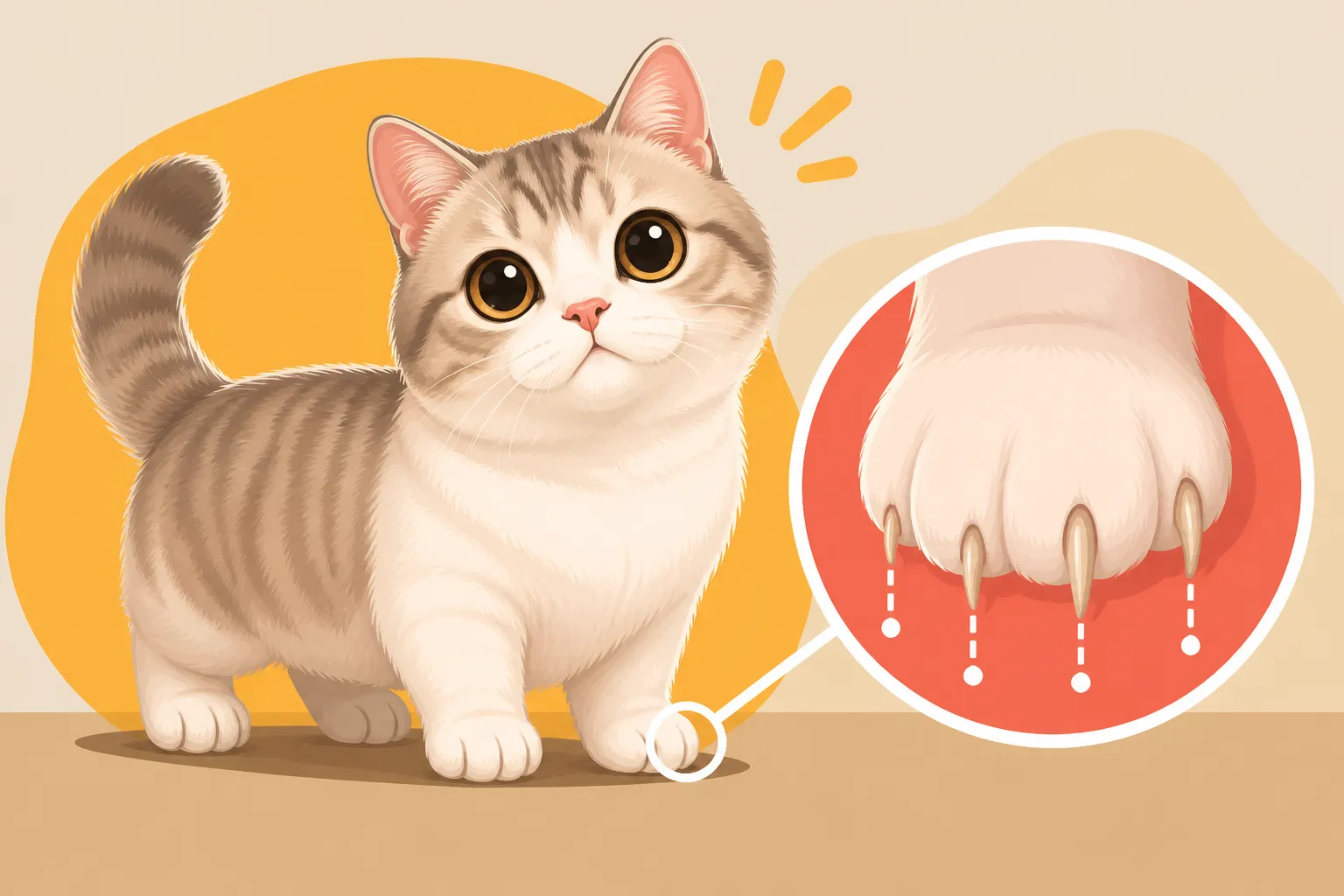
- Varying Lengths: Some claws on the same paw might be noticeably shorter or blunter than others. For instance, the two middle claws on a front paw might be more worn than the outer ones, or vice versa.
- Different Angles: The tips of the claws might be worn down at different angles, indicating inconsistent contact with scratching surfaces.
- One Paw vs. Another: You might observe that the claws on one front paw are more worn than the other, or that the front paws show significantly more wear than the hind paws (which is common for all cats, but can be exacerbated in Munchkins).
- Roughness or Chipping: While all claws shed layers, excessively rough, chipped, or frayed claws on certain toes, particularly if others are smooth, can indicate uneven force or friction.
When you're checking your Munchkin's paws, gently extend each claw. Look at the length, shape, and condition of the tip. Pay particular attention to their front paws, as these are usually the primary tools for scratching, climbing (even if it's just a small step), and bearing weight during movement. A healthy claw should be pointed but not excessively long, and relatively smooth. Unevenness often becomes more apparent as the cat ages and joint issues potentially develop.
Common Reasons for Uneven Wear in Munchkins
Beyond the general mechanics of their short legs, several specific factors can contribute to uneven claw wear in Munchkins. Understanding these can help you pinpoint the root cause for your individual cat and take appropriate action.
Compensatory Movement and Joint Strain
Because their legs are shorter, Munchkins often have to compensate in their movements, which can put extra strain on certain joints and muscle groups. Imagine a cat with normal legs needing to climb onto a low stool. They might simply hop up. A Munchkin, however, might have to use a more powerful push-off, engage their shoulders more, or even "commando crawl" their way up. These compensatory movements, repeated over time, can lead to uneven pressure on their paws.
For example, if a Munchkin subtly favors one front leg due to a slight stiffness or discomfort in a shoulder or elbow, that paw might experience less engagement with scratching surfaces, or alternatively, the other paw might take on more of the scratching burden to compensate. This is where conditions like arthritis can start to show their subtle signs. How Arthritis Shows in a Munchkin's Front Legs is particularly relevant here, as it can affect their ability to flex and extend their paws naturally. If a joint is stiff or painful, a cat might alter its gait, leading to certain claws dragging or pushing more forcefully. The cumulative effect of Why a Munchkin's Shoulders Wear First and What Repeated Landing Does to a Munchkin's Elbows can mean that the front paws, in particular, become areas of concern for uneven wear. It's a domino effect: discomfort in one joint leads to altered movement, which then influences claw wear.
Environmental Factors and Scratching Opportunities
The environment your Munchkin lives in plays a huge role in how their claws wear down. As mentioned, traditional tall scratching posts are often useless. If your home doesn't offer suitable, accessible scratching alternatives, your Munchkin will find their own, and these might not be ideal for even claw maintenance.
Consider these scenarios:
- Lack of suitable horizontal scratchers: If the only scratching options are vertical posts they can't effectively use, they might resort to scratching carpet, which can wear claws down in an inconsistent manner depending on the angle of attack.
- Hard flooring: Homes with extensive hard surfaces like laminate or tile, without enough rugs or soft landing spots, can mean that during play or quick movements, their claws might "grip" or "drag" differently, contributing to uneven abrasion.
- Inaccessible furniture: If a Munchkin is constantly trying (and sometimes failing) to jump onto furniture, the friction generated by these attempts, especially if they're scrabbling or slipping, can impact claw wear. Even if you've provided How to Set Up Ramps Around a Munchkin's House, they might still attempt a direct jump sometimes, leading to uneven contact.
- Limited variety: Cats benefit from a variety of scratching surfaces – cardboard, sisal, carpet, wood. If your Munchkin only has access to one type, it might not cater to all their claw-grooming needs, again leading to certain claws being neglected or overused.
A Munchkin relies heavily on what's available at floor level, and if those options don't support healthy claw maintenance, uneven wear is almost inevitable.
Underlying Health Considerations
While uneven claw wear is often a sign of mechanical issues related to their short legs, it can also point to broader health concerns, especially as they get older.
- Arthritis and joint pain: As discussed, joint pain can alter gait and paw placement. If your Munchkin is experiencing discomfort, they might naturally shift their weight or avoid using a painful paw to scratch or push off. This can lead to the claws on the favored paw becoming overgrown, or the claws on the other paw wearing down excessively from compensatory use. This is particularly important because Whether a Munchkin Gets Arthritis Earlier is a common concern due to their unique skeletal structure.
- Obesity: Why Weight Is More Dangerous on a Munchkin is a crucial point. Extra weight puts significant strain on a Munchkin's short legs and spine. This added burden can further alter their gait, making compensatory movements more pronounced and contributing to uneven claw wear. An overweight Munchkin might move less, scratch less effectively, or simply bear down more heavily on their paws.
- Neurological issues: In rare cases, uneven claw wear could be a very subtle sign of a neurological issue affecting coordination or muscle control, causing the cat to drag a paw or place it incorrectly. This is far less common but worth considering if other symptoms are present.
- Other paw injuries: A subtle paw pad injury, a thorn, or even an ingrown claw can cause a cat to favor one part of its paw, leading to uneven contact and wear on the other claws. Always check their paw pads and between their toes if you notice sudden changes.
Regular veterinary check-ups, where your vet assesses their gait and palpates their joints, are essential for identifying these underlying issues early. How to Keep an Old Munchkin Moving Safely involves addressing these health concerns head-on.
Strategies for Managing and Preventing Uneven Claw Wear
Okay, so we understand why it happens. Now, what can we actually do about it? The good news is that with a bit of proactive care and some thoughtful adjustments to their environment, you can significantly mitigate uneven claw wear and promote better paw health for your Munchkin.
Tailoring Scratching Solutions
Since Munchkins can't effectively use tall scratching posts, it’s vital to provide accessible and appealing alternatives. Think horizontal, angled, and low-level options.
- Horizontal Scratching Mats: These are a lifesaver. Look for sturdy cardboard scratchers or sisal mats that lie flat on the floor. Place them in multiple locations, especially near where your Munchkin likes to rest or stretch. Cats often like to scratch right after waking up. You can find excellent, durable options on platforms like Chewy or Amazon.
- Angled Scratchers: These offer a compromise between horizontal and vertical. They provide a gentle incline, allowing your Munchkin to get a good stretch without having to reach too high. Some come with multiple scratching surfaces or even small toys attached.
- Low-Profile Cat Trees/Steps: While not purely for scratching, Which Scratching Post a Munchkin Can Use will often be a horizontal one, but a cat tree with very close-set, carpeted platforms can offer scratching opportunities on its lower levels. Ensure the carpet is tightly woven and safe for their claws.
- Scratching Ramps: Some ramps designed for easy access to furniture can also double as scratching surfaces if made from sisal or a similar material. This serves a dual purpose, addressing mobility and claw health.
The key is variety and accessibility. Experiment with different materials (cardboard, sisal, carpet, even wood) and placements to see what your Munchkin prefers. Ensure they don't have to jump or strain to use them.
Regular Nail Trimming Techniques
Even with the best scratching setup, most Munchkins will still need regular nail trims, especially if you notice uneven wear. This is where you can step in to balance things out.
- Frequency: Aim for a trim every 2-4 weeks. This might seem frequent, but it's easier to take off tiny bits regularly than to tackle overgrown claws.
- Appropriate Clippers: Invest in good quality cat nail clippers. There are scissor-style and guillotine-style options. For a Munchkin's short forelegs, a smaller, scissor-style clipper might be easier to maneuver. Which Clippers Suit a Munchkin's Short Forelegs focuses on finding ergonomic tools for this specific challenge.
- Technique: The most important rule is to avoid cutting into the quick (the pink part inside the claw that contains blood vessels and nerves). If you're unsure, just clip the very tip, or ask your vet or a professional groomer for a demonstration. When trimming, hold your Munchkin gently but securely. Trimming a Munchkin's Claws Without Twisting Its Legs is crucial; support their paw and avoid any uncomfortable angles. You want to make clean, quick cuts.
- Targeting Unevenness: If you notice one claw is significantly longer, you can trim it slightly more aggressively (still avoiding the quick!) to bring it closer in line with the others. For claws that are overly worn, you might trim them less, letting them catch up naturally. It’s a balancing act.
- Positive Reinforcement: Make nail trims a positive experience. Offer treats, praise, and gentle handling. If your cat resists, do one paw at a time over several sessions rather than forcing a full trim.
Remember, consistent trimming can prevent ingrown claws and reduce the impact of uneven wear, keeping your Munchkin's paws healthy and comfortable.
Supporting Overall Joint Health
Addressing the root causes of uneven wear often circles back to joint health. Strong, flexible joints allow for more natural movement and better paw placement.
- Weight Management: This cannot be stressed enough. Why Weight Is More Dangerous on a Munchkin is a stark reality. Every extra ounce puts disproportionate strain on their short limbs and spine, exacerbating any joint issues and altering gait. Work with your vet to establish an ideal weight and a feeding plan to maintain it.
- Joint Supplements: Many vets recommend joint supplements for Munchkins, especially as they approach middle age. Ingredients like glucosamine, chondroitin, and omega-3 fatty acids can support cartilage health and reduce inflammation. Talk to your vet about suitable supplements and dosages.
- Regular, Low-Impact Exercise: Encourage gentle play that keeps them moving without excessive jumping or high-impact activities. Floor-level wand toys, laser pointers, and chasing small balls are perfect. This helps maintain muscle mass, supports joint flexibility, and prevents stiffness.
- Comfortable Environment: Ensure your home is Munchkin-friendly. Provide ramps or pet steps to their favorite resting spots (sofas, beds) to minimize jumping and landing impact. Soft bedding can also provide comfort for aging joints.
- Veterinary Care: Regular check-ups are paramount. Your vet can monitor their joint health, assess their gait, and detect early signs of arthritis or other conditions. They might recommend imaging (like X-rays) as your Munchkin ages to keep an eye on spinal and joint health. Why a Munchkin's Vet Year Includes Its Joints for a reason – proactive care is key.
By combining these strategies, you’re not just managing claw wear; you’re investing in your Munchkin’s overall well-being, ensuring they can enjoy a comfortable and happy life on their uniquely adorable short legs.
Disclaimer
This article is for general informational purposes only and does not constitute professional advice. Laws, prices and regulations vary by location and change over time. Consult a qualified professional for guidance on your specific situation.