How Early to Introduce a Munchkin Kitten to a Ramp
One of the biggest worries for new Munchkin cat parents is how their little short-legged friend will navigate a world designed for taller felines. It's easy to assume they'll just manage, but those adorable short legs can be put under immense strain if they're constantly jumping up and down from furniture. This guide will walk you through the why, when, and how of introducing ramps to your Munchkin kitten, ensuring they grow up confident, safe, and free from unnecessary joint stress.
The Crucial Role of Ramps for Munchkin Kittens
You’ve welcomed a Munchkin kitten into your home, and while their tiny legs are undeniably charming, they come with a unique set of needs when it comes to navigating their environment. Unlike their long-legged cousins, Munchkins simply cannot leap to the same heights or jump down without considerable impact. This isn't just about convenience; it's about their long-term health and well-being. Thinking about ramps early on is one of the most proactive things you can do for your little one.
Protecting Developing Joints and Spines
A Munchkin's signature short legs mean that every jump, especially downwards, puts a disproportionate amount of stress on their delicate joints and spine. Imagine repeatedly jumping off a chair when your legs are only half the length they should be – it's going to hurt! For a growing kitten, this repeated impact can lead to long-term issues, potentially exacerbating conditions later in life. We're talking about conditions like early onset arthritis or even spinal issues like lordosis, which can be a concern for some Munchkins.
Their front legs, in particular, bear the brunt of landings, and without proper support, this can lead to discomfort and accelerated wear and tear. Introducing ramps early helps distribute that impact, taking the stress off their developing bones and cartilage. It's about setting them up for a lifetime of comfort, preventing unnecessary strain from becoming chronic pain. After all, you want them scampering around playfully, not limping from discomfort. The question of What the Short Legs Actually Cost a Munchkin isn't just monetary, but also in potential health burdens if not cared for properly.
Their spine also carries a unique load. While their body length is generally proportional to a normal-sized cat, the short legs mean their core is closer to the ground, changing the mechanics of their movement. Why a Munchkin's Spine Carries a Load a Normal Cat's Does Not becomes evident when you watch them try to launch themselves onto a high surface. Providing ramps mitigates this issue significantly. It’s like giving them a gentle slope instead of a sheer cliff face to climb and descend.
Building Confidence and Independence
It might seem counterintuitive, but providing accessibility actually boosts a Munchkin's confidence, rather than making them dependent. A Munchkin is a normal cat that cannot reach. They have all the instincts of a typical feline—the desire to explore, to perch, to watch the world from a vantage point—but are physically limited. Constantly struggling to reach favorite spots can lead to frustration or even anxiety. If they frequently attempt a jump and fail, or land awkwardly, they might become hesitant to explore, which can dull their natural curiosity.
Ramps offer a safe and reliable pathway to their desired destinations, empowering them to get to their favorite window perch, curl up on the sofa with you, or reach their comfy bed on the bookshelf. This sense of achievement and ability to navigate their world without assistance builds a strong sense of independence. They learn that they can get where they want to go, fostering a bold and adventurous spirit. Witnessing them confidently trot up a ramp instead of struggling or meowing for help is incredibly rewarding, knowing you’ve given them the tools to thrive.
Without ramps, you might find your Munchkin becomes more vocal, perhaps How Much a Munchkin Talks When It Wants Lifting. While adorable, it can indicate a degree of frustration. Ramps offer a silent solution, giving them autonomy.
Adapting the Home for a Lifetime of Ease
Think of introducing ramps as part of the essential process of With a Munchkin the House Changes, Not the Cat. It’s not about changing your cat's behavior, but about creating an environment where their natural behaviors can flourish safely. This means strategically placing ramps and steps wherever your Munchkin might want to go. High windowsills, your bed, the sofa, or even their favorite cat tree can all become accessible with the right equipment.
An adapted home minimizes the risks of accidental falls or injuries that can occur when a cat attempts jumps beyond its physical capabilities. It's about being proactive, not reactive, to potential problems. This foresight ensures your Munchkin can enjoy a full, active life without the constant threat of injury. Many Munchkin owners eventually find that Ramps and Steps Are Munchkin Equipment, Not Luxuries, but rather a necessity for their pet's long-term health and happiness.
This adaptation also benefits you, the owner. You'll spend less time worrying about them falling or getting stuck, and more time enjoying their playful antics. It creates a harmonious living space where both you and your Munchkin can relax, knowing their needs are met. This comprehensive approach to their care will lay the groundwork for a happy, healthy cat.
Pinpointing the Best Time for Ramp Introduction
So, when exactly should you start rolling out the red carpet (or ramp, in this case) for your tiny Munchkin? The answer is earlier than you might think! Integrating ramps into their environment from a young age is crucial, not just for safety, but also for normalization. The earlier they see them as a natural part of their world, the more readily they'll adopt them.
Observing Natural Curiosity in Early Weeks
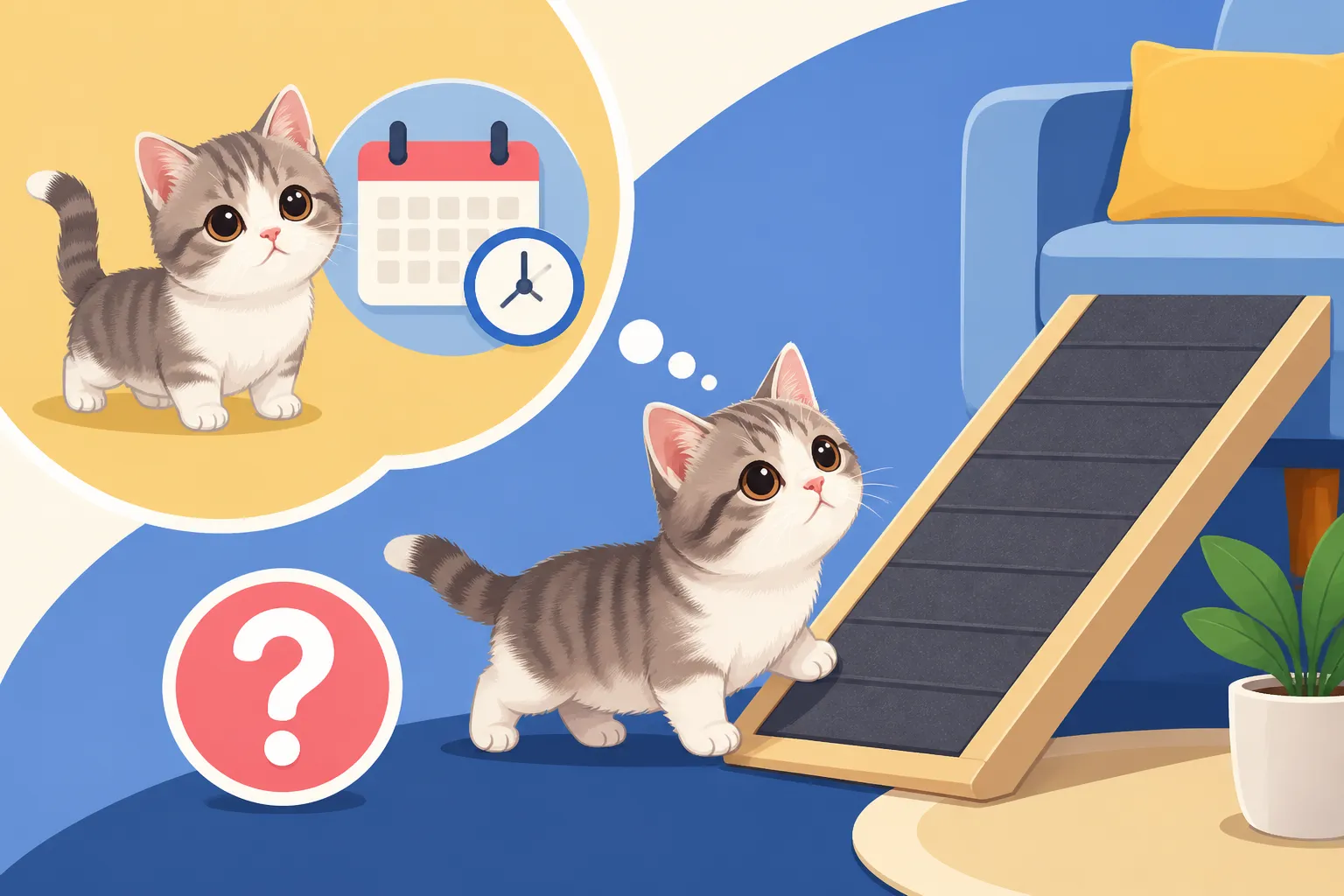
The ideal time to introduce a Munchkin kitten to ramps is as soon as they are mobile and begin exploring their surroundings. This typically means around 8-10 weeks of age, though some kittens might show interest a little earlier or later. At this stage, kittens are incredibly curious and receptive to new experiences. Their minds are like sponges, absorbing everything about their new home.
As soon as they're old enough to leave their mother and littermates and start venturing out, usually around 12 weeks when they come home with you, they'll be ready for gentle exploration. This aligns well with When a Munchkin Kitten Needs an Early Vet Check, where their overall mobility can also be assessed. You'll notice them attempting small climbs onto low furniture or exploring steps. This innate drive to investigate makes them perfect candidates for ramp training. You're simply channeling their natural desire to climb into a safe and healthy outlet. The little ones are often very playful and energetic, even with their short legs, so harnessing that energy towards safe movement is key.
Start with very low, gentle inclines to build their confidence. Think of a shallow ramp leading up to a low pet bed or a small platform. Don't expect them to tackle a steep ramp to your bed right away. The goal is to make the ramp a fun, non-threatening part of their playful discoveries. Remember, How Early a Munchkin Kitten's Legs Show means their physical limitations are apparent from a young age, so early intervention is always best.
The Importance of a Gradual and Positive Start
A gradual introduction is absolutely vital for success. Rushing a kitten, or making the experience scary, can create a lifelong aversion to ramps. You want them to associate ramps with positive experiences, like treats, play, and reaching coveted spots. Think of it as teaching them a new, fun game. Never force them onto a ramp or scold them for not using it. This will only backfire and make them wary.
Start by placing short, wide ramps in high-traffic areas where they naturally want to go, but where a jump might be too much. Perhaps a ramp leading up to the sofa where you spend time, or a low window perch. Make sure the ramp is stable and doesn't wobble, as instability can frighten a small kitten. How to Anchor a Ramp So a Munchkin Trusts It is a critical detail that will pay dividends in their confidence.
The trick is to make the ramp irresistible. Use small, high-value treats to lure them onto and up the ramp. Drop a favorite toy at the top or halfway up. Celebrate their small successes with enthusiastic praise and gentle petting. Consistency is also key; if the ramp is always there and always leads to good things, they’ll quickly understand its purpose. This positive reinforcement, day after day, will build their comfort and proficiency.
A Practical Guide to Introducing Ramps Successfully
Introducing ramps isn't rocket science, but it does require a bit of thought and strategy. It's about making it easy and appealing for your Munchkin, and that starts with the right equipment and the right approach.
Selecting the Ideal Ramp for Your Munchkin
Not all ramps are created equal, especially when it comes to a Munchkin. You'll want to prioritize stability, appropriate incline, and a non-slip surface. A ramp that wobbles or is too steep will be intimidating and potentially dangerous.
Consider these factors:
- Incline: For kittens, start with a very gentle slope. A shallow incline is less intimidating and easier to navigate for their short legs. As they grow and gain confidence, you can gradually introduce slightly steeper options, but always err on the side of caution. How Steep a Munchkin's Ramp Can Be depends on the individual cat and the height it needs to reach.
- Width: A wider ramp provides more perceived security and makes it easier for them to turn around or pause if they feel unsure. Narrow ramps can feel precarious.
- Surface: Grip is paramount. Look for ramps with carpeted surfaces, ribbed rubber, or some other non-slip material. Smooth, slick surfaces like polished wood or plastic are a no-go, as they can cause slips and falls, creating negative associations. For general home accessibility, you might find options for Which Surface a Munchkin's Ramp Should Have is a key consideration. Many pet ramps available on sites like Chewy or Amazon are designed with textured surfaces specifically for traction.
- Stability: Ensure the ramp is sturdy and doesn't rock or shift when your kitten steps on it. Fasten it securely to the furniture it leads to, if possible. A ramp that feels unsafe will instantly deter your kitten.
You might even consider pet steps as an alternative or in conjunction with ramps. For very low heights, a series of shallow, wide steps can be just as effective and sometimes easier for a kitten to understand than a ramp. Just ensure the step height is appropriate for their short legs.
Making Ramp Training Fun and Rewarding
The key to successful ramp introduction is positive reinforcement and making it an enjoyable experience. Here’s a simple step-by-step approach:
- Placement is Everything: Start by placing a ramp leading to a highly desirable spot that your Munchkin kitten already wants to reach, such as their favorite sunbeam on the sofa, or your bed if they're allowed up there. How to Set Up Ramps Around a Munchkin's House effectively involves understanding their preferred lounging and play areas.
- Lure with Treats and Toys: Place a small, irresistible treat (like a tiny piece of cooked chicken or a lickable treat) on the very first step or the bottom of the ramp. As your kitten approaches and takes the treat, immediately offer praise.
- Gradual Progression: Place subsequent treats a little further up the ramp. Don't rush it. If they only take one step the first time, that’s a victory! End the session on a positive note.
- Playtime Integration: Use a wand toy to entice them up the ramp. Dangle it at the top or along the sides, making them want to chase it upwards. This transforms training into engaging playtime. Brands like Chewy offer a wide variety of interactive toys perfect for this.
- Consistency: Practice these short, positive sessions multiple times a day. Repetition in a fun context builds muscle memory and confidence.
- Praise and Affection: Every time your kitten uses the ramp, whether for a treat or to play, shower them with verbal praise and gentle pets. They associate the ramp with positive attention from you.
Remember, the goal is for them to choose to use the ramp because it's the easiest and most rewarding way to get where they want to go. Avoid forcing or pushing them, as this can create fear and resistance.
Strategic Placement for Maximum Benefit
Where you place the ramps can make all the difference in how quickly your Munchkin adopts them and how useful they become. Think like a Munchkin cat: where do they want to be, and what obstacles are in their way?
Key Placement Areas:
- Sofa and Bed: These are prime real estate for any cat, especially one that loves to cuddle with their human. A ramp up to the sofa or your bed ensures they can join you without risky jumps. Consider a ramp with a low rise that doesn't take up too much space.
- Window Sills: Cats love to observe the outside world. If your windowsills are too high, a ramp or a series of well-placed steps can give your Munchkin access to this stimulating vantage point.
- Cat Trees/Condos: Standard cat trees are often designed with large gaps between platforms, which are challenging for Munchkins. Replace the lower platforms with ramps or add smaller, closely spaced steps. Which Cat Tree Layout Suits a Munchkin is crucial information for any owner.
- Favorite Perching Spots: Observe where your kitten tries to jump or where they seem to want to go but can't. This might be a low shelf, a dresser, or even a sturdy chair. Any spot they show interest in but struggle to reach is a candidate for a ramp.
Here's a quick comparison of ramp types to consider:
| Ramp Type | Pros | Cons | Ideal Use for Munchkins |
|---|---|---|---|
| Carpeted | Excellent grip, soft on paws, aesthetically pleasing. | Can collect fur, may be harder to clean. | General household use, leading to beds, sofas, cat trees. |
| Wooden | Sturdy, durable, often adjustable. | Can be heavy, may require additional grip strips. | Permanent solutions, heavier furniture, outdoor catios. |
| Plastic | Lightweight, easy to clean, often portable. | Can be less stable, may feel cheaper, often needs grip added. | Temporary use, travel, easy mobility between rooms. |
| Foam Steps | Soft, lightweight, gentle on joints, stable. | Can be bulky, may not hold heavier cats long-term. | For very low heights, easing onto low beds, senior cats. |
When purchasing, look for options available on sites like Amazon or Chewy, which often have customer reviews specifically mentioning use with small or short-legged pets. The goal is to make every desired area accessible, thus preventing What a Munchkin Kitten Should Not Be Allowed to Jump.
Overcoming Common Hurdles in Ramp Training
Even with the best intentions and the perfect ramp, your Munchkin kitten might not take to it immediately. Don't get discouraged! Patience and consistency are your greatest allies. Understanding common challenges will help you troubleshoot effectively.
Addressing Hesitation and Fear
It's completely normal for a kitten to be a little wary of a new object in their environment. Imagine a giant, unknown slope suddenly appearing in their living room! Their instincts might tell them to approach with caution.
If your kitten is hesitant or fearful:
- Reduce Intimidation: Start with the shortest, lowest ramp possible. Place it against a familiar piece of furniture. A long, steep ramp can look like a mountain to a tiny kitten.
- Scent Familiarity: Rub a towel or blanket that smells like your kitten or their mother on the ramp. This can make the new object feel more familiar and less threatening.
- Create a "Safe Zone": Place a soft blanket or a favorite toy on the bottom of the ramp, creating a comfortable space where they can approach without feeling pressured to climb immediately.
- Don't Force It: Never push or place your kitten onto the ramp if they're resisting. This will only reinforce their fear. Allow them to approach and explore at their own pace.
- Lead by Example (Subtly): If you have another confident pet (cat or small, gentle dog) who uses a ramp, let your Munchkin observe them. Sometimes, seeing another animal use it safely can build their confidence.
- Break Down the "Climb": If they seem overwhelmed by the length of the ramp, try placing a few treats just on the first inch, then slightly further. Just getting them to step onto it is a huge first win. Many owners wonder How to Teach a Munchkin to Use a Ramp, and breaking it into tiny steps is often the answer.
Remember, some cats are simply more cautious than others. Keep sessions short, positive, and end before they become stressed. Slowly, they'll build trust in the ramp and in your gentle guidance.
Maintaining Ramp Appeal and Safety
Even after your Munchkin is a ramp pro, it's important to ensure the ramps remain appealing and, most importantly, safe. Over time, ramps can shift, surfaces can wear, or new obstacles might appear.
- Regular Inspections: Make it a habit to check all your ramps weekly. Look for any wobbles, loose connections, frayed carpet, or worn-out grip surfaces. A loose ramp can be as dangerous as no ramp at all.
- Cleanliness: Ramps, especially carpeted ones, can collect fur, dirt, and even scent markers that might deter your cat. Vacuum or wipe them down regularly to keep them fresh and inviting.
- Re-Evaluate Placement: As your kitten grows, their preferred spots might change, or new furniture might be introduced. Be flexible and willing to move or add ramps as needed to maintain accessibility.
- Address Deterrents: If your Munchkin suddenly stops using a ramp they once loved, investigate why. Has it become wobbly? Is there a new, noisy appliance nearby? Has something been placed on the ramp that makes it less inviting? Sometimes, Why a Munchkin Refuses a Steep Ramp isn't just about the incline, but a subtle change in its environment.
- Joint Support as They Age: As your Munchkin ages, their joints will naturally become stiffer. Even if they've been using ramps their whole life, you might need to reconsider the incline or add softer surfaces. Caring for an Old Munchkin That Has Stopped Climbing means making even their accessible routes easier. Ensure they have appropriate joint supplements in their diet to keep them moving comfortably.
By consistently maintaining your ramps and being attentive to your Munchkin's needs, you're investing in their comfort and mobility for their entire life. Early introduction and ongoing attention will ensure your short-legged friend lives a long, happy, and fully accessible life in your home.
Disclaimer
This article is for general informational purposes only and does not constitute professional advice. Laws, prices and regulations vary by location and change over time. Consult a qualified professional for guidance on your specific situation.