Sandra Hochenedel and the First Munchkin
Many cat lovers are fascinated by the unique appearance of the Munchkin cat, often wondering how such a distinctive breed came to be. It’s a story rooted in an unexpected discovery, one that began with a compassionate individual and a stray cat. This guide delves into the crucial role Sandra Hochenedel played in the origin of the Munchkin breed, exploring the initial encounter, the subsequent litters, and how her observations laid the groundwork for a globally recognized, albeit sometimes controversial, feline.
The Origin Story: A Stray Under a Truck
The tale of the Munchkin cat doesn't begin in a grand cattery or with a meticulously planned breeding program, but rather in a much more humble and unexpected setting. It starts with a chance encounter between a kindhearted woman and a feline in need, an event that would ultimately change the course of cat history. This serendipitous discovery laid the foundation for a breed known for its unusually short legs and distinctive silhouette.
The Discovery in Rayville, Louisiana
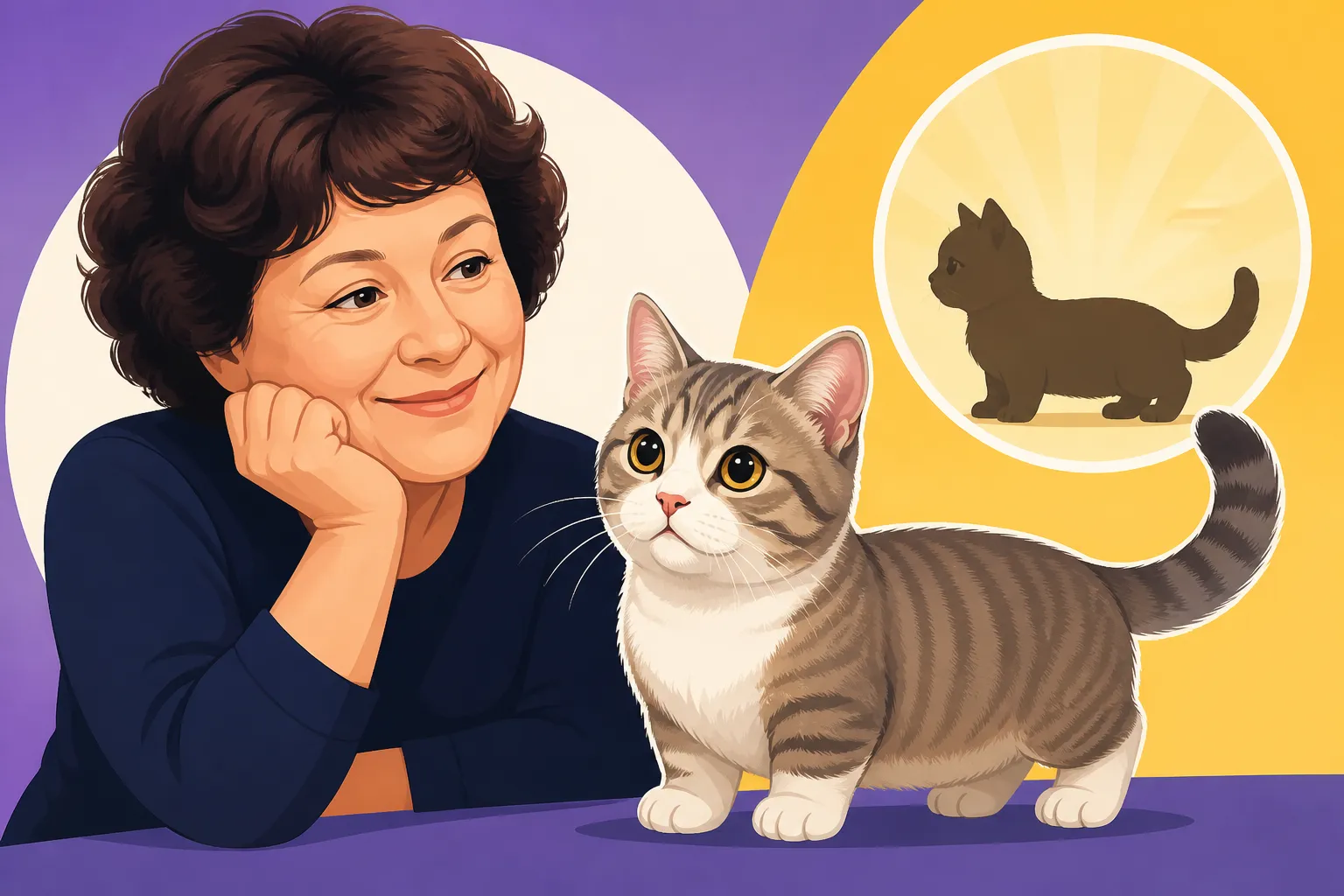
Our story takes us to Rayville, Louisiana, in the year 1983. Sandra Hochenedel, a schoolteacher, was going about her day when she stumbled upon two pregnant stray cats. They were not just ordinary strays; they possessed a peculiar physical trait that immediately caught her attention. One of these cats, a long-haired black female, was found sheltering The Truck the First Munchkin Was Found Under, scrawny and in desperate need of care. Sandra, being an animal lover, couldn't leave them to their fate. She took them in, providing them with food, shelter, and a safe environment.
This act of kindness marked the true beginning of the Munchkin breed's journey. Without Sandra's intervention, these cats, and their unique genetic characteristic, might have simply lived out their lives unnoticed by the wider world. Her decision to care for them not only saved their lives but also brought to light a fascinating genetic mutation that would eventually captivate, and sometimes divide, the cat fancy community. It's a testament to how often the most significant discoveries in animal breeding come from humble origins and observant individuals.
Blackberry's Unusual Appearance
The long-haired black stray, whom Sandra affectionately named Blackberry, was the matriarch of the Munchkin breed. What made Blackberry so remarkable was her legs – they were significantly shorter than those of a typical cat, giving her a low-slung, almost ferret-like gait. This wasn't the result of an injury or illness; she moved with agility and grace despite her unique stature. What the First Munchkin Looked Like was quite memorable due to this distinct feature.
Blackberry's short legs were a spontaneous genetic mutation, a natural occurrence that sets the Munchkin apart. At the time, Sandra didn't necessarily understand the genetic implications, but she observed that Blackberry was otherwise healthy, happy, and possessed a loving temperament. This observation was crucial, as it suggested that the short legs were not a debilitating condition but rather a distinctive physical characteristic. Her sound health and pleasant demeanor encouraged Sandra to continue caring for her and eventually, to explore the possibility of this trait being inherited.
The First Litter and the Birth of a Breed
The true revelation about Blackberry's unique legs came when she gave birth. It was during this period that Sandra Hochenedel began to understand that she might have stumbled upon something truly extraordinary, a genetic trait that could be passed down through generations. This was the pivotal moment when the Munchkin transitioned from being a curious anomaly to the nascent stages of a new breed.
Witnessing Inherited Short Legs
Blackberry's first litter under Sandra's care was a groundbreaking event. To Sandra's surprise and fascination, How Many of the First Munchkin Litter Were Short Legged kittens displayed the same short-legged trait as their mother. This was the undeniable evidence that the characteristic was hereditary, not just a one-off anomaly. It immediately piqued Sandra's scientific curiosity, even though she wasn't a geneticist. She saw healthy, active kittens, playing and scurrying around just like their longer-legged siblings, simply closer to the ground.
This moment confirmed that Why the First Munchkin's Legs Were Not a Disease, but a reproducible genetic variation. The fact that the kittens were thriving, with no apparent discomfort or mobility issues related to their leg length, was paramount. Sandra observed them closely, noting their playful nature and their ability to navigate their environment effectively, albeit with a different style of movement. This early observation of health and vitality was critical in advocating for the breed later on.
The Significance of Toulouse
Among Blackberry's first litter, a male short-legged kitten caught Sandra's eye. This kitten, whom she named Toulouse, would go on to play an equally significant role in the development of the Munchkin breed. Sandra decided to give Toulouse to a friend and fellow cat enthusiast, Kay LaFrance. This decision was pivotal because it effectively created a second, independent line for breeding, expanding the gene pool and preventing potential inbreeding issues. Which Munchkin Kitten Was Given to a Friend proved to be an invaluable piece of the puzzle.
What Toulouse Contributed to the Munchkin cannot be overstated. By having two unrelated (or distantly related) short-legged cats, breeders could then ensure genetic diversity and establish the breed on a broader and healthier foundation. Toulouse, like his mother, was a healthy, active cat, further proving the viability and non-detrimental nature of the short-legged gene. Blackberry and Toulouse Are the Two Cats Behind Every Munchkin, truly forming the genetic cornerstone from which all subsequent Munchkins would descend. Their lineage is traced back to these two foundational cats, making their early story essential to understanding the breed's origins.
Early Days and Growing Interest
Once the hereditary nature of the short legs was established through Blackberry and Toulouse, the next step was to share this unique discovery with the wider world of cat enthusiasts. This period involved initial breeding efforts, careful observation, and the strategic introduction of outside genetics to ensure the health and robustness of the emerging breed.
Sharing the Discovery and Initial Breeding Efforts
Sandra Hochenedel and Kay LaFrance, now with their unique short-legged cats, began the journey of developing what they hoped would become a recognized breed. They carefully bred Blackberry and Toulouse, as well as their offspring, always mindful of the health and welfare of the cats. Their initial breeding efforts were more about exploration and understanding the genetic trait than large-scale production. They wanted to confirm the inheritance patterns and ensure the cats were truly healthy.
What Hochenedel Did With the First Munchkin was to ensure its survival and the continuation of its unique trait. They observed that roughly half of each litter would inherit the short legs, while the other half would have legs of normal length. This consistent pattern further solidified their understanding of the gene. To maintain genetic diversity and health, they needed to bring in unrelated cats. Even in these early stages, careful documentation and responsible breeding practices were paramount. For any new breed, especially one with a distinctive physical characteristic, establishing a broad and healthy genetic base is crucial to its long-term viability, and these pioneering breeders understood that intrinsically.
The Role of Outcrossing in Expanding the Gene Pool
One of the smartest and most responsible decisions made in the early days of the Munchkin breed was the commitment to outcrossing. It's a practice where a purebred cat is bred with a non-pedigreed cat or a cat from a different breed. This isn't just a casual mating; it's a carefully planned strategy to introduce new genetic material and broaden the gene pool, which is vital for the health and vitality of any developing breed. Why Munchkin Outcrossing Was Necessary From the Start was clear: to avoid the pitfalls of a limited gene pool, which can lead to increased genetic health problems.
Early Munchkin breeders selected healthy, unrelated domestic shorthairs or longhairs for outcrossing. This practice ensured that the short-legged gene was spread across a diverse genetic background, reinforcing overall health and avoiding the magnification of other potential genetic issues. Breeders often looked for robust, friendly cats from reputable sources. Items like high-quality cat food bowls and comfortable bedding, easily found on platforms like Chewy, would have been essential for supporting the health of both the foundation cats and their outcross partners. This meticulous approach to breeding helped to establish the Munchkin as a generally healthy breed, despite its controversial physical characteristic. How the First Munchkin Colony Grew was largely due to these thoughtful breeding practices, carefully managed by Sandra and Kay and the growing circle of enthusiasts.
The Genetic Trait: Understanding Munchkin Dwarfism
The distinctive short legs of the Munchkin cat are not merely a cosmetic quirk; they are the result of a specific genetic mutation. Understanding the science behind this trait is crucial for responsible breeding and for appreciating the unique biological characteristics of the breed. This genetic understanding also helps to address some of the common misconceptions surrounding Munchkin health.
Why Munchkin Dwarfism Is Called Autosomal Dominant
The genetic trait responsible for the Munchkin's short legs is known as autosomal dominant inheritance. Let's break that down. "Autosomal" means that the gene responsible is not located on a sex chromosome (like X or Y); it's on one of the non-sex chromosomes. This means that both males and females can inherit the trait, and it's passed on regardless of the cat's sex. "Dominant" means that only one copy of the mutated gene is needed for the cat to display the short-legged characteristic. If a cat inherits even one copy of the Munchkin gene from either parent, it will have short legs.
This is why when a short-legged Munchkin is bred to a normal-legged cat (which is the recommended practice), roughly half of the kittens in the litter will inherit one copy of the gene and display the short-legged trait, while the other half will inherit two copies of the normal gene and have long legs. Why Munchkin Dwarfism Is Called Autosomal Dominant is fundamental to understanding its inheritance pattern. This predictable inheritance makes it easier for breeders to plan matings and understand the genetic outcomes, helping them to avoid problematic combinations. Even today, breeders use tools and genetic tests to ensure they are making sound decisions, often sourcing high-quality supplies and resources from places like Chewy to support their catteries.
What Two Copies of the Munchkin Gene Do
While one copy of the Munchkin gene results in the charming short-legged appearance, inheriting two copies of the gene is a very different story. This is known as a homozygous condition, and in the case of the Munchkin, it is considered lethal. Kittens that inherit two copies of the short-legged gene from both parents typically do not survive past the embryonic stage. They are reabsorbed by the mother's body, and therefore, What Two Copies of the Munchkin Gene Do is, tragically, to prevent the embryo from developing.
This understanding is why responsible Munchkin breeders absolutely prohibit breeding two short-legged Munchkins together. It's a crucial ethical consideration to prevent the loss of embryos and ensure the health and welfare of the breeding cats. By always breeding a short-legged Munchkin to a normal-legged cat (an outcross or a long-legged Munchkin from a Munchkin litter), breeders ensure that no kitten receives two copies of the dominant gene. This practice is enshrined in the ethical guidelines for breeding and is a testament to the careful genetic management required for the breed.
From Foundling to Formal Recognition
The journey from a stray cat under a truck to a recognized breed is a long one, filled with careful breeding, documentation, and ultimately, presentation to the wider cat fancy community. Sandra Hochenedel’s initial discovery set the wheels in motion for a breed that would both charm and challenge the traditional views of feline conformation.
The Munchkin's Journey to TICA
After years of careful breeding, observation, and documentation by Sandra Hochenedel, Kay LaFrance, and a growing community of enthusiasts, the Munchkin breed was ready to seek formal recognition. The International Cat Association (TICA) became the primary registry that embraced the Munchkin. TICA is known for its progressive approach to new breeds, often willing to consider naturally occurring genetic mutations that produce healthy, unique cats. In 1994, TICA officially accepted the Munchkin into its new breed development program. What TICA Registered the Munchkin As in 1994 was a significant step, signaling that the breed met their foundational health and temperament standards.
This acceptance was a major milestone, allowing Munchkins to be shown in TICA-sanctioned events as non-championship cats, where they could be evaluated against a preliminary breed standard. The process to achieve full championship status is rigorous, involving consistent conformation to the breed standard across multiple generations and geographical locations. It wasn't an overnight success; it took dedication, perseverance, and continued responsible breeding from the community that Sandra and Kay helped establish. This lengthy process helps ensure that new breeds are truly viable and healthy before being fully integrated into the competitive show ring.
The Enduring Impact of a Humble Beginning
Sandra Hochenedel’s discovery of Blackberry under a truck in Rayville, Louisiana, ignited a movement that has had a profound and lasting impact on the cat fancy. From that single, unassuming stray, an entire breed emerged, captivating cat lovers around the globe. The Munchkin, with its unique short stature, became a symbol of how natural genetic diversity can introduce fascinating new forms into the feline world.
This humble beginning also led to the development of many other "dwarf" cat breeds, often referred to as Munchkin hybrids, by crossing Munchkins with other established breeds (like the Minuet, Bambino, and Kinkalow). This proliferation, however, also brought ethical debates, especially concerning the stacking of genetic mutations. Despite the ongoing discussions, the foundational work done by Sandra Hochenedel and Kay LaFrance in those early years ensured that the original Munchkin breed was established with a focus on health, temperament, and responsible breeding practices. To this day, owners caring for their Munchkins ensure they have everything they need, from specialized low-entry litter boxes to high-quality food, often turning to reputable pet suppliers like Chewy for these essential items that support a comfortable and enriched life for their unique feline companions.
The Munchkin's Path Through Controversy and Acceptance
While the Munchkin gained popularity, its unique physical characteristic also sparked considerable debate within the wider cat community. The conversation often revolves around ethics, welfare, and the definition of what constitutes a healthy, naturally occurring breed. This journey has shaped the perception and status of the Munchkin across various feline registries.
Why Some Registries Oppose the Munchkin
Not all cat registries welcomed the Munchkin with open arms. Organizations like the Cat Fanciers' Association (CFA), one of the oldest and most traditional cat registries, and the Governing Council of the Cat Fancy (GCCF) in the UK, have explicitly refused to recognize the Munchkin breed. Their primary concern stems from the genetic mutation that causes the short legs, which they classify as a form of dwarfism. These organizations often adhere to strict ethical guidelines that discourage the breeding of animals with physical characteristics that might lead to health problems or impair their natural movement and quality of life.
The argument from these opposing registries is that selectively breeding for a genetic mutation that causes shortened limbs could potentially predispose the cats to spinal issues or other skeletal problems, even if studies haven't conclusively proven this in all cases. Why CFA Will Not Register a Munchkin and Why GCCF Refuses the Munchkin boils down to these ethical and welfare considerations. They prioritize what they perceive as the long-term health and functional integrity of a cat breed above unique aesthetics. This divergence of opinion highlights the complex ethical landscape within the world of animal breeding and the different philosophies that guide various organizations.
TICA's Acceptance and the Breed Standard
In contrast to some other registries, TICA (The International Cat Association) has been a consistent champion of the Munchkin cat. After years in their new breed development program, TICA granted the Munchkin full championship status in 2003. This decision meant that Munchkins could compete for championship titles alongside other established breeds, a testament to the breed's stable genetics, health, and consistent type. TICA's philosophy is often more open to natural genetic mutations, provided the animals are healthy, active, and can lead a normal life.
TICA's breed standard for the Munchkin specifically calls for a cat of medium size with a moderate body type, and critically, a normal spine. The short legs are the distinguishing feature, but the standard emphasizes that the cat should be muscular, with good bone development, and agile. What the TICA Munchkin Standard Asks For is a balanced approach, focusing on overall health and function rather than just the leg length. This approach seeks to differentiate the Munchkin from other forms of dwarfism that might carry more severe health implications, allowing for careful breeding and a clear vision for the breed's future.
Beyond the Foundation: The Munchkin's Enduring Legacy
The initial discovery by Sandra Hochenedel and the subsequent efforts of early breeders created more than just a new cat breed; they established a significant lineage that would inspire further breeding innovations and spark ongoing discussions about genetic diversity and animal welfare. The Munchkin's legacy continues to evolve, shaping conversations in the cat fancy and influencing how we view unique feline characteristics.
The Proliferation of Munchkin Hybrids
The existence of the Munchkin cat, with its unique short-legged gene, opened the door for the creation of numerous hybrid breeds. Breeders, captivated by the Munchkin's distinctive look, began crossing them with other established breeds to create cats with combined characteristics. For instance, crossing a Munchkin with a Persian resulted in the Minuet (formerly Napoleon), while a cross with a Sphynx created the Bambino, and a Munchkin with a LaPerm produced the Lambkin. How the Minuet Was Made From a Munchkin and How the Bambino Was Made From a Munchkin are just a couple of examples of this trend.
This proliferation of Munchkin hybrids has further complicated the ethical discussions surrounding the breed. Some critics argue that combining the Munchkin's dwarfism gene with other distinct traits, especially those that might also have their own health considerations (like the curled ears of a Scottish Fold or the hairlessness of a Sphynx), could potentially lead to stacking multiple mutations and unforeseen health challenges. Why Munchkin Hybrids Stack Two Mutations is a concern for many veterinarians and welfare advocates, who urge extreme caution and thorough health screening in such breeding programs.
The Ongoing Debate and Future of the Breed
From its humble beginnings under a truck in Rayville, the Munchkin cat has traversed a path filled with both adoration and controversy. The debate often centers on whether breeding for a trait like short legs, which is a form of dwarfism, is inherently ethical, especially given the potential for associated health concerns like lordosis or pectus excavatum. While proponents argue that healthy Munchkins live full, active lives and do not experience pain from their legs, critics maintain that such selective breeding prioritizes aesthetics over welfare.
The legacy of Sandra Hochenedel and her discovery of Blackberry continues to fuel this dialogue. Responsible Munchkin breeders today remain committed to health testing, careful outcrossing, and adhering to strict ethical guidelines to ensure the welfare of their cats. The Munchkin’s journey from a curious stray to a recognized breed highlights the complex interplay of genetics, human preference, and animal welfare, reminding us that every breed has a story rooted in an individual's observation and dedication. For those considering welcoming a Munchkin into their home, ensuring they come from a reputable breeder who prioritizes health and openly discusses these concerns is paramount, and gathering information from trusted pet resources, including product reviews and care guides on sites like Chewy, can be incredibly helpful.
| Key Figures/Events in Munchkin Origin | Description | Year / Period |
|---|---|---|
| Sandra Hochenedel | Discoverer of the foundational cat, Blackberry, and early breeder. | 1983 |
| Blackberry | The original short-legged stray cat, matriarch of the breed. | 1983 |
| Rayville, Louisiana | Location where Blackberry was discovered. | 1983 |
| Toulouse | Male short-legged kitten from Blackberry's first litter, also a foundational cat. | 1983 |
| Kay LaFrance | Friend of Sandra Hochenedel, received Toulouse, helped establish breeding lines. | 1983-on |
| TICA Acceptance | The International Cat Association accepts Munchkin into New Breed Program. | 1994 |
| TICA Championship Status | Munchkin achieves full championship status with TICA. | 2003 |
Disclaimer
This article is for general informational purposes only and does not constitute professional advice. Laws, prices and regulations vary by location and change over time. Consult a qualified professional for guidance on your specific situation.