How a Munchkin’s Legs Are Judged
Many people are fascinated by the Munchkin cat's unique short legs, but there's often a lot of confusion about what constitutes a "good" or "bad" leg structure, especially when breeders or registries talk about conformation. It’s not just about how short they are; it's about the overall health and functionality of the limb. Understanding the nuances of their physical structure is key to appreciating this breed and ensuring their well-being. This guide will walk you through the specifics of how a Munchkin's legs are judged, from the official TICA standard to what a discerning eye looks for in terms of health and daily function.
Understanding the Munchkin's Unique Anatomy
The Munchkin cat is instantly recognizable by its characteristic short legs, a trait that stems from a natural genetic mutation. However, it's crucial to understand that this isn't simply a case of miniature limbs; it's a specific form of dwarfism that affects bone growth in a particular way. This distinction is vital for appreciating both the breed's appearance and its health considerations.
The Genetic Basis of Short Legs
The short legs of a Munchkin cat are the result of an autosomal dominant gene mutation. This means that only one copy of the gene is needed for a cat to display the short-legged trait. It's the same kind of mutation that leads to short-limbed dwarfism in other species. Unlike some genetic conditions where affected individuals carry two copies of a problematic gene, with Munchkins, carrying even one copy leads to the distinctive short legs. This is why every short-legged Munchkin has one copy of the gene and one normal copy; two copies of the Munchkin gene are actually lethal to the embryo, resulting in early embryonic death. This genetic quirk means that when breeding Munchkins, a short-legged cat must always be bred with a normal-legged cat to produce viable kittens. Munchkin Dwarfism Is Dominant and Lethal in Two Copies
The gene responsible for this trait causes the long bones in the legs to grow shorter than usual. This is known as pseudoachondroplasia, a term that distinguishes it from true achondroplasia, which affects other parts of the skeleton as well. In pseudoachondroplasia, the cartilage at the ends of the long bones, which is responsible for lengthening the bones, doesn't function as effectively. This leads to legs that are notably shorter, often appearing slightly bowed, while the rest of the cat's skeleton, including its spine and body length, develops normally. Understanding What Pseudoachondroplasia Does to a Munchkin's Legs helps clarify that it's a specific growth anomaly, not a general miniaturization.
Why Body Length Stays Normal
One of the most defining characteristics of the Munchkin, and a critical point in how its legs are judged, is that its body length remains proportionate to a standard-sized cat. While the legs are short, the spine, torso, and tail length are all considered normal. This creates the unique "low-slung" appearance that Munchkin owners adore. It's not a miniature cat; it's a cat with normal body size on short legs. This normal body length is important because it means the cat's internal organs are housed within a standard feline frame, unlike some severe dwarf conditions that can lead to compacted organs.
The normal length of the spine is a frequently discussed topic. Many concerns about Munchkin health revolve around the potential for spinal problems like lordosis (an inward curvature of the spine) or pectus excavatum (a sunken chest). However, the genetic mutation specifically affects the long bones of the limbs, not the vertebrae. So, while a short-legged cat’s spine might be subjected to different stresses due to its altered gait and inability to jump as high, the structure of the spine itself is considered normal. This is why a cat with short legs, but a normal body, is the standard. Why a Munchkin's Spine Is Normal Length explores this in more detail.
Distinguishing Munchkin Legs from Other Conditions
It's important to differentiate the Munchkin's specific form of dwarfism from other conditions that might result in short limbs or other skeletal abnormalities. Sometimes, genetic mutations can lead to more severe forms of dwarfism that affect overall skeletal development, leading to conditions like disproportionate dwarfism or other debilitating skeletal dysplasias. The Munchkin's pseudoachondroplasia is distinct in that it primarily impacts the long bones of the legs without, in most cases, affecting the skull, spine, or internal organs in the same way more severe forms of dwarfism might.
A responsible breeder will screen their cats for various health conditions and be transparent about the genetic background. It's not uncommon for uninformed individuals to mistake a cat with an injury or another genetic deformity for a Munchkin, or for unscrupulous breeders to misrepresent other short-legged cats. True Munchkins, when responsibly bred, should exhibit robust health despite their short stature. If a cat shows signs of additional skeletal issues beyond the characteristic short legs, such as a severely malformed skull, compressed torso, or significant mobility impairment, it's a sign that it might not be a purebred Munchkin or that it carries additional, undesirable genetic traits. Always ensure you understand the difference when researching Which Health Problems the Munchkin Actually Has.
The TICA Standard: What Judges Look For
When it comes to showing Munchkin cats, The International Cat Association (TICA) is the primary registry that fully recognizes the breed. Their breed standard provides a detailed blueprint of what an ideal Munchkin should look like, with specific attention paid to the defining characteristic: its legs. Understanding this standard is crucial for anyone involved in breeding, showing, or simply appreciating the breed's unique conformation.
Overall Conformation and Balance
The TICA standard emphasizes that while the Munchkin has short legs, it should still possess the overall balance and athletic appearance of a domestic cat. It’s not about being awkwardly low to the ground; it’s about having a well-proportioned body that functions harmoniously with its shorter limbs. The body should be medium-sized, semi-foreign in type, with a well-rounded chest and firm musculature. The head should be a modified wedge with rounded contours, and the eyes should be walnut-shaped, giving an alert and sweet expression.
Crucially, the standard looks for a cat that moves with agility and confidence, despite its stature. A Munchkin should not appear to struggle or be inhibited by its short legs. Judges will observe the cat's gait, looking for a smooth, fluid movement without signs of pain or awkwardness. The overall impression should be one of a healthy, active cat, capable of navigating its environment with ease. What a Munchkin Looks Like Against the TICA Standard delves deeper into the full range of characteristics. Any appearance of discomfort, stiffness, or an unnatural gait would be considered a fault.
Foreleg and Hindleg Appearance
The legs are, of course, the star of the show when judging a Munchkin. TICA specifies that the legs should be short and well-muscled, with medium boning. All four legs should be relatively equal in length, although the hind legs are often slightly longer than the front, leading to a gentle rise from shoulder to rump. This slight difference in hind leg length is normal and contributes to their characteristic gait. The paw pads should be thick and firm, and the paws themselves should be round and compact.
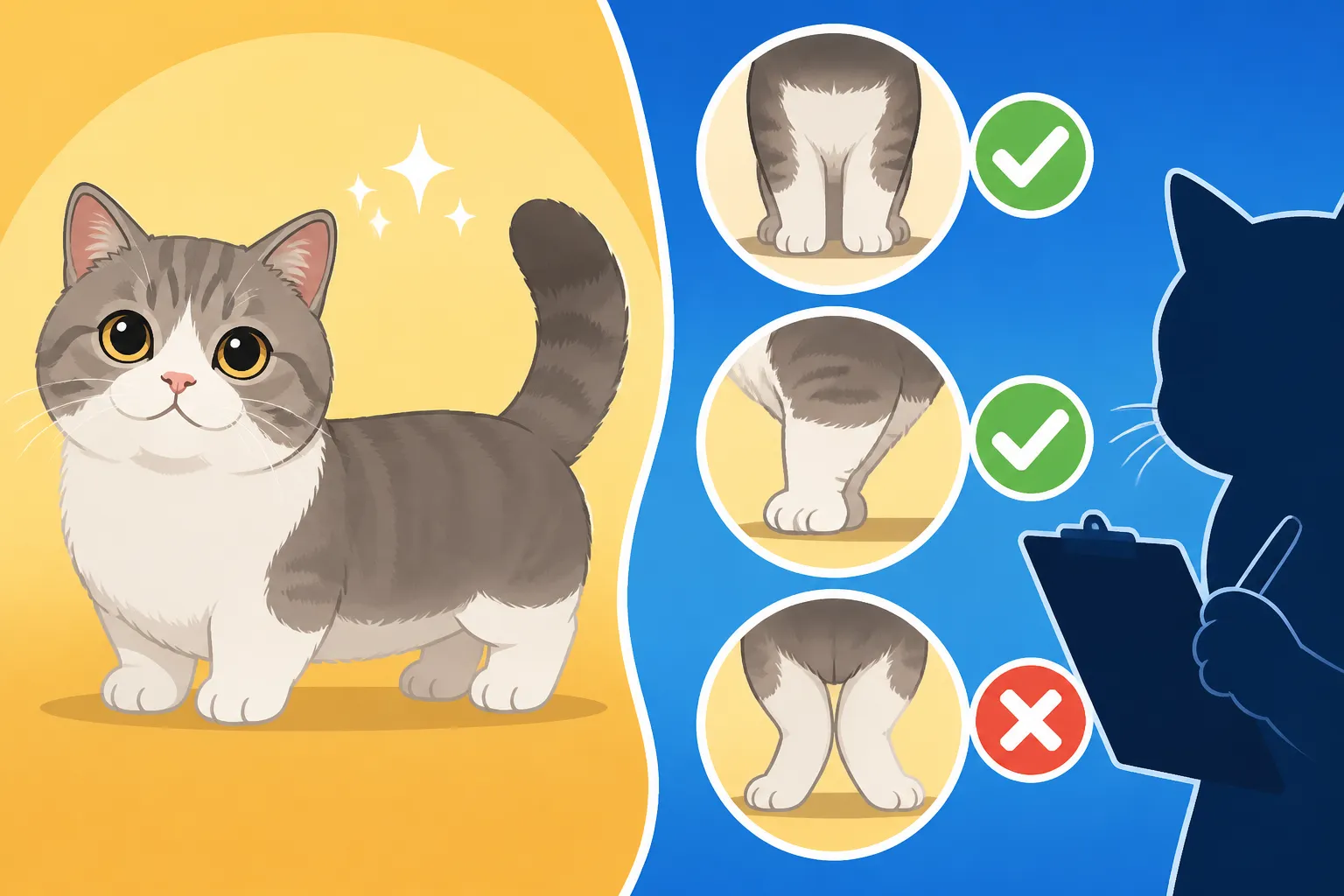
One specific detail often noted is the appearance of the forelegs. The TICA standard allows for a slight bowing of the forelegs, but it must not be excessive or appear deformed. Why a Munchkin's Front Legs Look Bowed explains that this slight bowing is a direct result of the shortened long bones and is part of the characteristic appearance, not necessarily a defect, as long as it doesn't impede movement or cause discomfort. However, significant outward turning of the paws (splayed feet) or severe bowing that creates an unhealthy angle at the joints would be considered a serious fault. The joints themselves should be firm and correctly aligned, allowing for full range of motion.
Acceptable Angles and Posture
Judges pay close attention to the angles formed by the legs and the body, particularly the hocks (ankles). The TICA standard calls for well-angled hind legs that provide good propulsion. When viewed from behind, the hind legs should be straight and parallel, not cow-hocked (turned inward) or bow-legged (turned outward). Similarly, the front legs, while potentially showing that slight bowing, should be straight from the elbow to the paw, with the elbows tucked neatly against the body.
The cat's posture, both standing and moving, is paramount. A Munchkin should stand squarely on its feet, with its chest held high. When observed in motion, the unique "ferret-like" gait is expected, where the cat moves with a low, flowing stride rather than a high-stepping one. The standard dictates that any cat exhibiting signs of spinal problems, poor joint conformation, or an inability to move freely and comfortably, would be disqualified or faulted heavily. This emphasis on functionality and health, even within the context of a breed defined by a genetic anomaly, reflects the commitment to the cat's welfare.
Beyond the Show Ring: Health Considerations for Legs
While the TICA standard provides guidelines for an ideal Munchkin, responsible ownership goes far beyond aesthetics. The real judgment of a Munchkin's legs comes from their ability to support a healthy, active life. Owners and ethical breeders understand that the focus must always be on health, comfort, and mobility.
Assessing Leg Functionality in Everyday Life
For a Munchkin, the true measure of its legs isn't just how they look in a posed picture, but how they perform day in and day out. A healthy Munchkin should be able to run, play, and explore its environment with enthusiasm. They might not jump to the top of the refrigerator like a long-legged cat, but they should be able to scale cat trees with well-spaced platforms or use ramps and steps with ease. Their gait should be smooth and even, without limping, favouring one side, or showing hesitation.
Observing a Munchkin during play is often the best way to assess their functionality. Do they chase toys with gusto? Can they turn quickly? Do they engage in the famous "prairie dog sit" comfortably, balancing on their hind legs to get a better view? These are all indicators of good leg and spinal health. Any signs of stiffness, reluctance to move, or a change in their usual playful demeanor should be a prompt for a veterinary check-up. Remember, a Munchkin is a normal cat that just cannot reach, and its legs should allow it to live a full, happy life on a lower plane.
Identifying Potential Issues: Bowing and Angulation
While a slight bowing of the forelegs is acceptable within the TICA standard, it's a fine line between characteristic appearance and a health issue. Excessive bowing, or bowing in the hind legs, can indicate more severe bone deformities that could lead to pain, arthritis, or instability over time. Similarly, issues with angulation, such as hocks that are too straight or too bent, can place undue stress on joints. A veterinarian trained in feline orthopedics or with experience in the breed can assess the severity of these angles. How a Vet Assesses a Munchkin's Leg Conformation typically involves a physical examination, palpation of the joints, and sometimes X-rays to visualize the bone structure.
Other red flags include splayed feet, where the paws turn outward significantly, or any signs of uneven weight distribution on the paws. These issues can indicate underlying joint problems or discomfort. Responsible breeders will be vigilant in screening for such conformational faults in their breeding lines. While the Munchkin gene itself isn't directly linked to conditions like hip dysplasia, the added stress on joints from altered mechanics can exacerbate or introduce issues if the conformation isn't sound. It's vital to choose a kitten from a breeder who can speak confidently about the leg and joint health of their breeding cats and is transparent about any observed issues.
The Importance of a Breeder's Ethical Assessment
An ethical Munchkin breeder understands that their responsibility extends far beyond simply producing cute, short-legged kittens. They are stewards of the breed's health and welfare. This means making careful breeding choices to minimize health risks and ensure robust progeny. For Munchkin legs, this involves selecting breeding cats with excellent conformation, clear movement, and no history of joint problems. They should also avoid breeding cats with exaggerated short legs (often called "rug hugger" types) if those legs show any signs of functional impairment or significant bowing that could lead to long-term issues.
A reputable breeder will not only adhere to the TICA standard but will also prioritize the functional health of their cats. They should be able to show you the parents, allowing you to observe their gait and overall movement. They will also provide health guarantees that specifically address genetic conditions common in felines, and they should be upfront about any potential predispositions within the breed. Transparency is key. If a breeder avoids discussing health or specific conformational details, that's a significant warning sign. Don't be afraid to ask What a Munchkin Breeder Should Be Able to Show You regarding the health and ancestry of their kittens.
Grading Leg Length and Type
Within the world of Munchkins, you'll sometimes hear different terms used to describe leg length. While TICA's official standard doesn't use these informal terms for judging, they are common parlance among breeders and enthusiasts and can certainly impact a kitten's price and perceived desirability.
Defining "Standard" vs. "Rug Hugger"
Informally, Munchkin leg lengths are often categorized to give potential owners an idea of what to expect.
- Standard Munchkin: This refers to cats with legs that are noticeably shorter than a typical cat but still allow for relatively easy movement and jumping onto lower furniture. These cats generally conform well to the TICA breed standard, showing good balance and agility. This is the most common and generally preferred leg length for both health and show purposes.
- Rug Hugger Munchkin: This term describes Munchkins with extremely short legs, often causing their bellies to appear very close to the ground, almost "hugging" the rug. While some people find this appearance particularly endearing, these cats may have more restricted mobility. They might struggle with even low jumps or negotiating small steps, and their gait can appear more restricted. What a Rug Hugger Munchkin Is and Why It Costs More often explains that their rarity and unique look can command a higher price, but potential owners should weigh this against potential limitations in mobility and the need for more house adaptations.
It's important to understand that these terms are not officially part of the TICA standard but are used colloquially. A TICA judge focuses on the health and functional soundness of the legs within the context of the breed's short-legged nature, rather than assigning a specific "grade" based on these informal labels. However, a cat with legs so short it struggles to move would certainly be faulted.
How Leg Length Impacts Price and Availability
The length of a Munchkin's legs can definitely influence its price. Generally, the shorter the legs, the higher the demand and, consequently, the higher the price. "Rug Hugger" Munchkins, due to their perceived rarity and unique appearance, often fetch premium prices. This can be a tricky area, as buyers might be drawn to the most extreme short-legged look without fully understanding the potential implications for the cat's long-term mobility and quality of life. How Much a Rug Hugger Munchkin Costs can be significantly more than a standard-legged Munchkin.
Conversely, "standard" length Munchkins, those with legs that are short but not extremely so, are more commonly available and generally represent a better balance between the breed's characteristic look and optimal functionality. Long-legged kittens born in a Munchkin litter (which happens about half the time, as only one parent has the gene) are still considered Munchkins but do not express the short-legged trait. They are often sold at a lower price as companion pets, as they don't have the defining short legs. Breeders will carefully evaluate a kitten's leg length and overall conformation by around 12 weeks of age, once their adult proportions are becoming clear. This assessment helps them determine suitability for show, breeding, or pet homes. Why a Breeder Grades a Munchkin's Legs at Twelve Weeks is a standard practice.
The Role of the Veterinarian in Leg Assessment
Beyond the breeder's assessment and the show judge's eye, a veterinarian plays a crucial role in formally evaluating a Munchkin's leg and spinal health. A vet can conduct a thorough physical examination, palpating the joints, assessing range of motion, and observing gait. They can identify any abnormal angles, signs of discomfort, or early indicators of joint issues.
In some cases, especially if there are concerns about spinal health or severe bowing, a vet might recommend diagnostic imaging like X-rays. These images can reveal the precise bone structure, joint health, and any signs of conditions like lordosis or pectus excavatum. It's a wise practice for any Munchkin owner to have their kitten thoroughly checked by a vet familiar with the breed, not just for general health, but specifically for skeletal conformation. A reputable breeder will encourage this early vet check and provide clear health records. Why a Munchkin Kitten Needs an Early Vet Check is highly recommended.
Owner Observations: What You See Day-to-Day
As a Munchkin owner, you become the primary judge of your cat's well-being and mobility. While breed standards and veterinary checks provide formal assessments, your daily observations are invaluable for catching subtle changes and ensuring your short-legged companion remains comfortable and active throughout its life.
Watching for Changes in Gait and Movement
A Munchkin's gait is distinct; it's often described as a "ferret-like" or "weasel-like" scurry, very low to the ground and agile. They might not jump high, but they are often surprisingly fast on the flat and can corner with impressive agility due to their low center of gravity. Observing this normal, fluid movement is key. Any sudden changes in how your Munchkin moves should catch your attention. Are they limping, even subtly? Are they favoring one leg? Do they seem hesitant to run or play as vigorously as before?
Perhaps they are struggling with stairs they once navigated easily, or they refuse to use a ramp they previously loved. These could be early indicators of joint discomfort or a spinal issue. For example, if you notice your Munchkin seems to have difficulty grooming its hindquarters, it might not just be laziness; it could be due to stiffness or pain in its back or hips. Regularly watching your cat walk and play helps establish a baseline for what's normal for your individual Munchkin, making it easier to spot deviations. You can even film them occasionally to show your vet How a Vet Watches a Munchkin Walk.
Recognizing Signs of Discomfort or Stiffness
Munchkins, like many cats, are masters at hiding pain. This means you need to be a diligent observer to pick up on subtle clues. Beyond changes in gait, look for other signs of discomfort:
- Reduced Activity: Less play, more sleeping, or reluctance to engage in usual activities.
- Difficulty with Routine Actions: Struggling to get onto a low couch, avoiding favorite spots that require a small jump, or difficulty using the litter box.
- Changes in Posture: Sitting or lying in unusual positions, hunching, or holding their body stiffly.
- Vocalization: More meowing, hissing, or growling when touched in certain areas.
- Grooming Changes: Over-grooming a particular area (which can indicate pain there) or, conversely, neglecting grooming, especially the hindquarters, due to discomfort or inability to reach.
- Changes in Temperament: Becoming withdrawn, irritable, or less affectionate than usual.
It's natural for cats, as they age, to become a bit stiffer, but significant changes should always warrant a vet visit. Early detection of conditions like arthritis can lead to treatments that significantly improve their quality of life. Whether a Munchkin Gets Arthritis Earlier is a common concern among owners, and proactive monitoring is the best defense.
Maintaining Optimal Leg Health Through Care
Proactive care is paramount to maintaining your Munchkin's leg and overall skeletal health. Here are some key aspects:
- Weight Management: This is perhaps the single most critical factor. Every extra pound places undue stress on a Munchkin's short legs and spine. A lean body condition is essential. Why Weight Is More Dangerous on a Munchkin is not an exaggeration – it dramatically increases the risk of joint problems and spinal discomfort. Regular weighing and careful portion control are crucial.
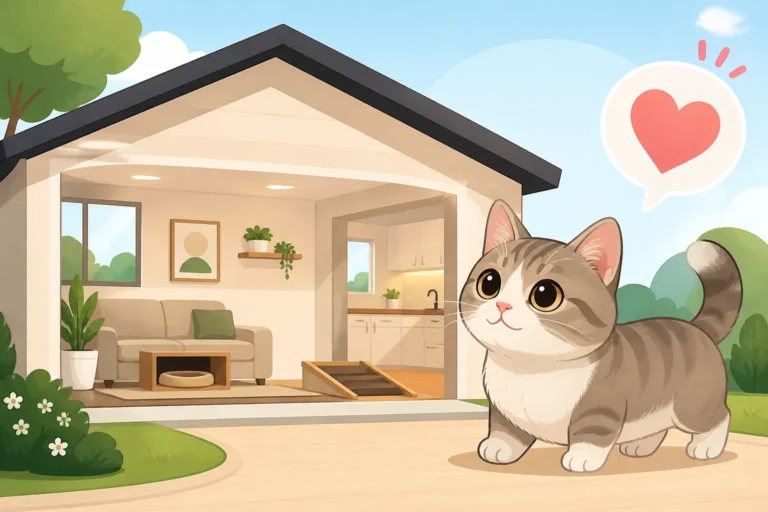
- Environmental Adaptations: Provide ramps, pet stairs, and low-entry litter boxes. Ensure all favorite resting spots, like window sills or beds, are easily accessible without jumping. Items available at retailers like Chewy can be invaluable here. Ramps and Steps Are Munchkin Equipment, Not Luxuries is a mindset every owner should adopt.
- Nutrition and Supplements: Discuss with your vet if joint-supportive foods or supplements (like glucosamine and chondroitin) might be beneficial, especially as your Munchkin ages.
- Regular Grooming: Since Munchkins can struggle to groom their hindquarters, regular brushing and occasional sanitary clips are necessary to prevent matting, which can be uncomfortable and lead to skin issues. Grooming the Half of a Munchkin It Cannot Reach is a vital part of their routine care.
- Veterinary Check-ups: Consistent vet visits, especially as they get older, allow for early detection and management of any skeletal or joint issues.
By being observant and providing a supportive environment, you can ensure your Munchkin's short legs continue to carry them through a happy and comfortable life.
| Feature Assessed | TICA Standard (Ideal) | Owner Observation (Ideal) | Potential Issues (Red Flags) |
|---|---|---|---|
| Leg Length | Short, but proportionate to body | Allows for easy movement, agility | Excessively short (rug hugger) impacting mobility, or uneven length |
| Bowing of Forelegs | Slight bowing acceptable | No impact on gait or comfort | Excessive bowing, causing awkward gait or instability |
| Angulation | Well-angled hind legs, straight from hocks | Smooth, fluid movement, good propulsion | Cow-hocked, bow-legged, splayed feet, stiff or straight hocks |
| Gait/Movement | Agile, ferret-like, confident stride | Runs, plays, uses ramps/steps easily | Limping, hesitation, stiffness, reluctance to move, favoring limbs |
| Spine | Normal length, flexible | No visible curvature, comfortable "prairie dog sit" | Lordosis (inward curve), pectus excavatum (sunken chest), pain on palpation |
| Musculature | Well-muscled, medium boning | Firm to the touch, no atrophy | Weakness, muscle loss, particularly in shoulders/hips |
| Overall Balance | Harmonious body-to-leg ratio | Active, playful, no signs of struggle | Awkward appearance, difficulty balancing, easily tired |
Disclaimer
This article is for general informational purposes only and does not constitute professional advice. Laws, prices and regulations vary by location and change over time. Consult a qualified professional for guidance on your specific situation.